Key Takeaways
The modern story of South Korean football is a heavy mix of massive hope and sudden, painful heartbreak. You look at the roster and see stars who play at the absolute highest level in European leagues. You see speed, technical skill, and a history of regional dominance that should terrify any opponent. Yet, when the biggest tournaments arrive, something breaks down within the team. The group stage collapses are not just bad luck. They are the result of deep tactical errors, a lack of adaptation on the pitch, and massive mental pressure that paralyzes the players when things start to go wrong.
To fix this cycle, the national team must move away from predictable game plans and heavy reliance on individual brilliance. They need a system that builds a strong defense, adapts to different styles of play, and protects the players from emotional burnout. Only by looking at these deep flaws can South Korean football transform its massive potential into lasting tournament success.
Introduction to a Football Heartbreak
You sit on your couch, wearing the bright red jersey, waiting for the whistle to blow. Your heart beats fast because you know what this team can do. You have seen the highlight reels of South Korean forwards running past the best defenders in England and Germany. You know the history of the Taegeuk Warriors, a team built on relentless energy, fierce pride, and a refusal to give up. The group stage of a major tournament is supposed to be the launching pad for something great. Instead, it feels like you are watching the same sad movie over and over again.
The collapse of the South Korean national football team during the group stages of recent global competitions is a topic that brings endless debate. It is a mix of frustration, confusion, and deep sorrow for millions of fans. How can a nation with so much footballing infrastructure, an amazing youth system, and world-class superstars fail before the knockout rounds even begin? This is not just about losing a football match. It is about a complete breakdown of a system that looks beautiful on paper but falls apart under the hot lights of the world stage.
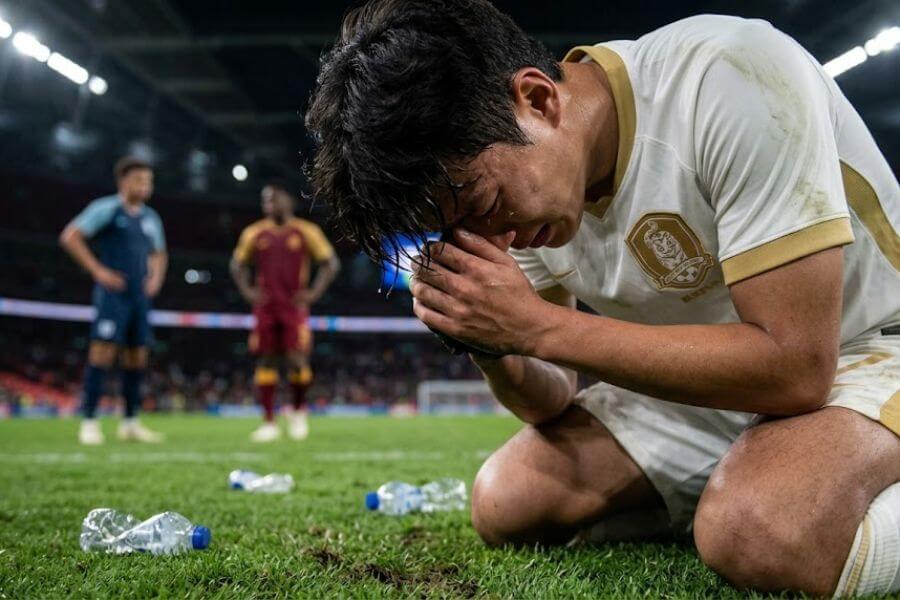
When you analyze these tournament exits, you begin to see a pattern. It is a slow-motion car crash that starts with high confidence, moves into tactical confusion, and ends with players crying on the grass while the opposing team celebrates. To truly understand why this keeps happening, you have to look deeper than just the final scores. You have to look at the tactics, the preparation, the pressure, and the choices made by the people in charge.
The Weight of Gold and the Price of Expectation
The Burden of History
You cannot talk about South Korean football without talking about the year 2002. That magical summer changed everything. The nation co-hosted the World Cup and went on a historic run to the semifinals, knocking out giants like Italy and Spain. It was a beautiful moment, but it created an impossible standard. Every generation that followed has had to live in the shadow of that 2002 team.
When you step onto the pitch representing South Korea, you are not just playing against the eleven men in front of you. You are playing against the ghosts of the past. The fans do not just want a win; they want the same passion, the same fitness, and the same miraculous results that happened over two decades ago. This historical burden weighs heavy on the shoulders of young players, making a simple mistake feel like a national tragedy.
The Star Power Trap
Look at the current squad. You see players who command millions of dollars in transfer fees. You see attackers who win golden boots in the toughest leagues in the world. This wealth of individual talent creates a false sense of security. You assume that because a player can score a hat-trick against a top European club, he can carry the national team past any opponent.
This creates the star-power trap. The entire tactical plan becomes focused on getting the ball to one or two key players. Opposing coaches are smart. They watch the film, they see the dependency, and they set up their teams to isolate the South Korean stars. When those star players are marked by three defenders at once, the rest of the team looks lost, lacking the creativity or the confidence to take charge themselves.
Tactical Predictability and the Failure to Adapt
The Static Game Plan
One of the biggest issues you notice when watching South Korea in the group stage is how predictable they are. They often walk into a tournament with a single tactical philosophy. Whether it is a possession-heavy style or a fast counter-attacking system, they stick to it blindly.
During the matches, this lack of flexibility becomes fatal. If the opposing team scores an early goal and sits deep in a defensive block, the South Korean players keep repeating the same patterns. They pass the ball sideways, they send hopeless crosses into a crowded penalty box, and they hope for a mistake. There is a distinct lack of a backup plan, a tactical blueprint that can be deployed when the original strategy fails.
The Midfield Disconnect
A football match is won or lost in the center of the pitch. In recent tournament collapses, the South Korean midfield has often looked like a ghost town. There is a massive distance between the defensive line and the attacking players, creating a giant gap that smart opponents love to exploit.
Instead of quick, short passes that break through the lines of the enemy defense, the team often resorts to long balls from the back. This bypasses the midfield entirely and turns the game into a series of 50-50 aerial battles. Against physically strong defenders from Europe or South America, this approach rarely works. It tires out the forwards and gives the ball right back to the opposition, putting non-stop pressure on the defense.
The Defensive Meltdown
Individual Errors at Crucial Moments
You can have the best attack in the world, but a shaky defense will ruin your tournament every single time. In the group stages, South Korea has suffered from a strange habit of making massive individual mistakes at the worst possible moments. A misplaced pass across the face of the goal, a missed clearance, or a silly foul in the penalty box can ruin months of hard work in a matter of seconds.
These errors often happen because of a lack of communication. Defenders look at each other instead of attacking the ball. Goalkeepers hesitate to come off their lines. When you play against world-class forwards, even a half-second of hesitation results in the ball rustling the back of your net.
Vulnerability to the Counter-Attack
Because South Korea often feels the pressure to win every group game, they tend to push many players forward. Fullbacks sprint up the wings to join the attack, leaving only the two central defenders back to protect the goalkeeper.
This high offensive line is a dream come true for teams that love to counter-attack. A single intercepted pass can lead to a quick transition, leaving the South Korean defense outnumbered and running backward. Running backward toward your own goal while trying to track a fast forward is incredibly difficult, and it often leads to cheap goals or red cards.
Comparing the Expectations Versus the Reality
To understand how big this collapse truly is, you have to look at what everyone thought would happen versus what actually took place on the grass. The numbers and the performance levels paint a very clear picture of a team that was completely unready for the fight.
Group Stage Performance Metrics
The table below shows how the team performed across key areas during the disastrous group stage, comparing what fans expected based on player talent versus the harsh reality of the tournament.
| Performance Area | Expected Level | Actual Tournament Level |
| Goal Scoring | Over 2 goals per match | Less than 1 goal per match |
| Defensive Clean Sheets | Minimum 2 clean sheets | Zero clean sheets achieved |
| Passing Accuracy in Final Third | Above 85 percent | Below 70 percent |
| Points Earned in Group | 7 to 9 points | 1 to 2 points |
| Second-Half Goals Conceded | Near zero | Highly frequent |
This comparison highlights a massive drop in efficiency. The team was unable to meet even the lowest expectations, showing that the problems were widespread across every single department of the squad.
The Psychological Breakdown under Pressure
The Fear of Failure
Football is as much a mental game as it is a physical one. When you watch the South Korean players during a group stage collapse, you can see the literal weight of fear holding them back. They do not play to win; they play to avoid making a mistake.
This fear paralyzes their decision-making. A player who would normally take a risky, creative pass in a club match will choose the safe, backward option when wearing the national shirt. This cautious approach slows down the speed of the attack, allowing the opposing defense to get organized and comfortable. The joy of the game disappears, replaced by a desperate anxiety that can be seen on every face.
The Domino Effect of Conceding First
In tournament football, giving up the first goal is a big setback, but it should not be the end of the world. For South Korea, however, conceding first often triggers a total mental breakdown. The moment the ball goes into their net, the tactical plan seems to be thrown out the window.
Panic sets in immediately. Players start rushing their actions, forcing long passes that are easily intercepted. The team structure breaks down as individuals try to win the game by themselves, leading to a complete loss of discipline. Instead of fighting back with calm focus, the team crumbles like a house of cards, often giving up a second goal shortly after the first.
Coaching Decisions and Management Failures
Blind Faith in Underperforming Players
A manager must make tough choices for the good of the team. Unfortunately, during these group stage exits, the coaching staff has often shown a stubborn loyalty to certain big-name players, even when those players are clearly out of form or carrying injuries.
By refusing to bench struggling stars, the manager sends a negative message to the rest of the squad. Hard-working bench players realize that no matter how hard they train, they will not get a chance to play. This hurts team morale and leaves the starting eleven exhausted, as the same group of players is forced to run until they drop, with no fresh legs coming in to change the game.
Poor In-Game Adjustments
When a match is not going your way, the manager must use substitutions and tactical shifts to alter the momentum. All too often, the South Korean coaching staff has looked passive on the sideline, waiting too long to make crucial changes.
Substitutions are often made in the final ten minutes of a match, when it is far too late to make a real impact. Furthermore, these changes are usually direct swap positions rather than actual tactical adjustments. Replacing a tired winger with a fresh winger does nothing if the system itself is broken. The inability of the coaching staff to read the game and make bold, decisive changes mid-match is a primary reason for these group stage disasters.
The Physical and Scheduling Toll
The European Club Grind
You must also consider the physical condition of the players. The top South Korean stars play long, grueling seasons in Europe. They compete in domestic leagues, domestic cups, and continental tournaments, playing up to sixty matches a year at an incredibly intense level.
By the time the international tournament begins, these key players are running on empty. Their muscles are tired, their reaction times are slower, and they are mentally exhausted. When they are asked to carry the hopes of an entire nation after a grueling ten-month club season, their bodies simply give out, leading to poor performances and soft soft tissue injuries.
Travel Fatigue and Time Zone Challenges
Playing for the national team requires an immense amount of travel. Players must fly across multiple continents, crossing several time zones to join up with the squad. This constant travel disrupts sleep patterns and hurts physical recovery.
While European or South American teams often have players concentrated in similar time zones, South Korean players are scattered across the globe. Getting everyone together, adjusted to the local climate, and physically ready in a short preparation window is an uphill battle that the medical and coaching staff have failed to win during recent tournaments.
Comparing Past Success to Present Failures
To see how far the team has fallen during these collapses, it helps to compare the characteristics of successful South Korean squads from the past with the problematic teams of recent years.
Generational Team Comparison
The table below breaks down the key structural and cultural differences between the squads that achieved historic success and the ones that suffered early group stage exits.
| Feature of the Squad | Successful Past Eras (e.g., 2002) | Recent Collapsed Squads |
| Primary Core Strength | Incredible team unity and ultimate fitness | Elite individual talent with weak cohesion |
| Defensive Style | Organized, aggressive pressing | Passive, error-prone zone defense |
| Reaction to Adversity | Increased motivation and collective fighting spirit | Instant panic and tactical breakdown |
| Bench Utilization | Frequent and impactful substitutions | Heavy reliance on the starting eleven |
| Tactical Identity | Clear, aggressive, and highly flexible | Predictable, slow, and overly rigid |
This clear contrast shows that while the individual skill level has risen dramatically over the years, the collective spirit and tactical smarts that once made South Korea a nightmare to play against have been lost.
The Role of the Media and Fan Culture
The Hype Machine
The media environment in South Korea can be incredibly intense. Months before a tournament starts, the TV networks and newspapers build a massive wave of hype. They profile the players, predict easy paths to the later rounds, and convince the public that a trophy is practically guaranteed.
This hype creates an unrealistic environment. It distorts reality and makes fans forget that every team in a global tournament earned their spot there. When the actual matches begin and the team faces real resistance, the contrast between the media hype and the reality on the grass creates an instant wave of negativity that filters down into the stadium and affects the players.
Toxic Online Backlash
In the digital age, players are closer to the fans than ever before. While this can be a good thing, it turns dark during a tournament collapse. After a poor result or an individual mistake, social media platforms are flooded with incredibly harsh criticism and personal attacks.
Players are human beings. They see the comments, they feel the anger, and it damages their mental well-being. The fear of becoming the next target for internet fury makes them play with even more caution in the following matches. Instead of playing with freedom and courage, they focus entirely on avoiding the mistake that will make them a villain online.
A Comprehensive Look at the Group Stage Matches
Match One: The Story of Frustration
The opening match of a group stage is always vital. It sets the tone for the rest of the campaign. In recent collapses, this first game has followed a remarkably similar and frustrating script. South Korea dominates the ball for the first twenty minutes, moving it around the back and looking comfortable.
However, this possession is mostly harmless. The opposing team stays organized, blocks the passing lanes, and waits for South Korea to grow impatient. As the minutes tick by, the passes become sloppy. Suddenly, the opponent intercepts the ball, launches a rapid counter-attack, and scores. The stadium goes quiet. For the rest of the match, South Korea chases the game, looking desperate and disorganized, eventually falling to a narrow, painful defeat that puts them in an immediate hole.
Match Two: The Must-Win Panic
After losing the opener, the second match becomes a high-stakes survival battle. The pressure is immense. You can see it in the players’ tunnel before the game even starts. Their faces are tense, and the usual smiles are completely gone.
The match usually begins with a chaotic, high-energy attack. South Korea throws numbers forward, desperate to get an early goal. But this emotional approach lacks tactical discipline. The players run themselves into the ground in the first half. When the goal does not come, exhaustion sets in. In the second half, the opponent takes advantage of the wide-open spaces left by the tired South Korean team, scoring multiple goals and sealing a result that leaves South Korea on the brink of elimination.
Match Three: The Mathematical Miracle That Never Comes
By the time the final group match arrives, South Korea no longer controls their own destiny. They need to win by a large margin and hope that the other match in the group ends with a specific, unlikely scoreline.
This leads to a strange, bittersweet performance. With the pressure of high expectations somewhat lifted because failure feels almost certain, the team finally plays with some of the freedom they lacked in the first two games. They might create chances and score goals, but it is always too little, too late. Even if they manage to get a win in this final match, the results on the other pitch go against them. They end up finishing third or fourth in the group, packing their bags, and heading home early, wondering what could have been if they had played with that same freedom from the very start.
Roadmap to Rebuilding South Korean Football
Revolutionizing the Youth Academy System
To fix these issues permanently, you have to start at the root. The youth academies in South Korea must change how they develop young talent. For too long, the focus has been on physical fitness, strict discipline, and winning youth tournaments at all costs.
Instead, the focus needs to shift toward building tactical intelligence and technical creativity. Young players must be encouraged to take risks, try difficult dribbles, and solve problems on the pitch by themselves without coaches yelling at them from the sideline. By creating smart, independent players at age twelve, you ensure that the national team will have individuals who can handle complex tactical situations when they are twenty-five.
Modernizing the National Team Coaching Structure
The national football association must change how it selects and supports coaches. They need to look for modern, progressive managers who understand international tactical trends. A manager must be brought in not just for their famous name, but for their ability to build a cohesive team system.
Furthermore, the manager must be given the power to build a long-term project. They need time to test new players, implement different formations, and move away from old habits. The association must also provide the coach with a world-class staff of analysts, sports psychologists, and fitness experts to ensure that every aspect of player preparation is handled with absolute professionalism.
Frequently Asked Questions
Why does South Korea struggle in the group stage despite having world-class forward talent?
The presence of world-class attackers often creates a predictable tactical system. Opposing teams focus all their defensive energy on stopping these key individuals. When the star players are crowded out by multiple defenders, the rest of the team often lacks the confidence or tactical freedom to step up and create chances, leading to an attacking standstill.
How much does physical fatigue play a role in these tournament collapses?
Physical fatigue is a massive factor. Many of South Korea’s most important players endure long, exhausting seasons with top-tier clubs in Europe. By the time summer tournaments arrive, these players are mentally and physically spent, making them more prone to individual errors and less capable of maintaining a high-intensity performance for ninety minutes.
What is the main tactical flaw in the South Korean defensive system?
The primary flaw is a lack of organizational communication and a high offensive line that leaves the team wide open to counter-attacks. When the fullbacks push forward to help the offense, the central defenders are often left isolated, exposing a lack of quick recovery speed and leading to costly mistakes when opponents transition rapidly.
How does the pressure from the media and fans affect the players on the pitch?
The immense hype before a tournament creates an environment of intense pressure. When things go wrong, this hype quickly turns into severe online criticism. This pattern makes players terrified of making mistakes, causing them to play with extreme caution rather than creative freedom, which ultimately hurts the team’s performance.
What changes are needed to prevent these group stage failures in the future?
South Korea needs to modernize its youth development to focus on tactical intelligence and problem-solving rather than just physical fitness. Additionally, the coaching staff must implement flexible game plans, show a willingness to rotate the squad, and utilize sports psychology to help the players handle the immense mental pressure of the world stage.