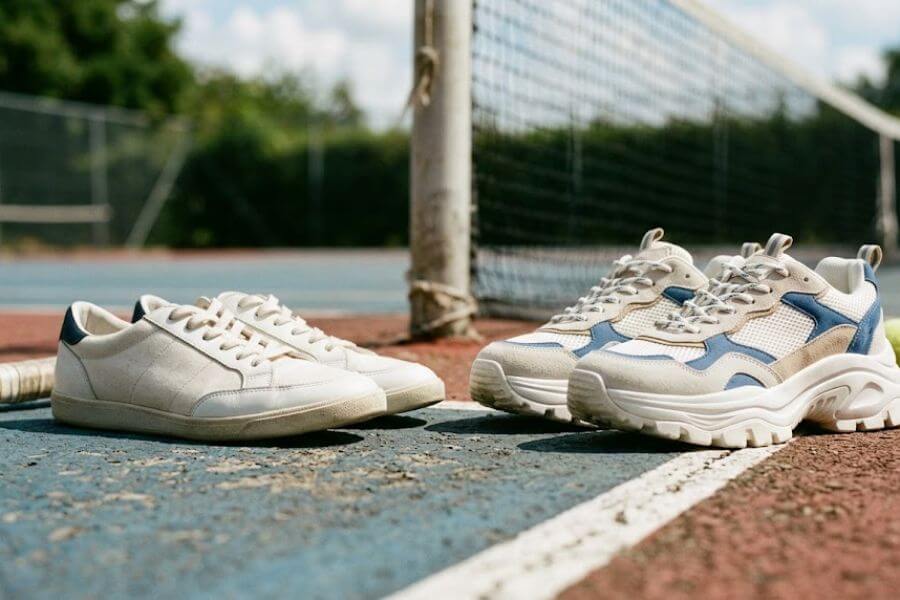
Choosing the right pair of tennis shoes can feel like a daunting task, especially with so many styles hitting the shelves. Two of the most popular styles you will come across are low-profile and chunky tennis shoes. While they both look great, they serve very different purposes when it comes to comfort, performance, and everyday style. Understanding the core differences between these two designs will help you make the best choice for your feet, whether you are heading to the tennis court or just running weekend errands.
Quick Summary Table
| Feature | Low-Profile Tennis Shoes | Chunky Tennis Shoes |
| Sole Thickness | Thin and flat | Thick and oversized |
| Weight | Very lightweight | Heavier and substantial |
| Ground Feel | High (close to the ground) | Low (highly elevated) |
| Cushioning | Minimal and firm | Maximum and plush |
| Best For | Agility, quick cuts, minimalist style | Long-term comfort, impact absorption, bold fashion |
| Ankle Support | Moderate (relies on natural movement) | High (due to wide, stable base) |
| Flexibility | Highly flexible | Stiff and rigid |
How We Ranked These
To bring you the most accurate comparison, we evaluated both shoe styles based on real-world usage, athletic performance, and daily comfort. We focused on the key factors that actually impact how a shoe feels and performs on a daily basis. Here are the main elements we used to rank the differences:
- Sole thickness and overall stack height
- Weight and ease of movement
- Level of cushioning and shock absorption
- Court performance and agility response
- Style versatility and modern fashion trends
1. Sole Thickness and Height
The most obvious difference you will notice right away is the thickness of the sole. Low-profile tennis shoes feature a thin, flat sole that keeps your feet close to the ground for a natural feel. Chunky tennis shoes, on the other hand, boast massive, oversized midsoles that add noticeable height and a thick barrier between your feet and the pavement.
2. Weight and Portability
Weight plays a massive role in how tired your legs feel at the end of the day. Low-profile shoes use minimal materials, making them incredibly lightweight and easy to pack in a gym bag. Chunky sneakers use dense layers of foam and rubber, which adds extra weight and makes them feel much heavier on your feet during long walks.
3. Cushioning and Shock Absorption
If you love a soft, walking-on-clouds sensation, the amount of cushioning is a major deciding factor. Chunky tennis shoes are packed with plush foam that absorbs heavy impacts, making them excellent for standing on hard surfaces for hours. Low-profile shoes offer firm, minimal padding, which gives you less impact protection but prevents that mushy, sinking feeling.
4. Court Agility and Ground Feel
When it comes to actual sports performance, being close to the ground changes how you move. Low-profile shoes excel on the tennis court because they give you excellent ground feel, allowing you to make quick cuts, sharp turns, and sudden stops without rolling your ankle. Chunky shoes lack this sharp responsiveness because the high platform reduces your connection to the surface beneath you.
5. Flexibility and Foot Movement
Your feet naturally want to bend and flex as you step, and your shoe choice dictates how much freedom they get. Low-profile designs are highly flexible, bending easily with the natural motion of your foot to build strength over time. Chunky shoes are much more rigid and stiff, forcing your foot to roll forward in a rocking motion rather than bending naturally.
6. Fashion Style and Versatility
The way these shoes look determines how you can style them with your daily wardrobe. Low-profile tennis shoes offer a classic, timeless aesthetic that cleanly matches almost any outfit, from casual shorts to sleek jeans. Chunky tennis shoes lean heavily into the bold, retro streetwear trend, making a loud fashion statement that commands attention.
7. Durability and Wear Resistance
Because they are built with different amounts of material, these shoes wear down in different ways. Chunky shoes have extra rubber on the outsole, meaning it takes a long time to wear completely through the bottom of the shoe. Low-profile shoes have much thinner rubber outsoles, which can wear thin faster if you constantly scrape your feet on rough concrete or tennis courts.
Conclusion
In the end, choosing between low-profile and chunky tennis shoes comes down to what you value most. If you want a lightweight, flexible shoe that keeps you agile and offers a classic look, a low-profile is your best bet. If you prefer maximum comfort, heavy shock absorption, and a bold fashion look, the chunky style will serve you well. Think about your daily activities and pick the pair that matches your lifestyle best.
Frequently Asked Questions
Which style is better for people with lower back pain?
Chunky tennis shoes are generally better for lower back pain because their thick midsoles absorb a lot of the shock generated when your feet hit the ground. This extra padding prevents the impact from traveling up your legs and into your spine, which can reduce soreness after walking.
Can I safely run long distances in low-profile tennis shoes?
It depends on your experience, but most people should avoid long-distance running in traditional low-profile tennis shoes because they lack the specific forward-rolling geometry and specialized foam needed for running. Doing so without proper training can strain your calves and Achilles tendons due to the lack of heel cushioning.
Do chunky tennis shoes make your feet sweat more?
Yes, chunky tennis shoes often cause your feet to sweat more because the thick layers of foam and extra upper materials retain more heat. Low-profile shoes typically use thinner fabrics and less insulation, allowing air to circulate more freely to keep your feet cool.
Are low-profile tennis shoes safe for individuals with flat feet?
Low-profile shoes can be tough for individuals with flat feet if the shoes lack built-in arch support, as the flat design offers very little structure. If you have flat feet and want to wear low-profile shoes, you may need to add a supportive orthotic insert to prevent foot fatigue.
How do I clean chunky tennis shoes without ruining the thick soles?
The best way to clean chunky shoes is to scrub the thick midsoles using a soft-bristled brush dipped in warm water mixed with a few drops of dish soap. Avoid soaking the entire shoe in water, as excessive moisture can trap water inside the deep foam layers and cause the glue to break down over time.