Key Takeaways
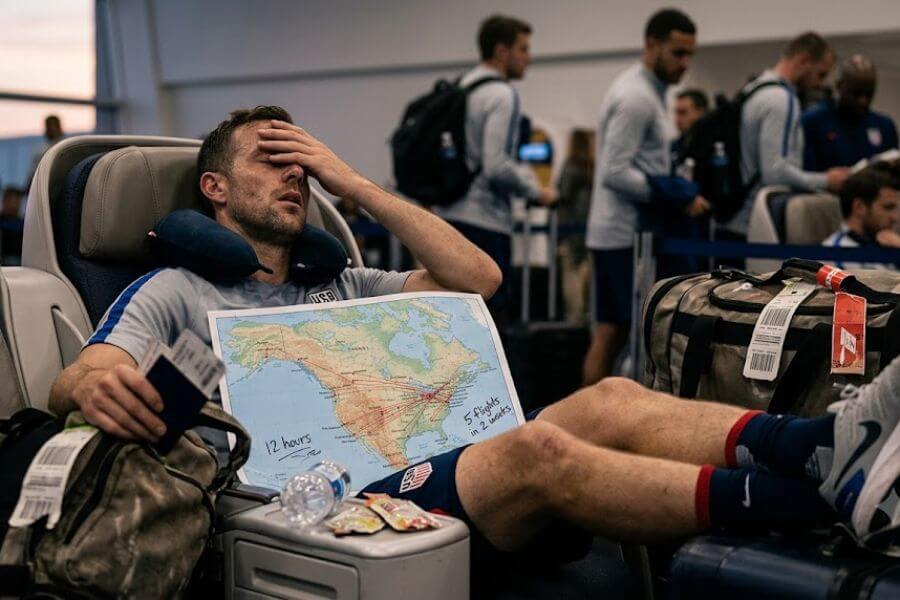
The 2026 World Cup breaks all historical records with forty-eight teams playing across three massive nations, Canada, Mexico, and the United States. While the tournament promises grand entertainment, the incredible travel distances are emerging as a silent opponent for the athletes. Teams are facing extreme cross-country flights, sudden shifts in time zones, and wild changes in climate that push human physical recovery to its absolute edge. Success will depend not just on soccer skills, but on how well sports scientists can combat jet lag, muscle fatigue, and exhaustion.
A New Kind of World Cup Challenge
Imagine running for ninety minutes in the heavy, wet heat of Miami. Your muscles burn, your lungs scream for air, and your heart thumps against your ribs. You give everything you have to secure a vital win for your country. The match ends, but your true struggle is just starting. Within a few hours, you must pack your gear, board a private jet, and fly thousands of miles across a continent. When the plane touches down, you find yourself in the cool, rain-swept Pacific Northwest, where the local clocks show a three-hour time difference. Your body thinks it is the middle of the night, but you must head straight to a training pitch to prepare for another high-stakes match.
This scenario is the new reality for athletes in the 2026 World Cup. For decades, the greatest sporting event on earth took place in single countries with compact borders. In tournaments hosted by nations like Germany, South Africa, or Qatar, teams could jump on a short bus ride or a quick domestic flight and arrive at their next stadium in less than an hour. The 2026 edition changes the rules completely. By spreading matches across three giant nations, FIFA has created a tournament where the geography itself is an active opponent.
You are looking at a competitive landscape where travel logistics matter just as much as tactical setups. The teams that hoist the trophy at the end of this exhausting journey will be the ones that survive the physical tax of endless flights, shifting time zones, and extreme weather changes.
The Scale of the Three-Nation Map
To truly understand why this tournament is pushing teams to the limit, you have to look at the sheer scale of the North American continent. The 2026 matches are taking place in sixteen host cities divided into three giant regions, the East Coast, the Central Plains, and the West Coast. This design sounds organized on paper, but the actual distances between these cities are staggering when compared to past tournaments.
In previous decades, a world championship was a localized festival. Teams could set up one base camp, stay in the same hotel rooms for a month, and maintain a strict daily routine. In 2026, the distance from Vancouver on the west coast of Canada to Miami on the southeastern tip of the United States is more than three thousand miles. That single journey takes longer than flying from London to Dubai.
The expansion to forty-eight teams means there are more matches, more venues, and far more movement. Some groups require teams to zigzag back and forth across national borders, racking up thousands of air miles before they even reach the knockout rounds. The physical strain accumulates with every hour spent sitting in a pressurized airplane cabin, making traditional rest impossible.
The Hardest Routes in the Group Stage
Not all teams are dealing with the same travel burdens during the opening round of the tournament. The luck of the draw and the schedule design mean that certain nations face a brutal traveling circus, while others get to stay relatively stationary. Looking at the distance data reveals a massive gap between the most traveled and least traveled squads.
Nations like Algeria, Bosnia and Herzegovina, and the Czech Republic have drawn schedules that require them to fly thousands of miles between their group matches. These teams must constantly pack up their operations, adjust to new hotels, and spend precious recovery hours in the sky. For these athletes, the tournament feels like an endless cycle of boarding planes, clearing customs, and trying to stretch stiff legs in hotel lobbies.
On the other side of the ledger, a few fortunate teams have hit the jackpot with highly localized schedules. Teams like Egypt, Paraguay, and France are playing their opening matches in tightly clustered geographic zones, requiring very little movement between games. This imbalance creates an uneven playing field before the referee even blows the whistle to start a match.
Group Stage Travel Distance Comparison
The table below highlights the dramatic differences in travel requirements for select teams during the group phase of the tournament.
| Nation Men’s Team | Total Group Stage Travel Distance (Kilometers) | Total Group Stage Travel Distance (Miles) |
| Algeria | 5,936 km | 3,688 mi |
| Bosnia and Herzegovina | 5,898 km | 3,665 mi |
| Czech Republic | 5,603 km | 3,481 mi |
| South Africa | 4,818 km | 2,994 mi |
| Canada | 4,359 km | 2,709 mi |
| DR Congo | 4,354 km | 2,705 mi |
| Belgium | 3,897 km | 2,421 mi |
| United States | 3,670 km | 2,280 mi |
| England | 3,181 km | 1,976 mi |
| Senegal | 482 km | 776 mi |
| Panama | 464 km | 746 mi |
| Norway | 426 km | 686 mi |
| France | 397 km | 639 mi |
| Paraguay | 351 km | 565 mi |
| Egypt | 287 km | 462 mi |
The Hidden Science of Travel Fatigue
You might wonder why a short flight on a luxury private jet can cause so much damage to an elite athlete. After all, these are millionaire soccer stars who fly frequently for their club teams. The reality is that the human body does not care about the price of a plane ticket. High-performance athletic output requires perfect internal balance, and long-range travel destroys that balance in several specific ways.
First, airplane cabins have very low humidity levels. The dry air causes rapid dehydration, drying out the airways and thickening the blood. When an athlete is dehydrated, their muscles lose elasticity, making them much more susceptible to pulls, tears, and strains during explosive sprints.
Second, sitting in a confined space for hours causes fluid to pool in the lower legs. This pooling leads to stiffness in the ankles and calves, reducing joint mobility. An elite soccer player relies on micro-adjustments in their feet and ankles to control the ball and change direction. A small amount of travel stiffness can be the difference between a perfect pass and a costly turnover.
Finally, the physical pressure of flying slows down cellular recovery. After an intense match, muscle tissues are full of micro-tears that need fresh, oxygen-rich blood flow to heal. Spending the day after a game on a plane slows down this natural healing process, forcing players into their next match with muscles that are still damaged from the last one.
The Battle Against Shifting Time Zones
Crossing borders across North America does not just mean changing scenery, it means constantly resetting your watch. The 2026 host cities stretch across multiple distinct time zones, including Pacific, Mountain, Central, and Eastern times. Moving between these zones wreaks havoc on the internal biological clock of the players.
The human body operates on a natural daily rhythm that controls hormone release, body temperature, and sleep cycles. When a team flies from Los Angeles to New York, they jump forward three hours. Suddenly, players are expected to fall asleep when their brains think it is late afternoon, and they must wake up when their bodies think they should be in deep sleep.
Disrupted sleep cycles lead to a massive drop in mental focus and physical reaction times. In a fast-paced game like soccer, a split-second delay in thought can ruin an offside trap or cause a defender to miss a crucial tackle. Teams that cannot manage jet lag will find themselves lagging behind on the pitch, vulnerable to sharp opponents who are better adjusted to the local time.
Surviving the Extreme Weather Wildcards
As if the distances and time zones were not enough, the 2026 map forces teams to confront incredibly diverse environmental conditions. You are looking at a tournament where a team might play in a chilly, overcast coastal city one week, and a blistering hot, humid southern venue the next.
In places like Miami, Houston, and Monterrey, the summer heat can easily climb past ninety-five degrees Fahrenheit, accompanied by oppressive humidity that makes the air feel like a thick blanket. Players sweat profusely in these environments, losing vital electrolytes and draining their energy stores in a matter of minutes. High-intensity pressing styles of soccer become incredibly dangerous to sustain under these conditions.
Conversely, venues like Seattle, San Francisco, and Vancouver offer much cooler, milder climates. While this cooler weather is generally better for physical performance, moving rapidly between these distinct climates places a massive stress on the human immune system. The sudden changes make players vulnerable to respiratory bugs, headaches, and physical sluggishness.
Climate and Environment Breakdown by Venue
The table below outlines the diverse environmental conditions that players must navigate as they move from city to city.
| Host City | Region | Summer Climate Condition | Major Environmental Challenge |
| Mexico City | South | Mild, High Altitude | Thin Air, Low Oxygen Levels |
| Monterrey | South | Extremely Hot, Humid | Rapid Dehydration, Heat Stroke |
| Miami | East | Hot, Very Humid | Heavy Sweating, Intense Exhaustion |
| Houston | Central | Hot, Humid | Severe Physical Fluid Loss |
| Dallas | Central | Hot, Indoor Stadium | Artificial Turf, Climate-Controlled Air |
| Atlanta | Central | Hot, Indoor Stadium | Rapid Transition from Outdoor Air |
| Kansas City | Central | Warm to Hot | Variable Summer Weather Fronts |
| New York / NJ | East | Warm, Humid | High Moisture Content in Air |
| Philadelphia | East | Warm, Humid | Unpredictable Heavy Summer Storms |
| Boston | East | Warm, Pleasant | Temperature Swings Between Day and Night |
| Toronto | East | Warm, Mild | Changing Wind Patterns Near Lake |
| San Francisco | West | Mild, Cool | Cool Evening Temperatures, Coastal Winds |
| Los Angeles | West | Warm, Dry | Dry Air, Harder Artificial Pitch Impact |
| Seattle | West | Mild, Overcast | High Moisture, Cooler Temperatures |
| Vancouver | West | Mild, Cool | Indoor Environment with Damp Coastal Air |
| Guadalajara | South | Warm, Rainy | High Pitch Moisture, High Altitude |
The Thin Air of High-Altitude Venues
The ultimate environmental test of this World Cup takes place when teams travel south into Mexico. Venues like Guadalajara and especially Mexico City sit thousands of feet above sea level. Estadio Azteca in Mexico City rests at an altitude of over seven thousand two hundred feet, an elevation that changes the physics of human performance entirely.
At high altitudes, the atmospheric pressure is lower, meaning there are fewer oxygen molecules in each breath of air. When athletes run at this elevation, their lungs cannot deliver oxygen to their muscles at the normal rate. The body quickly enters an oxygen deficit, leading to a massive buildup of lactic acid, rapid fatigue, and a sensation of suffocating during intense sprints.
Adapting to high altitude normally requires weeks of living and training in thin air, allowing the body to produce more red blood cells. However, the tight schedule of the 2026 World Cup does not allow for long adaptation periods. Teams must fly in, play their match, and fly out. This hit-and-run approach means players will be gasping for breath, relying heavily on substitutes and defensive tactics to survive the ninety minutes.
The Base Camp Conundrum
To deal with these immense logistical challenges, teams had to make a critical choice when selecting their official Team Base Camp training sites. FIFA finalized a footprint of forty-eight base camps spread across North America, with thirty-nine in the United States, seven in Mexico, and two in Canada. Where a team decided to set up its home away from home will play a huge role in its ultimate success or failure.
Some nations chose to place their base camps right in the middle of the continent to make flights to any city as short as possible. For instance, Algeria, Argentina, England, and the Netherlands all chose training facilities in the greater Kansas City area. This central hub strategy means they never have to endure a massive five-hour cross-country flight to reach the coasts.
Other teams decided to prioritize specific environmental conditions over travel times. South Africa set up their camp in Pachuca, Mexico, embracing a high-elevation base camp at nearly eight thousand feet to ensure their lungs are perfectly adapted to the thin air of the southern stadiums. Meanwhile, nations like France and Germany chose base camps on the East Coast, keeping themselves close to European time zones to minimize early tournament jet lag.
Selected Base Camp Strategies
- Central Hub Strategy: Teams like England and Argentina are using Kansas City as a geographic anchor, keeping flights uniform and avoiding extreme coast-to-coast travel.
- Altitude Adaptation Strategy: South Africa is staying in high-altitude Mexican facilities to build up red blood cells and dominate matches played in thin air.
- Climate Familiarity Strategy: Portugal and Brazil chose warm, humid camps in Florida and New Jersey to keep their bodies primed for the hot summer matches in the eastern and southern regions.
The Brutal Impact on Tactics and Style
The physical exhaustion caused by endless travel will inevitably bleed onto the pitch, altering how the actual games are played. Modern soccer is dominated by high-intensity tactics, such as aggressive pressing, rapid counter-attacks, and constant off-the-ball running. To execute these systems, players must be at one hundred percent physical capacity.
As the tournament progresses into the late knockout rounds, you will likely see a tactical shift away from these high-energy styles. Coaches will realize that their players simply do not have the fuel tanks to press high up the pitch for ninety minutes after crossing three time zones.
Instead, expect to see more conservative, defensive game plans. Teams will likely drop into compact defensive shapes, conserve their energy, and wait for specific moments to strike on the counter-attack. The pace of the games might slow down significantly during the second half of matches, turning football into a chess match of survival rather than a showcase of non-stop athletic power.
The Rise of the Secret Support Staff
With the players pushed to their absolute limits, the true heroes of the 2026 World Cup might be the people wearing lab coats and tracksuits behind the scenes. The support staff, including sports scientists, nutritionists, physiotherapists, and sleep experts, have become the secret weapons of every national team.
Nations are spending millions of dollars to build mobile recovery labs that travel with the squad. As soon as a match ends, the support staff goes to work, hooking players up to compression boots to stimulate blood flow, handing them customized electrolyte shakes to combat dehydration, and providing specialized light-blocking glasses to help them sleep on night flights.
Nutritionists must meticulously plan every meal to counteract the inflammatory effects of travel, serving antioxidant-rich foods and monitoring hydration levels through daily medical tests. The team that manages these details best will have a massive competitive advantage over squads that rely on outdated recovery methods.
How Travel Inequities Shape the Bracket
The uneven distribution of travel distances creates a massive talking point for fans and analysts alike. In a fair tournament, every team would face similar physical obstacles. In 2026, the luck of the group draws has created clear winners and losers before a single ball is kicked.
A team that travels less than five hundred kilometers in the group stage will enter the round of thirty-two with fresh legs, clear minds, and a normal training routine under their belts. An opponent that had to fly five thousand kilometers across multiple time zones will enter that same match carrying deep physical and mental fatigue.
This travel gap could lead to shocking upsets in the knockout rounds. Underdog nations with favorable travel schedules might run circles around traditional powerhouses that have been worn down by the endless North American flight paths. When you are filling out your tournament bracket, looking at the travel map is just as important as looking at the team rosters.
The Ultimate Test of Mental Resilience
Physical exhaustion is only one half of the coin, the mental toll of this tournament is equally severe. Soccer players are human beings who thrive on routine, comfort, and stability. Spending weeks living out of suitcases, constantly packing and unpacking gear, and waking up in unfamiliar hotel rooms wears down a player’s mental focus.
When you are mentally tired, your decision-making suffers. You lose the patience required to break down a stubborn defense, you get frustrated with referees more easily, and you lose the sharp focus needed to defend set-pieces in the final minutes of a game.
The squads that can maintain a positive, adaptable mindset through these logistical nightmares will have a huge edge. True leadership in the locker room will be about keeping players calm, focused, and positive when flights are delayed, routines are disrupted, and exhaustion sets in. The 2026 World Cup will not just crown the most talented soccer team, it will crown the most resilient group of human beings on the planet.
Frequently Asked Questions
Why does travel distance matter so much for professional soccer players?
Elite soccer requires players to run up to seven miles per match, combining long endurance with hundreds of explosive sprints. Long travel distances cause dehydration, muscle stiffness, and sleep loss, which slow down muscle recovery and increase the risk of injuries. A tired player loses speed and mental focus, directly hurting their performance on the pitch.
How did FIFA try to reduce the travel burden for teams?
FIFA divided the sixteen host cities into three main geographical regions, East, Central, and West. The goal was to keep group stage matches clustered within one region so teams would not have to fly coast-to-coast between games. However, due to stadium availability and schedule design, several teams still face long cross-country flights.
Which teams travel the furthest during the group stage?
Algeria faces the longest journey, traveling 5,936 kilometers across the continent. Bosnia and Herzegovina is right behind them at 5,898 kilometers, followed by the Czech Republic at 5,603 kilometers. These teams must endure massive flights and multiple time zone changes between their opening matches.
Which teams have the shortest travel distances?
Egypt has the most favorable schedule, traveling a mere 287 kilometers during the group stage. Paraguay travels only 351 kilometers, and France covers just 397 kilometers. These teams stay in tight geographic clusters, giving them a huge recovery advantage over highly traveled squads.
How does altitude affect players in venues like Mexico City?
Mexico City sits over 7,200 feet above sea level, where the air is thin and contains less oxygen. When playing at high altitude, an athlete’s body cannot deliver oxygen to muscles efficiently, leading to rapid exhaustion, heavy breathing, and a dangerous buildup of lactic acid.
What are teams doing to combat travel fatigue?
Teams are using advanced sports science, including compression boots to improve blood flow, strict hydration protocols, and customized nutrition plans. Sleep experts also use specialized lighting and travel schedules to help players adapt to new time zones as quickly as possible.