Key Takeaways
- Mandatory three-minute hydration breaks are reshaping the global tournament by splitting the standard ninety-minute game into four distinct tactical quarters.
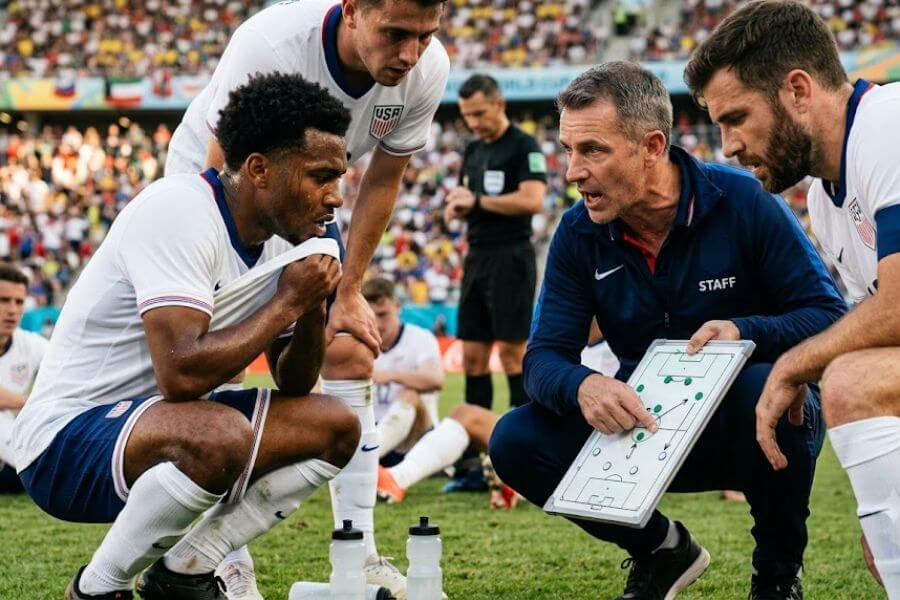
- Sideline bosses now use these mandatory pauses as official timeouts to alter their team setups, using portable computers and tactical boards to correct major errors on the spot.
- The regular rhythm and flow of top-tier matches are deeply affected, allowing struggling defensive setups a rare chance to reset while halting the momentum of fast-flowing, attacking squads.
- Physical energy levels are transforming because high-intensity pressing styles can now be sustained much longer due to the brief cooling periods and predictable physical relief.
- Broadcasters and corporate sponsors are capitalizing on these newly created slots, shifting the cultural landscape of the sport closer to the structured format of North American leagues.
The Dawn of a New Football Era
You step into the stadium, or you sit down in front of your television screen, expecting the traditional spectacle that has defined global soccer for generations. You expect ninety minutes of continuous, flowing drama, broken only by a single fifteen-minute rest period in the middle. Instead, you are witnessing a deep shift in how the most popular game on earth is played, coached, and experienced.
The introduction of mandatory three-minute hydration breaks midway through each half at the World Cup has forever altered the tactical landscape. What was once seen as an occasional medical safety measure for extreme weather is now a permanent fixture of every single match. Whether a game takes place under a scorching midday sun or inside a fully climate-controlled stadium with a closed roof, the referee blows the whistle around the twenty-second minute and the sixty-seventh minute.
This change does not just mean that players are getting a chance to drink water. It means the sport has been quietly split into four quarters. For decades, the beauty of soccer lay in its fluid, unpredictable nature. Managers could shout instructions from the technical area, but their words were often lost in the roar of tens of thousands of fans. Tactics were set before the match and adjusted at halftime.
Now, everything has changed. These brief pauses have become incredibly powerful tactical windows. They allow sideline bosses to alter their systems, calm their players, and break the momentum of their opponents. As you watch your favorite team navigate this new reality, you are seeing a game where data, sudden adjustments, and physical management are fine-tuned in real time.
Shifting From Two Halves to Four Quarters
To truly understand how this rule affects the pitch, you must look at how it alters the psychological and physical flow of a match. For over a century, soccer has been a game of building pressure. One team dominates possession, pins the opponent back in their own defensive third, and waits for mental or physical fatigue to create a gap.
With the new three-minute breaks, that building pressure is automatically interrupted. You can think of it as a reset button that is pushed twice every game. The team that is under immense pressure suddenly gets a guaranteed lifeline. They do not have to hold out until the halftime whistle anymore. They only need to survive for twenty-two minutes at a time.
This reality splits the match into four distinct segments, each with its own rhythm and approach.
The First Quarter: Minutes One to Twenty-Two
In this opening phase, teams usually try to implement their primary game plan. You will notice high energy, aggressive pressing, and an attempt to score an early goal. However, players and managers also play with the knowledge that a pause is coming quickly. Attacking teams push with maximum intensity, knowing they can empty their physical fuel tanks because a rest period is just twenty minutes away. Meanwhile, defending teams focus on staying compact, knowing that if they can keep a clean sheet until the whistle blows, they will get a chance to fix any structural flaws.
The Second Quarter: Minutes Twenty-Three to Forty-Five Plus
Once the first hydration break ends, a completely different game begins. The momentum of the match has been stopped. The team that was dominating must rebuild their rhythm from scratch. The team that was struggling has just received specific instructions on how to close down spaces. This segment often becomes highly tactical, as both sides try to exploit the adjustments made during the three-minute pause. It culminates in the traditional halftime rest, leading into the third phase.
The Third Quarter: Minutes Forty-Six to Sixty-Seven
Similar to the start of the match, the third quarter features a burst of energy as teams emerge from the locker room. But unlike the past, coaches do not have to plan a strategy that lasts for a full forty-five minutes. They only need to map out a twenty-minute burst. You will see teams use high-risk attacking strategies during this window, trying to catch their opponents off guard before the next mandatory whistle arrives.
The Fourth Quarter: Minutes Sixty-Eight to Ninety Plus
This is where tournaments are won and lost. By the time the second cooling break arrives around the sixty-seventh minute, physical exhaustion is setting in, especially in hot host cities. The final pause offers a critical moment for physical recovery and mental focus. Teams aiming to hold onto a narrow lead will use this time to organize a defensive wall, while trailing teams will map out a desperate, all-out attacking plan for the final stages of the match.
The following summary table outlines how these four quarters have redefined the traditional structure of a World Cup match.
Match Structure Comparison
| Quarter | Timeframe | Primary Team Goal | Tactical Characteristic |
| First Quarter | 1′ to 22′ | Establish dominance or survive initial press | High physical output, testing opponent weaknesses |
| Second Quarter | 23′ to HT | Exploit new adjustments made during the break | High tactical structure, slower rebuilding of rhythm |
| Third Quarter | 46′ to 67′ | Launch aggressive attacks or protect a lead | High-risk strategies, short-burst pressing systems |
| Fourth Quarter | 68′ to 90’+ | Close out the victory or launch a comeback | Extreme mental focus, maximum defensive or attacking focus |
The Sideline Turn Into an Official Timeout
If you look closely at the benches during these three-minute breaks, you will see that they look less like traditional soccer huddles and more like timeouts in American football or basketball. The old image of a manager standing quietly on the sideline while players walk away to grab a quick drink is gone. Today, the technical area becomes a hive of intense activity the second the referee blows the whistle.
Coaches have quickly realized that these three minutes are too valuable to waste. They are utilizing the time to pass on deep tactical details that would otherwise have to wait for halftime or the end of the match.
The Rise of Technology on the Grass
You will now regularly see managers pulling out laptops and tablet computers the moment the break begins. They are not just giving motivational speeches; they are showing live video clips. Assistant coaches up in the stadium press box tag key moments of the match in real time and send them down to the sideline.
During the cooling period, players huddle around these screens. A left-back can look at a clip showing exactly how an opposing winger is exploiting a gap in the defensive line. A midfielder can see where the open spaces are in the opponent’s transition block. This instant visual feedback allows for incredibly precise adjustments that were completely impossible in previous generations of the sport.
The Manager as a Chess Player
This setup turns the manager into an active chess player who can influence the board while the game is moving. Consider a scenario where a team is being heavily pressed and cannot pass the ball out from their defensive area. In the past, the manager could only scream at their central defenders, hoping they would hear over the noise of the crowd.
Now, the manager can gather all eleven players into a tight circle. They can redrawn the passing lines on a tactical board, tell the midfielders to drop deeper, and instruct the forward to run into the channels to stretch the opposition. Within three minutes, the entire structural approach of the team is rewritten.
- Immediate Correction: Major defensive errors can be fixed before they lead to a goal.
- Targeted Communication: Coaches can speak directly to individual player units, such as the back four or the front three, simultaneously.
- Emotional Regulation: If a young team is starting to panic under pressure, the manager can use the pause to calm nerves and restore order.
Redefining Energy Management and Pressing
The physical demands of modern soccer are incredibly high. Elite players are expected to sprint thousands of meters, press opponents high up the pitch, and transition from defense to attack at maximum speed. This physical reality has led to the rise of intense pressing systems, where teams hunt for the ball in groups to force turnovers near the opponent’s goal.
However, these intense systems have a major weakness: physical exhaustion. Human bodies can only sustain such high levels of energy output for a limited time before fatigue sets in, leading to tactical errors and gaps in defensive lines.
Fueling the High-Press System
The mandatory three-minute breaks have completely changed the calculations around physical energy expenditure. Because players know they will receive a cooling towel and immediate fluids every twenty minutes, they can press with much higher intensity during the active segments of the match.
You no longer see teams pacing themselves through a long, exhausting forty-five minute half. Instead, they can fly across the grass, secure in the knowledge that a physical reset is just around the corner. This change has increased the overall speed and physical impact of World Cup matches, making the game even more intense for viewers.
The Physiological Reset
During those three minutes, sports scientists and medical staff play a massive role. They do not just hand out water bottles; they utilize specific cooling techniques to lower the core body temperature of the athletes.
- Cold Towels: Placing towels soaked in ice water on the neck and head helps lower body temperature quickly.
- Electrolyte Blends: Customized fluid mixes are given to players based on their individual sweat rates to prevent cramping.
- Muscular Release: Massagers and physical therapists quickly work on players who are showing signs of tightness to ensure they do not pull muscles in the upcoming segment.
This small window of recovery means that when the referee restarts play, the players return to the field at full speed. The drop in performance that traditionally happens around the thirty-fifth minute or the eightieth minute is significantly reduced.
The table below highlights the difference in how teams manage their physical outputs under the old continuous system versus the new quarter-based system.
Energy Management Framework
| Feature | Continuous System (Old) | Quarter-Based System (New) |
| Pressing Duration | Paced bursts to conserve physical energy | Sustained, maximum-intensity pressing blocks |
| Fatigue Onset | Visible decline after thirty minutes of play | Delayed due to regular cooling and rehydration |
| Muscular Cramping | High risk in the final stages of each half | Reduced through immediate electrolyte replacement |
| Tactical Discipline | Drops as physical exhaustion impacts choices | Maintained due to regular mental and physical resets |
Halting Attacking Rhythm and Sustained Momentum
While defensive coaches and sports scientists praise the new rule, attacking players and fans who love fluid soccer are often deeply frustrated. Momentum is a powerful, invisible force in sports. When a team finds its rhythm, passes the ball quickly, and creates chance after chance, they are riding a wave of psychological and tactical dominance.
The new three-minute hydration breaks can be a massive obstacle for an attacking team that is completely on top of its opponent.
Killing the Flow of Domination
Imagine you are watching an underdog struggle against a powerhouse nation. The powerhouse has spent fifteen minutes pinning the underdog inside their own penalty box. The defenders are exhausted, their legs are heavy, and they are starting to make positioning mistakes. A goal feels completely inevitable.
Then, the referee blows his whistle. The hydration break has arrived.
The powerhouse players are furious. Their rhythm is instantly broken. They must walk to the sideline, stand still for three minutes, and let their heart rates drop. Meanwhile, the struggling defenders get to sit down, drink fluids, wipe the sweat from their eyes, and listen to their coach explain exactly how to stop the attack. When play resumes, the wall of pressure has disappeared, and the attacking team must spend another ten minutes trying to build that same level of dominance.
The Art of the Tactical Stoppage
Smart teams have quickly learned how to weaponize these breaks to kill the momentum of their opponents. Even before the referee officially blows the whistle for the cooling pause, players will look at the stadium clock. If they are under heavy pressure around the twentieth minute, they will purposely slow down the game. They will take a long time over throw-ins, delay goal kicks, or stay down a little longer after a tackle, trying to bridge the gap until the mandatory break arrives.
This reality has led to a major debate about whether the rule is punishing teams that play beautiful, attacking, high-tempo soccer while rewarding teams that rely on defensive blocks and time-wasting tactics.
The Broadcaster and Commercial Transformation
It is impossible to discuss modern international sports without looking at the financial realities that drive them. While FIFA has continuously stated that the three-minute hydration breaks were introduced purely for player welfare, the commercial impact of these stoppages cannot be ignored.
For the first time in World Cup history, television networks have been given the explicit right to monetize these mid-half breaks. This decision has completely transformed how the tournament is broadcast to hundreds of millions of homes around the globe.
Soccer Meets North American Commercial Styles
Traditionally, soccer was one of the few sports that resisted the heavy commercialization seen in American leagues like the NFL or NBA. Fans loved the fact that once a half started, there were zero commercial interruptions for forty-five straight minutes. Advertisements were restricted to the pre-game show, halftime, and post-game analysis.
Now, that traditional wall has been broken down. The three-minute pause gives broadcasters roughly two minutes and ten seconds of highly valuable, sellable airtime right in the middle of live match action.
- The Split-Screen Approach: Some networks use a split-screen format, showing the coaches shouting instructions on one side while playing a commercial on the other side.
- Full Commercial Breaks: Other broadcasters cut away completely from the stadium to show full advertisements, returning to the grass just seconds before the referee restarts play.
- Virtual Sponsorships: You will also see digital advertisements superimposed onto the center circle or over the technical areas during the pause, turning the break into a highly profitable billboard.
The Fan Backlash
This shift has created significant anger among traditional soccer purists. Many fans feel that the rule is a Trojan horse designed to bring American-style commercial breaks into global soccer under the guise of medical safety. On social media and in stadiums, supporters complain that the sport is losing its unique identity and feeling more like a corporate product divided into commercial chunks.
However, for television executives and football associations, these breaks represent a massive new revenue stream that is likely here to stay, regardless of fan pushback.
How Different Tactical Systems Adaptation
Every major formation and playing style in soccer reacts differently to the introduction of mandatory hydration breaks. Coaches across the globe have spent months analyzing data to understand how their specific setups can survive and thrive under this rule.
Let us look at how three of the most popular tactical systems are adapting to the four-quarter reality.
The Possession-Based Style (Tiki-Taka)
Teams that rely on keeping the ball and wearing down opponents through endless passing networks face a major challenge with this rule. Their entire philosophy is built on sustained control. They want to tire out the opponent’s defensive block over a long period.
Because the breaks offer the opposition a physical and mental reset every twenty minutes, possession-heavy teams are finding it much harder to break down stubborn defensive walls. To adapt, these teams are becoming more aggressive in the final third of the field. You will see them take more risks and cross the ball more often in the minutes leading up to a break, trying to get their goal before the opponent can reorganize.
The Counter-Attacking Style
For teams that love to sit deep, absorb pressure, and strike rapidly on the counter-attack, the hydration breaks are a massive benefit. These squads spent a lot of energy running without the ball, which is incredibly exhausting.
The three-minute pauses give counter-attacking sides the exact recovery windows they need to maintain their discipline. Their players can work incredibly hard for twenty minutes, knowing they will get a chance to catch their breath and realign their defensive lines. This reality has made underdogs much more competitive in this tournament, as they can maintain a compact shape for the full ninety minutes without collapsing from physical exhaustion.
The High-Press System (Gegenpressing)
As discussed earlier, high-pressing teams are using the breaks to fuel their aggressive style. However, they must also be incredibly careful. If a high-pressing team fails to win the ball and score during a twenty-minute segment, the break allows the opponent to adjust their buildup play to escape the press.
Therefore, pressing managers are using a rotating strategy. They will press with absolute ferocity for the first fifteen minutes of a quarter, and then drop into a medium block for the final seven minutes before the break, protecting their energy levels while waiting for the timeout to reset.
The comparison table below details how these various tactical systems have adjusted to the implementation of the three-minute breaks.
Tactical System Adjustments
| Tactical Style | Main Vulnerability Under New Rule | Required Tactical Adaptation | Overall Impact on Success |
| Possession-Based | Opponents get regular defensive resets | Increased risk-taking and direct attacking plays | Negative impact on breaking down low blocks |
| Counter-Attacking | Must rebuild defensive focus after each break | Deep structural drills during the three-minute pause | Highly positive impact on staying competitive |
| High-Press System | Opponents can watch video to bypass the press | Rotating intensity levels during active play | Balanced impact, allows for higher short-term output |
The Impact on Squad Depth and Substitutions
The reality of playing a World Cup divided into quarters extends far beyond the eleven players on the field. It has completely altered how managers look at their entire twenty-six man squad and how they plan their substitutions during a match.
In the past, substitutions were highly predictable. A manager would usually make their first change around the sixtieth minute, a second around the seventy-fifth minute, and a final change near the end to waste time or protect a result.
The Strategic Substitute
With the hydration breaks occurring around the twenty-second and sixty-seventh minutes, the timing of substitutions has shifted completely. The second break happens at the exact moment when managers are looking to make changes.
Instead of waiting for a stoppage in play or sending a player out to warm up while the game is moving, coaches are now using the sixty-seventh minute hydration break to make multiple substitutions at once. This choice allows the incoming players to stand with the manager during the timeout, receive detailed tactical instructions on a screen, and enter the field perfectly integrated into the system.
- No Transition Friction: Substitutes enter the game without the usual confusion about who they are marking or where they should stand.
- Instant Impact: Fresh players can immediately execute a new tactical plan at full physical speed.
- Maximizing Freshness: Managers can target specific exhausted positions, such as wing-backs, right at the break to maintain high-intensity running.
The Value of Versatile Squad Players
Because tactics can change radically during a match thanks to the sideline timeouts, managers now value versatile players more than ever before. You need players who can start the match in a four-four-two formation, move into a three-five-two after the first hydration break, and finish the game in a defensive five-four-one system.
A player who can only play one specific role is becoming a luxury that many World Cup squads cannot afford. The bench is no longer just a collection of backup options; it is a tactical toolbox used to reshape the quarters of a match.
Frequently Asked Questions
What exactly is the new World Cup hydration break rule?
The rule is a mandatory three-minute stoppage in play that occurs midway through each half of every single match during the tournament. The referee will blow the whistle to pause the game around the twenty-second minute of the first half and around the sixty-seventh minute of the second half. During this time, players gather near their respective bench areas to consume fluids, use cooling towels, and speak with their coaching staff.
Is this cooling break used in every single match regardless of the weather?
Yes. Unlike previous versions of the rule where breaks were only called if weather and humidity reached dangerous levels, the current rule states that the breaks must take place in all one hundred and four matches of the tournament. This requirement applies even if a game is being played in cold weather, during an evening kickoff, or inside a fully enclosed stadium with advanced climate-control and cooling systems.
Does the clock stop during the three-minute hydration break?
No, the stadium clock does not stop when the referee pauses the game for the players to drink water. The time continues to run, and the full three minutes of the break are tracked by the fourth official. This lost time is then added back onto the end of the respective half as part of the total stoppage time, which is why matches in this tournament often feature very long periods of added time.
How are football managers utilizing these breaks to change their tactics?
Managers are treating these three-minute pauses exactly like an official timeout in basketball or American football. They gather all eleven players together and use portable computers, tablet screens, and traditional tactical boards to show live video clips and diagrams. This setup allows them to change formations, fix defensive mistakes, and give specific instructions to individual players right in the middle of a half.
Why are some players and football fans criticizing this rule change?
Critics argue that the mandatory breaks completely destroy the natural rhythm and continuous flow that makes soccer special. Attacking players are frustrated because the pause can instantly kill their momentum when they are dominating an opponent. Fans are also deeply unhappy because television networks are using the three-minute windows to broadcast commercial advertisements, making the sport feel more like a corporate, quarter-based entertainment product.
Does the hydration break rule benefit defending teams or attacking teams more?
Generally, the rule offers a massive advantage to defending teams and underdogs. When a team is under sustained pressure and running out of physical energy, the hydration break provides a guaranteed lifeline to rest, recover, and receive tactical help from their coach. Attacking teams that rely on wearing down an opponent through continuous speed and possession find their efforts interrupted by the mandatory pause.
Can coaches make player substitutions during the three-minute hydration break?
Yes, managers are fully allowed to make substitutions during the cooling periods. In fact, many coaches prefer to make their changes at this exact moment, particularly during the second-half break around the sixty-seventh minute. It allows the new player to stand with the coaching staff, look at the tactical screens, and completely understand their role before stepping onto the grass.