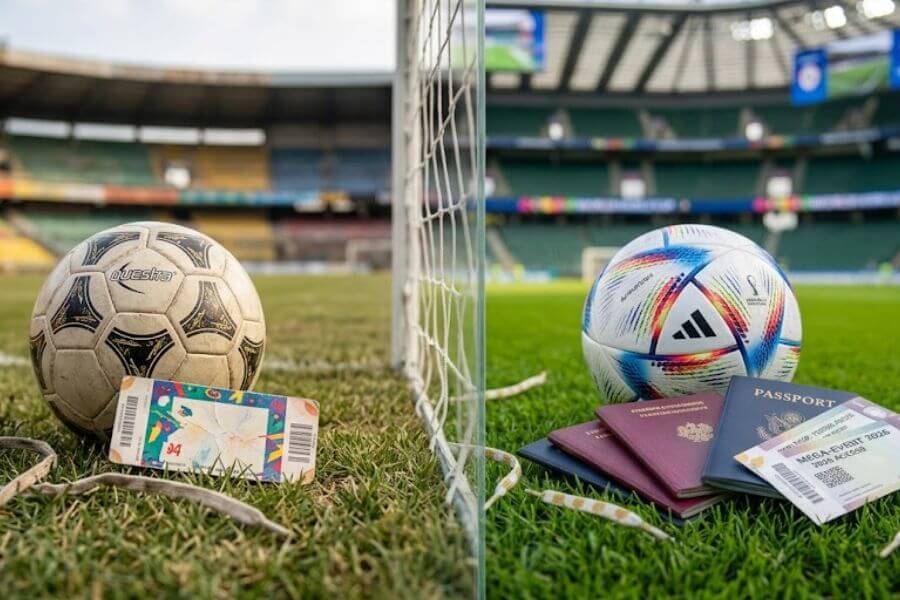
If you love soccer, you know that the story of the sport in the United States has two major chapters that define everything else. The first is 1994, when the world came to visit and discovered that America was more than just football with helmets and pads. The second is 2026, the moment when the nation fully embraces the global stage as a massive, multi-city host. You might wonder how a tournament featuring 24 teams in one country compares to a spectacle involving 48 teams across three massive nations. The jump in scale is truly incredible. While 1994 was about proving that the United States could host a tournament without any major issues, 2026 is about showing how far the culture has come. Today, soccer is part of the daily conversation, and this upcoming event is set to be the biggest sports production in human history.
The 1994 Experience: A High Stakes Gamble
In the early nineties, many people doubted whether soccer could truly catch on in the United States. The sport lacked the massive television presence it enjoys today. When the United States won the bid to host the 1994 World Cup, the pressure was immense. The governing body of world soccer needed to prove that the country could handle the logistics, the fans, and the heat.
The Atmosphere of the Mid-Nineties
The feeling back then was very different from now. You had to search for match updates in the newspaper or catch snippets on the nightly news. There were no smartphones to stream highlights or follow social media debates. It felt like a secret that was slowly being shared with the American public. Stadiums were largely borrowed from college or professional American football teams, leading to turf issues and massive distances between venues. Yet, the energy was pure. For many Americans, this was their first real look at the beautiful game played at the highest level.
Infrastructure and Travel Challenges
Traveling in 1994 was a test of endurance. Fans had to fly across the country for matches, dealing with outdated airport systems and limited public transit options for stadium access. It was a tournament built on the existing bones of American sports infrastructure. Because the sport was not yet deeply integrated into the culture, many fans were still learning the rules of the game. Despite these hurdles, the average attendance records set in that tournament remained the gold standard for many years, proving that the American audience was ready to show up if the product was right.
Comparing the Scope: From 24 Teams to 48
The most immediate change you will notice when you look at the two events is the shear size of the field. In 1994, only 24 nations fought for the trophy. This made every match feel like a playoff game. By contrast, the 2026 tournament will feature 48 teams. This change alters the entire flow of the tournament.
| Feature | 1994 World Cup | 2026 World Cup |
| Participating Teams | 24 | 48 |
| Host Countries | 1 (USA) | 3 (USA, Canada, Mexico) |
| Total Matches | 52 | 104 |
| Group Stage Format | 3 matches per team | 3 matches per team (expanded) |
| Impact on Soccer Culture | Foundational | Established |
The Logic Behind the Expansion
You might ask why the tournament needs to get so much bigger. The answer is growth. By expanding to 48 teams, more nations get a chance to compete on the world stage. This means more fans from different corners of the planet get to see their flags flying. For the hosts, it means a longer, more drawn-out celebration that touches more cities and engages more local communities. It is a shift from a short, intense explosion of soccer to a month-long global festival that dominates the cultural calendar.
The Cultural Shift: Then vs. Now
Think about how you consume sports today. You likely have a favorite European club, you track your fantasy league, and you watch matches on your tablet while doing other things. This level of immersion did not exist in 1994. The shift in American soccer culture is the most profound difference between the two events.
Growing the Game at Home
In the mid-nineties, the professional league in the United States did not even exist yet. It was only created as a direct result of the momentum from that 1994 tournament. Now, the league is thriving, with stadiums built specifically for soccer, local youth clubs in every town, and a generation of players who grew up watching the sport from the time they could walk. The 2026 event is not about introducing the game; it is about celebrating its arrival as a top-tier sport in America. You are no longer watching an outsider sport; you are watching a home-grown passion.
Technological Changes in the Fan Experience
If you compare the way you will watch the 2026 tournament to how a fan watched in 1994, it will feel like living in two different centuries. Technology has changed everything from how we see the goals to how we buy our snacks.
The Digital Transformation
- Instant access: You can watch any match, anywhere, on any device.
- Data and stats: You can see real-time player tracking and probability models.
- Fan engagement: Social media allows you to react to a goal at the exact moment it happens with millions of others.
- Logistics: Mobile ticketing and ride-sharing apps make getting to the stadium much smoother than the days of paper tickets and stadium parking lot traffic.
In 1994, you were limited by the reach of the camera and the television channel. Today, the event follows you in your pocket. The 2026 experience will be highly personalized. You can choose your camera angles, follow specific players, and join digital communities dedicated to your team. The sense of isolation that a soccer fan might have felt in 1994 is gone.
The Logistics of a Multi-Nation Host
Hosting a tournament across three countries is a massive undertaking. The 1994 event was entirely contained within the borders of the United States. For 2026, the United States will work in tandem with Canada and Mexico. This creates a fascinating blend of different cultures and travel demands.
Coordination Across Borders
The challenge for the organizers is making sure the experience remains consistent, even as fans cross borders and deal with different local regulations. While this sounds difficult, it also provides a unique opportunity. Fans get to experience three distinct styles of hosting. Mexico offers a deep, historic love for the game; Canada brings a growing, energetic scene; and the United States provides the massive, modern venues that can pack in tens of thousands of screaming fans. It turns the tournament into a North American tour rather than just a visit to one country.
Economic Impact and Urban Growth
When you look at the cities that hosted in 1994, many used the event to revitalize their downtown areas and improve their transportation networks. 2026 is poised to do the same, but on a much larger scale. Cities are investing billions into new transit links, stadium upgrades, and fan zones that will serve the public long after the final whistle.
Lasting Legacies
The focus in 2026 is on long-term sustainability. The planners are thinking about how to move millions of people without gridlocking the streets and how to make the stadiums useful for other community events. Unlike 1994, where the focus was just on surviving the month, 2026 is about building infrastructure that helps the cities grow. You will see cleaner stations, better public spaces, and an increased focus on walkable urban centers near the stadiums.
The Global Spotlight and Media Coverage
The media landscape of 1994 was a collection of local papers and major national networks. Today, the world is flat. Every match will be broadcast in dozens of languages, with commentary that caters to every possible fan base. The 2026 tournament will reach billions of screens, making it the most visible event in the history of the sport.
The Reach of the Modern Web
The conversation about the tournament starts years in advance. In 1994, you could miss the start of the tournament if you didn’t see the news on TV. Today, the algorithm will ensure that you cannot avoid the tournament even if you tried. The build-up is part of the experience. Every training session, every squad selection, and every friendly match in the years leading up to 2026 is dissected and debated by experts and fans alike.
Key Takeaways
- Scale: The jump from 24 teams to 48 teams creates a much longer and more intense event compared to the 1994 model.
- Culture: In 1994, the U.S. was learning the sport; in 2026, the U.S. is a mature, enthusiastic soccer nation.
- Tech: Mobile apps, streaming, and high-speed internet have turned the 2026 event into a portable, digital-first experience.
- Infrastructure: While 1994 was about borrowing existing stadiums, 2026 is about leveraging modern, custom-built venues and massive city-wide upgrades.
- Collaboration: Unlike the single-country host of 1994, the 2026 event is a complex, cross-border partnership between the U.S., Canada, and Mexico.
Frequently Asked Questions
Will 2026 be better than 1994?
That depends on what you value. If you prefer the raw, underground feeling of a sport just breaking into the mainstream, you might look back at 1994 with more nostalgia. If you want the absolute highest level of professional production, digital convenience, and a high-energy fan culture, 2026 will likely be the winner.
How do I get tickets for the 2026 event?
Tickets are managed through the official governing body portals. Because the event is so massive and the demand is high, you should sign up for official newsletters and wait-lists as soon as they are announced. Avoid third-party sites that are not authorized, as the security measures for entry will be very strict.
Why are there three countries hosting in 2026?
The scale of a 48-team tournament is so large that spreading the load across three countries makes the logistics more manageable and the cultural impact much wider. It allows more cities to participate and showcases the diversity of the North American continent.
What should I expect in terms of travel?
Traveling for 2026 will require careful planning. Because the host cities are spread out across three countries, you will need to plan for cross-border travel, different currencies, and varying local transit systems. However, the travel experience will be more modern, with better apps to help you navigate between cities and stadiums.
Will the stadiums be different from 1994?
Yes, significantly. In 1994, games were played in large stadiums that were not designed for soccer. For 2026, many of the venues are state-of-the-art facilities with better sight lines, advanced grass technology, and luxury amenities that were simply not available or possible thirty years ago.
How has the fan experience changed since the nineties?
The biggest change is the community. In 1994, you were an individual fan looking for others. In 2026, you will be part of a massive, global movement. Through social media, fan groups, and official fan zones, you are never alone. You can share the match experience with people on the other side of the world, making the atmosphere feel unified and vibrant.