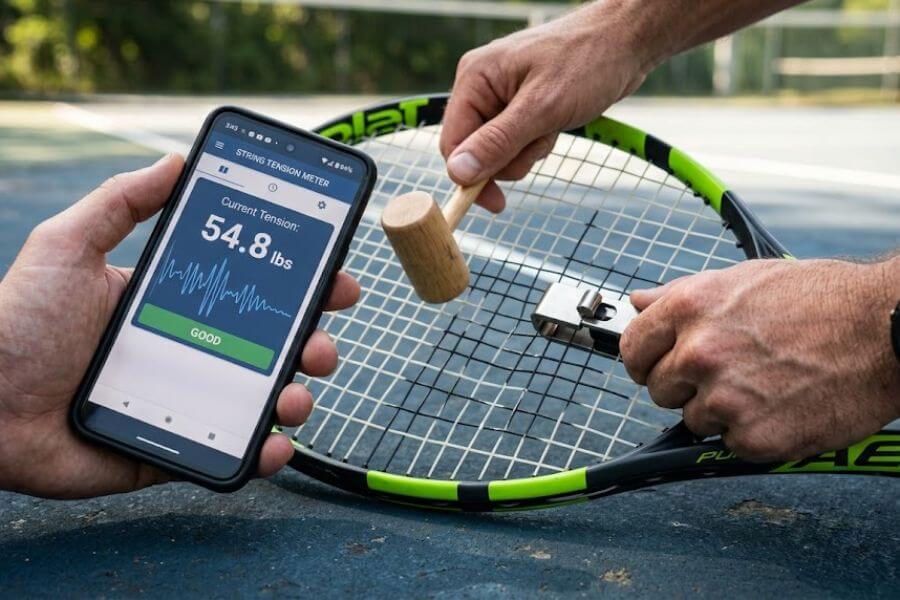
Have you ever wondered if your tennis or badminton racket is losing its snap? Whether you are a professional player or someone who just enjoys a weekend match, string tension is the secret ingredient to a better game. For years, you needed expensive equipment or a trip to a specialty shop to check your tension. Today, your smartphone has become a powerful tool that can help you measure and maintain your strings with incredible accuracy. In this post, we will explore the best tension loss meters and string measuring tools you can use right on your phone to keep your game sharp.
Quick Summary of Top Tools
| Tool Name | Best For | Compatibility | Ease of Use |
| TennisTension | Overall Accuracy | iOS / Android | High |
| Stringster | Quick Diagnostics | iOS / Android | High |
| ERT 300 (App Interface) | Professional Feedback | iOS | Medium |
| RacquetTune | Advanced Analytics | iOS | Medium |
| Tension Pro | Simple Measurements | iOS / Android | Medium |
How We Ranked These
To help you choose the right app, we looked at several key factors that define a great experience for racket sports players. We prioritized apps that are accessible to beginners while providing enough data for serious athletes. Here are the factors we considered:
- Accuracy of the measurement compared to traditional electronic tension machines.
- Ease of the initial setup and the calibration process.
- The clarity of the user interface and how easy it is to read results.
- Consistency in providing repeatable measurements over time.
- The frequency of app updates and developer support for newer phone hardware.
1. TennisTension
TennisTension is widely considered the gold standard for players who want to turn their smartphone into a professional-grade string analyzer. It works by analyzing the frequency of the sound your strings make when you tap them, providing a surprisingly accurate measurement of your current tension. The interface is intuitive, guiding you through the recording process to ensure you get the best possible reading without any background noise interfering. It is a fantastic choice for anyone looking to track how their strings lose tension over time, helping you decide exactly when it is time to get a fresh restringing.
2. Stringster
If you want a tool that is fast, clean, and extremely user-friendly, Stringster is an excellent option for your device. This app excels at giving you a quick “health check” for your racket, making it perfect for use right before a match or during a training session. It tracks your tension loss history, which allows you to visualize how your specific string setup behaves over the life of the racket. The visual feedback is very clear, using simple graphs to show if you are still within your ideal tension range, making it a stress-free way to monitor your equipment.
3. ERT 300 (App Interface)
While the ERT 300 is traditionally a physical device, many players now use its companion app ecosystem to interpret data and manage their string performance. This tool is geared toward those who are a bit more serious about their technical data and want to understand the relationship between string bed stiffness and playability. It provides a deeper look into the performance of your frame, and when paired with mobile data input, it offers one of the most comprehensive analytical views available. It is ideal for players who want to bridge the gap between casual measurement and professional-level racket diagnostics.
4. RacquetTune
RacquetTune is a long-standing favorite in the tennis community for its robust features and reliable measurement capabilities. It is designed for users who want to dive deep into the physics of their racket, offering detailed reports that go beyond just basic tension numbers. You can input various string types and tensions to compare how different setups change the way your racket feels on the court. While it has a slightly steeper learning curve than some of the other options on this list, the level of control and information it provides is unmatched for those who love to tinker with their gear.
5. Tension Pro
Tension Pro is a straightforward and effective tool for those who do not want to deal with complex settings or overwhelming data. It focuses on the core task of measuring string bed stiffness and delivering a clear, readable number to your screen. Because it is so lightweight and simple to operate, it is perfect for casual players who just want to make sure their racket feels the same way every time they step onto the court. It gets the job done quickly and reliably, allowing you to spend less time managing your equipment and more time playing the game you love.
Conclusion
Keeping your racket strings in top condition does not have to be a complicated or expensive task. By using these smartphone tools, you can easily track tension loss, understand your playing preferences, and make informed decisions about your gear. Whether you choose a simple app for quick checks or a more analytical platform for detailed statistics, you are taking a great step toward improving your performance. Pick one of these top-rated apps, give it a try on your court, and enjoy the confidence that comes with a perfectly tuned racket.
Frequently Asked Questions
Do these apps work with any type of racket?
Most of these apps are designed for tennis rackets, but many can be adapted for squash, racquetball, or badminton rackets by adjusting the settings to match the frame size and string pattern.
Do I need a quiet environment to get an accurate reading?
Yes, because these apps rely on the sound produced by your strings, minimizing background noise will significantly improve the accuracy of your tension measurements.
Can I use these apps if I have never measured tension before?
Absolutely, most of these apps include built-in tutorials and simple “how-to” guides that make the process very easy for beginners to follow.
How often should I check my string tension?
It is a good idea to check your tension every few weeks if you play regularly, or whenever your racket starts to feel noticeably different during your swings.
Will these apps damage my strings or racket frame?
No, these tools are completely non-invasive and work by recording sound, so there is no risk of physical damage to your equipment.