Key Takeaways: The New Era of Football Media
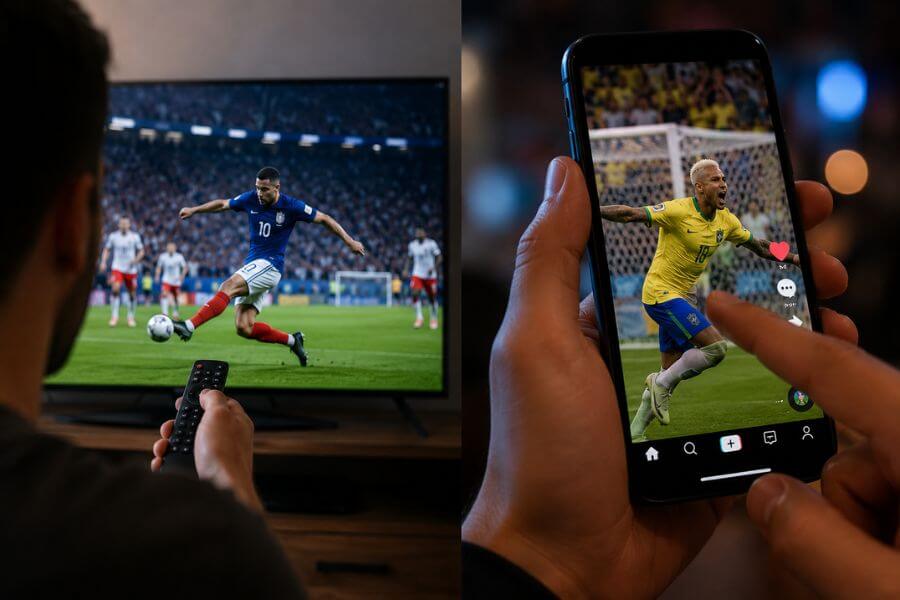
When you watch a World Cup match today, your eyes are no longer locked onto a giant screen in your living room. The way you consume the biggest sporting event on earth has completely shifted.
- Attention has fractured: Traditional television still holds the crown for live, full-length matches, but social platforms now dictate the cultural conversation after the final whistle.
- The rise of vertical video: TikTok has transformed football highlights from a passive viewing experience into an active, creative, and highly personal routine.
- Speed over production: You no longer want to wait for the late-night television highlight show when a creator can upload a tactical breakdown or a funny fan reaction three minutes after a goal.
- A hybrid future: The ultimate winner is not one single platform, but rather your own custom viewing habits that blend the high-definition beauty of television with the raw energy of social apps.
Introduction: Your Changing Living Room
Imagine sitting on your couch during a World Cup final. The tension is high, the stadium is roaring, and a striker runs toward the goal. Twenty years ago, your entire world at that moment was bounded by the four corners of your television set. If you missed a brilliant pass or a red card, you had to wait for the official broadcast replay. You relied completely on a single camera angle and two commentators chosen by a major network.
Today, your phone is likely already in your hand before the ball even hits the back of the net.
The modern World Cup is a multi-screen experience. While the live match plays out on a massive television screen, a completely different version of the tournament unfolds on your phone. This is the battle between traditional television networks and TikTok, a platform built on short, vertical videos and lightning-fast pacing.
This shift is not just about where you watch the games. It is about how you experience the joy, the heartbreak, and the community of global football. The landscape of sports media has changed forever, and you are right in the middle of it.
The Television Tradition: The Gold Standard of Broadcasting
For decades, television has been the holy grail of sports entertainment. It is the medium that turned the World Cup from a simple tournament into a global holiday. When you tune into a network broadcast, you are paying for premium quality that has taken nearly a century to perfect.
The Power of High-Definition Production
Television networks invest millions of dollars into their World Cup coverage. When you watch on a big screen, you see the game through thirty different high-definition cameras. You get ultra-slow-motion replays that show the exact moment a boot makes contact with the ball. You see the sweat on a manager’s face and the spin of the grass under a sliding tackle.
This level of production creates a sense of grand scale. It makes the World Cup feel like a cinematic event, a monument of human achievement that demands your full, undivided attention.
The Role of Expert Commentary
On television, you are guided by professionals. Former players and seasoned journalists sit in expensive studios to break down formations, historical statistics, and tactical adjustments. They provide a structured narrative. They tell you why a specific substitution changed the match in the seventieth minute, using advanced digital on-screen markers to track player movements. For the tactical purist, this detailed analysis is irreplaceable.
The TikTok Revolution: Football in Sixty Seconds
On the other side of the media world stands TikTok. What started as an app for dance trends has quickly become the primary source of football culture for a new generation of fans. It does not try to copy television; instead, it completely breaks all the rules of traditional sports broadcasting.
The Vertical Shift and the Feed
The most obvious change is structural. Television is horizontal, designed to match the wide view of a stadium. TikTok is vertical, designed to fit perfectly into the palm of your hand. This format changes how you view the players. Instead of looking at the whole pitch, you are focused on a single individual, a specific face, or a tight close-up of a skill move.
The TikTok algorithm feeds you content based on your exact interests. If you love a specific underdog team, your feed will not waste time showing you the powerhouse nations. It will give you a non-stop stream of clips dedicated entirely to your favorite players.
Fast Content for Short Attention Spans
On TikTok, a highlight is rarely just a replay of a goal. It is a package of rapid edits, loud music, on-screen text, and voice filters. A three-minute television replay is compressed into a nine-second burst of energy. You see the kick, the net shaking, the player sliding, and a funny meme cut into the video, all before you can even blink. It is designed to capture your attention instantly and never let go.
Side-by-Side: How the Formats Compare
To truly understand how your viewing habits have changed, it helps to look at the practical differences between these two media giants. Each has strengths that appeal to different parts of your brain.
| Feature | Traditional Television | TikTok Platform |
| Screen Orientation | Horizontal widescreen (16:9) | Vertical smartphone (9:16) |
| Video Length | Three to ten minutes per highlight | Five to sixty seconds per clip |
| Primary Creator | Major networks and licensed media | Everyday fans, independent creators, and players |
| Audio Style | Professional commentary and stadium ambient sound | Trending songs, voice-over commentary, and sound effects |
| Speed of Delivery | Scheduled post-match shows or official uploads | Seconds or minutes after the event occurs |
| Visual Quality | 4K resolution with professional camera rigs | Smartphone cameras or screen-recorded clips |
| Interactive Elements | Completely passive viewing | Comments, likes, shares, duets, and remixes |
The Fan View: From Consumer to Creator
One of the biggest differences between television and TikTok is your role in the process. On television, you are a passive consumer. You sit back, watch what the network producers chose to show you, and absorb their version of the match.
TikTok turns you into a participant. The line between the audience and the broadcaster has become thin.
The Rise of the Fan Reaction
During a World Cup, some of the most viral videos are not even clips of the actual match. They are videos of people watching the match. You get to see the raw, unedited passion of fans in living rooms, bars, and stadiums across the globe.
When a country scores a last-minute goal, you can scroll through hundreds of videos showing people screaming with joy, hugging strangers, or crying in disbelief. This creates a global community feeling that a sterile television studio simply cannot reproduce. You feel like you are watching the game with millions of friends.
Fan-Made Edits and Remixes
TikTok allows anyone with a smartphone to become a video editor. Fans take raw match footage and combine it with popular music, cinematic filters, and dramatic pacing to create short tributes to their favorite athletes. These edits often tell emotional stories about a player’s journey from a poor neighborhood to the world stage. They build a deep, personal connection between you and the players that goes far beyond their statistics on a sports website.
The Business of the Beautiful Game: Rights and Revenue
The battle for your attention is also a battle for billions of dollars. World Cup broadcasting rights are among the most expensive properties in the entertainment industry. The entry of short-form video platforms has disrupted the entire financial model of sports media.
The Traditional TV Monopoly
For decades, television networks paid massive sums to secure exclusive rights to broadcast the World Cup. They made their money back by selling commercial spots to major corporations. During a commercial break, you were forced to watch advertisements for cars, soft drinks, and insurance companies. This model relied on the fact that you had nowhere else to turn if you wanted to see the tournament action.
How TikTok Monetizes the Buzz
TikTok does not usually buy the rights to broadcast live World Cup matches. Instead, they capitalize on the conversation surrounding the event. Brands have realized that a younger audience spends more time scrolling through their phones than watching television ads.
Companies now sponsor popular TikTok creators to feature their products in match previews or post-game analysis videos. The platform makes money through targeted in-feed ads that blend seamlessly with your regular viewing experience, making it harder for you to look away.
Official Partnerships: If You Can’t Beat Them, Join Them
Major football organizations and television networks quickly realized that fighting TikTok was a losing battle. Instead, they have chosen to adapt and use the platform to reach wider audiences.
Official FIFA and Network Accounts
If you search for World Cup content on TikTok today, you will find verified accounts for FIFA, major sports networks, and national teams. These organizations use TikTok to share behind-the-scenes content that would never make it to a television broadcast.
- You see players joking around during training sessions.
- You see the kit managers preparing jerseys in the dressing room.
- You see candid moments of players eating breakfast or traveling on the team bus.
This content humanizes the athletes. It turns superstar players into relatable people, which makes you care more about their performance when they step onto the field for a live match.
Licensed Highlights on Social Media
Television networks now create custom vertical highlight clips for their social channels. They understand that if they do not provide these quick summaries, independent creators will do it for them. By putting their own watermarked, high-quality footage on TikTok, networks can capture the attention of casual viewers and direct them back to their full-length television broadcasts.
Tactical Analysis: Deep Dives vs. Quick Visual Bites
How you learn about the game of football differs wildly depending on which medium you choose. The depth of knowledge you receive depends entirely on the format of the platform.
The Television Masterclass
When a television network breaks down a play, they take their time. They show you the build-up from the goalkeeper, the movement of the midfielders to pull the defense apart, and the final run of the winger. They use slow-motion loops to explain complex tactical theories. This method gives you a comprehensive understanding of the sport, helping you see the match through the eyes of a professional coach.
The TikTok Tactic Clip
TikTok tactical analysis is sharp, fast, and highly visual. Creators use freeze-frames, colored arrows drawn directly on the screen, and enthusiastic voiceovers to explain a complex strategy in thirty seconds. They do not look at the whole system; instead, they focus on one single mistake or one moment of individual genius.
While it lacks the deep nuance of a twenty-minute television segment, it gives you a quick nugget of knowledge that you can easily share with your friends or discuss in a group chat.
Accessibility and Global Reach: Football for Everyone
The World Cup is meant to be a tournament for the whole world, but access to traditional media varies wildly depending on where you live and your financial situation.
The Cost of Television Coverage
In many countries, television rights have moved away from free-to-air public networks and onto premium cable or streaming services. If you want to watch the World Cup in high definition with top-tier commentary, you often have to pay an expensive monthly subscription fee. This financial barrier prevents millions of passionate fans from fully enjoying the beautiful game.
The Democratic Nature of TikTok
TikTok requires nothing more than a basic smartphone and an internet connection. The content is free to consume. A fan in a remote village can watch the exact same viral highlight clip as a viewer living in a luxury apartment building.
Furthermore, the platform allows fans from smaller football nations to share their local celebrations with a global audience. It breaks down geographical barriers and makes the World Cup feel like a truly inclusive experience.
The Dark Side of Fast Media: Misinformation and Copyright Issues
While the shift toward social media highlights has brought many positive changes, it has also created new challenges and problems that do not exist in the controlled world of television.
The Battle Over Intellectual Property
Because TikTok thrives on user-generated content, copyright infringement is rampant. Millions of users record their television screens with their phones and upload the footage directly to the app.
Television networks employ large teams of tech workers to track down and delete these illegal clips. It is a never-ending game of digital whack-a-mole. Just as one clip is taken down, three more pop up under different usernames.
The Spread of Misleading Clips
On TikTok, view counts are everything. This incentive structure leads some creators to post misleading or completely fake content to gain engagement. You might see a video with a shocking headline claiming a star player was banned from the tournament, only to find out the footage was from a match played five years ago.
Television networks have strict editorial standards and legal liabilities, meaning you can generally trust that the news they report is accurate and verified. TikTok lacks this central gatekeeper, putting the responsibility on you to filter out the truth from the lies.
Cultural Impacts: How Highlights Shape Football Trends
The way highlights are presented changes how you perceive the sport itself. The style of media you consume can alter your appreciation for different types of football skills.
The Longevity of Greatness on TV
Television highlights tend to respect the history of the game. They preserve iconic moments in their full context. When you watch a historic World Cup goal on a sports channel, you hear the original stadium commentary, see the full team celebration, and understand the historical weight of that specific goal in relation to the country’s football history. It creates lasting memories that stay with you for decades.
The Viral Trend Cycle on TikTok
TikTok operates on short-term hype. A player can become the biggest star in the world for forty-eight hours because of a single clever piece of footwork or a funny facial expression during a post-game interview.
However, because the feed moves so fast, that player is often forgotten by the next round of matches. TikTok turns football into a series of disposable trends, prioritizing individual moments of flashiness over long-term consistency and teamwork.
The Hybrid Fan: Designing Your Ultimate World Cup Experience
You do not have to choose a side in this media war. The most interesting development in modern sports culture is how fans are blending these two platforms to create a superior viewing routine.
The Two-Screen Solution
During a live World Cup match, your television provides the primary canvas. It gives you the live action, the wide perspective, and the beautiful high-definition picture.
At the exact same time, your phone acts as a companion device. You use TikTok to see what people are saying about a controversial referee decision, check out funny memes created in real time, or watch alternate angles of a goal recorded by a fan sitting directly behind the net.
Post-Match Consumption Habits
Once the referee blows the final whistle, your media routine splits into distinct phases. You might stay on the television channel for ten minutes to hear the initial reactions of the managers and players.
After that, you close the television and open TikTok to spend the next hour scrolling through fan celebrations, tactical breakdowns, and humorous edits. This combination gives you the best of both worlds: professional depth and grassroots energy.
Future Horizons: What the Next World Cup Will Look Like
As technology continues to evolve, the gap between television and social media will likely close even further. The way you watch the next World Cup will look radically different from anything you have seen before.
Smart Televisions with Built-In Feeds
We are already seeing the emergence of smart televisions that allow you to display social feeds right next to a live broadcast window. In the near future, you will not need to look down at your phone. You will be able to customize your television screen to show the live match on the left side while a real-time stream of vertical TikTok clips scrolls down the right side.
Artificial Intelligence and Custom Highlights
Imagine an automated system that builds a unique highlight package just for you. By analyzing your viewing preferences on social platforms, an artificial intelligence engine could take official television footage and automatically cut together a sixty-second vertical video focusing only on the specific player or team you support, complete with your favorite style of music. The worlds of high-end production and personalized delivery will soon become one.
Frequently Asked Questions
Why are younger football fans moving away from watching full matches on television?
Younger generations have grown up in a digital environment where information is delivered instantly. A ninety-minute football match can sometimes feel slow, especially during defensive battles with very few shots on goal. Short-form video platforms provide non-stop action and entertainment without any of the slow periods. Younger fans often prefer to skip the dry minutes and go straight to the high-energy moments, which fit perfectly into their daily media routines.
Can TikTok ever completely replace traditional television broadcasts for major sports events like the World Cup?
It is highly unlikely that TikTok will completely replace television for live sports. Live football requires massive technical infrastructure, including dozens of stadium cameras, satellite links, and heavy broadcast equipment to ensure a stable, high-quality stream for billions of viewers simultaneously. TikTok is designed for short, digestible content rather than long-form live broadcasting. Instead of replacing television, social media acts as an extension that enhances your overall experience.
How do football clubs and national teams protect their video content from being stolen and posted on social media apps?
Teams and media companies use advanced automated software that scans social media platforms for matching digital fingerprints of their copyrighted video clips. When the software detects unauthorized match footage, it automatically flags the video or issues a removal request to the platform. However, because millions of users upload videos daily, many creators manage to bypass these filters by altering the video speed, changing the color balance, or adding borders around the footage.
Does watching short highlights instead of full matches change how people understand the game of football?
Yes, relying solely on short clips can distort your understanding of football. Short highlights focus almost exclusively on goals, near-misses, and individual skill moves. They omit the crucial elements of teamwork, defensive positioning, physical endurance, and tactical patience that define a real match. If you only watch short clips, you might believe that football is an individual sport about flashy tricks, rather than a collective game of strategy and endurance.
How can I protect myself from fake news and misleading videos when looking for World Cup updates on social networks?
To avoid being misled, you should always check the source of the video. Look for a verified badge on the creator’s profile, which indicates that the account belongs to a trusted media organization, journalist, or official sports body. Be skeptical of shocking headlines or videos that lack proper context. If a rumor seems too wild to be true, try searching for confirmation on established sports news websites or official team channels before sharing the clip with your friends.