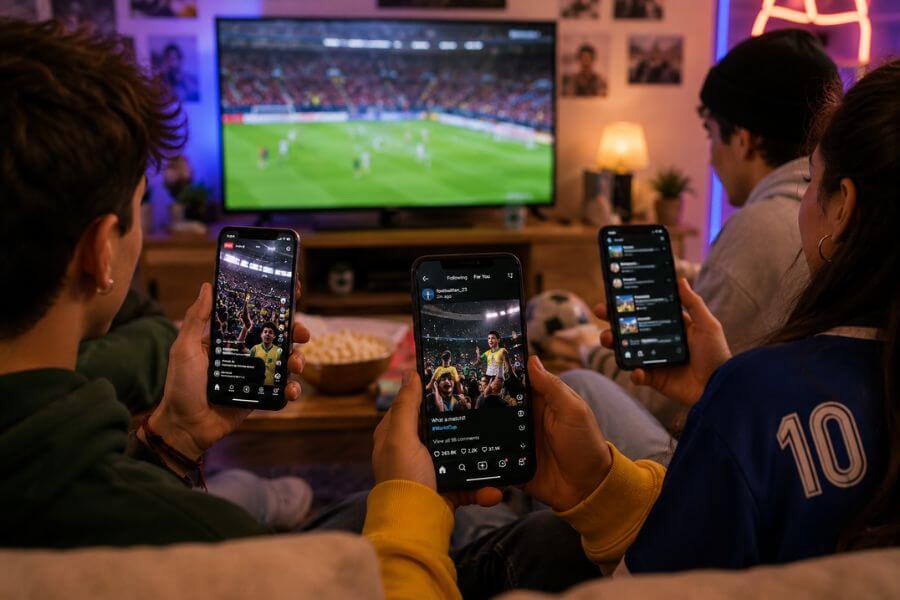
The way people watch live sports is changing forever. Think back to how your parents watched the World Cup. They sat on a couch, stared at a single television box, and stayed quiet until someone scored a goal. Today, that old way of watching feels like ancient history. A massive shift is happening right now during the World Cup, and a young group of fans is leading the way.
Gen Z is completely changing the rules of sports media. If you belong to this group, or if you watch how this group behaves, you know that a football match is no longer just a ninety-minute broadcast. It is a live, fast, multi-screen conversation that never stops. This shift is what we call the social-first viewing revolution. It is an exciting new world where social media platforms, group text messages, and short videos are just as important as the live game on the big screen.
Understanding this shift is not just about looking at phones. It is about understanding how a whole generation builds community, shares joy, and talks to each other across the globe. Let us dive deep into how young fans are rewriting the playbook for the biggest tournament on earth.
Key Takeaways
Before looking at every detail, here is a quick summary of how the social-first viewing revolution is changing the World Cup experience.
- The Phone Comes First: The traditional television screen is no longer the main focus. Young fans treat their mobile phones as the primary hub for live stats, memes, and fan chatter.
- Short Videos Win the Day: Most young viewers prefer quick highlights, behind-the-scenes clips, and fan reactions over a full ninety-minute broadcast.
- Community Happens in Group Chats: Watching sports is now a highly social event that takes place inside private messaging apps and online group spaces.
- Creators Replace Traditional Hosts: Young audiences trust independent internet creators and online personalities more than old-school studio analysts.
- Loyalty Focuses on Players: Fans today follow their favorite individual athletes across different teams rather than just supporting one national team.
- Humor Drives the Story: Memes, jokes, and funny viral trends shape how a match is remembered long after the final whistle blows.
The Death of the Passive Viewer
For decades, watching a football match was something you did without moving or speaking much. You sat back, let the images wash over you, and listened to two commentators talk on your television. That passive style of watching is officially dead. Young fans today do not want to just sit and watch. They want to participate, speak their minds, and be part of the action.
When you watch a World Cup match today, your hands are likely busy. You are typing a message, voting in a live online poll, or scrolling through a feed to see what other people think about a referee decision. This means the viewer is now an active creator of the experience. The game is no longer a one-way street from the stadium to your living room. Instead, it is a massive circle where fan reactions influence the conversation in real time.
This change means that boredom is a thing of the past. If a match becomes slow or defensive, traditional viewers might turn off the television. Young viewers, however, will turn to their phones to find entertainment. They will laugh at jokes about the slow game, look up player statistics, or play a quick mobile game while keeping an eye on the field. The live match is simply the raw material that fans use to build their own entertainment.
Active Engagement Statistics
To show how big this shift is, let us look at how different generations interact with a live sports broadcast.
Generation Viewing Behavior Comparison
| Generation | Main Screen Choice | Group Interaction Style | Main Source of Analysis |
| Older Generations | Living Room Television | In-Person Talk or Phone Calls | TV Studio Pundits |
| Millennials | Laptop or Connected TV | Social Media Feeds | Sports News Websites |
| Gen Z | Mobile Phone and Tablet | Private Group Chats and App Feeds | Independent Content Creators |
The Multi-Screen Mastery
If you walk into a room where a young fan is watching the World Cup, you will see a lot of screens. This is not a distraction from the game. It is how they maximize their enjoyment. This behavior is called multi-screening, and it has become an art form.
The main television screen might show the wide view of the pitch, but the smaller screens in a fan’s hands are doing the heavy lifting. One screen might show a live chat with friends from school or work. Another screen might display a live feed of coordinates showing exactly where a player is running. A third screen might show a live video of a creator reacting to the match in real time.
This means the live broadcast is actually just a background track. The real action happens on the personal screens. This multi-screen habit changes how people process information. Young viewers can track multiple storylines at the same time. They know when a player is close to breaking a record, what fans in the opponent’s country are saying, and which meme is trending, all while watching a corner kick happen live.
The Screen Hierarchy
To understand this setup, think of it as a pyramid of attention. Each screen has a specific job during a World Cup match.
- The Primary Screen (The Phone): This is where the emotional action happens. It hosts the group chats, the live social feeds, and the short video updates. It is the screen that receives the most eye contact.
- The Secondary Screen (The Television or Laptop): This screen provides the raw live footage. It stays on in the background so the viewer knows when to look up and celebrate.
- The Tertiary Screen (The Tablet or Smartwatch): This screen tracks deep data, such as live player speeds, passing heat maps, or fantasy football point updates.
Private Group Chats as the New Stadium
In the past, if you could not go to the stadium, you went to a local sports bar or invited neighbors to your house to watch the game. While people still love to gather in person, a huge portion of the social experience has moved into private digital spaces. Private group chats on messaging apps have become the virtual stadiums of the modern era.
These chats are filled with non-stop text messages, audio notes, funny photos, and video clips. When a goal is scored, a group chat explodes with caps-lock text messages in a matter of seconds. It creates a feeling of being together even if friends are thousands of miles apart or in different time zones. This is what experts call constant partial togetherness. You are never watching alone.
The beauty of these private spaces is that they feel safe and comfortable. Fans can share their honest, raw emotions without worrying about strangers judging them. They can make inside jokes, complain about their team, and celebrate wildly with the people who know them best. For Gen Z, a World Cup win does not feel real until it has been celebrated and talked about in the group chat.
The Ecosystem of a Match Chat
Inside these private digital rooms, the conversation follows a very specific rhythm that matches the flow of the football game.
Match Timeline and Chat Activity
| Match Moment | Traditional Fan Action | Gen Z Chat Behavior |
| National Anthems | Standing and Singing | Sharing memes about player hairstyles and outfits |
| First Kickoff | Cheering from the Couch | Sending predictions and custom sticker images |
| Mid-Half Water Break | Getting a Snack | Checking social feeds and reviewing early game stats |
| A Goal is Scored | Screaming and Jumping | Flooding the chat with capital letters and celebration videos |
| Halftime | Watching TV Commercials | Analyzing short video clips and debating referee choices |
| Final Whistle | Turning off the TV or Talking | Sharing viral internet jokes and updating fantasy scores |
The Rise of Short-Form Video Dominance
Ninety minutes is a long time for someone who grew up in the age of fast internet and instant information. Because of this, the way young fans consume World Cup content has shifted heavily toward short-form video. Quick vertical videos that last anywhere from fifteen to sixty seconds are becoming the preferred way to experience the tournament.
These short videos are not just basic match replays. They are highly creative pieces of media. They feature fast edits, upbeat music, text overlays, and voice filters. A creator might take a five-second clip of a player looking confused and turn it into a hilarious video that gets millions of views within an hour.
This means that a fan does not need to sit through a slow first half to feel connected to the World Cup story. They can watch a curated summary of the best moments, the funniest fan reactions, and the most dramatic errors in less time than it takes to make a cup of coffee. This style of media fits perfectly into a busy daily routine, allowing fans to stay informed and entertained while on the move.
Why Short Videos Work
There are several clear reasons why this format has taken over the hearts and minds of younger football fans.
- Instant Gratification: You get straight to the most exciting part of the match without any waiting around.
- High Density of Emotion: These videos focus purely on extreme joy, deep sadness, or intense anger, making them highly relatable.
- Easy to Share: You can send a short vertical video to a friend with a single tap, making it the perfect tool for digital conversation.
- Creative Freedom: Anyone with a phone can edit a clip, add a funny sound, and share their unique perspective with the world.
Creator-Led Commentary vs Traditional Broadcasts
Think about the classic sports commentator. Usually, it is an older person in a expensive suit sitting in a bright studio, speaking in a very formal, serious tone. While older generations love this traditional style, younger fans are turning away from it. They prefer to listen to internet creators, streamers, and independent fans who speak just like them.
These creators do not broadcast from giant stadiums. They stream from their bedrooms or local fan zones. They wear team jerseys, yell with genuine passion, use internet slang, and interact directly with their viewers through live comment sections. This creates a powerful sense of trust and connection. A young fan feels like they are watching the World Cup with a funny, knowledgeable friend rather than being lectured by an expert.
Creator-led commentary also allows for different points of view. If you want a deeply tactical breakdown, you can find a creator who uses digital boards to show player movements. If you want pure comedy and chaos, you can find a creator who reacts wildly to every single play. This choice allows viewers to customize their World Cup experience to match their personal mood.
Comparing Media Formats
Let us look at how traditional media channels contrast with the new wave of creator platforms.
Media Channel Differences
| Feature | Traditional TV Networks | Creator-Led Platforms |
| Language Style | Formal, Neutral, and Polished | Casual, Passionate, and Authentic |
| Viewer Role | Passive Listener | Active Participant via Live Chat |
| Speed of Updates | Tied to Scheduled Commercials | Instant and Continuous |
| Focus Area | Broad Match Overview | Niche Perspectives and Specific Players |
Fluid Fanatics and Player-First Loyalty
One of the biggest surprises of the social-first revolution is how national team loyalty is changing. In the past, you supported the country on your passport, and that was that. If your country was knocked out of the World Cup, your tournament was essentially over. Today, young fans are far more fluid in their support.
This generation follows individual players rather than just countries or clubs. Because of social media, fans feel a deep personal connection to the lives, styles, and personalities of individual athletes. They follow a player’s daily life, their fashion choices, their video game habits, and their friendships. Therefore, if a fan loves a specific star player, they will cheer for that player’s national team, even if it is a country on the other side of the world.
In fact, research shows that a huge percentage of young fans will continue to watch and enjoy the World Cup even after their own home country is eliminated. They will simply shift their support to another player they love or follow a collection of four or five different teams throughout the tournament. Football has become a sport without borders, driven by the global star power of individual human beings.
The Elements of Player Stardom
What makes an athlete appeal to a fluid fan? It goes way beyond how well they kick a ball on the pitch.
- Digital Authenticity: Fans love players who post raw, unedited moments from their lives instead of perfectly managed public relations content.
- Off-Field Style: Fashion choices, tunnel walks, and clothing collaborations are closely watched and debated online.
- Personal Values: Young fans respect athletes who stand up for social causes, speak out against injustice, and show real human empathy.
- Gaming and Culture: Players who stream video games or participate in internet culture build a massive, loyal following among younger demographics.
Memes as the Ultimate Language of the Tournament
If you want to understand how a match went, you do not look at the scoreboard anymore. You look at the memes. For Gen Z, internet jokes and visual memes are the primary language used to process the events of the World Cup.
A meme can sum up a complex tactical error, a funny fan moment, or a historical upset in a single image. It is a form of fast cultural shorthand. Within minutes of a major event happening on the field, hundreds of different versions of a joke will flood the internet. These memes are shared across group chats, reposted on social feeds, and remixed by creators.
This focus on humor changes the emotional weight of a loss. When a favorite team loses, older fans might feel sad or angry for days. Younger fans, however, use humor as a way to handle the disappointment. They will instantly laugh at memes about their own team’s poor performance, turning a painful sporting moment into a fun, shared social joke.
The Lifecycle of a World Cup Meme
A viral joke moves through the digital world at an incredibly fast pace during a live tournament.
- The Spark (0 to 2 Minutes): A player makes a funny face, falls over dramatically, or misses an open goal. Captures are taken immediately.
- The Creation (2 to 10 Minutes): Fans add clever text, match the image with viral audio clips, and post them online.
- The Explosion (10 to 60 Minutes): The joke is shared millions of times, entering the main stream conversation and group text chats.
- The Evolution (1 Days Later): Other creators remix the joke, connecting it to old football history or other pop culture events.
The Importance of Natural In-Game Breaks
The structure of a football match has ninety minutes of action divided into two halves, with a fifteen-minute rest period in the middle. However, modern tournaments have introduced things like mid-half water breaks and video review stops. Traditional fans often complain about these pauses, arguing that they ruin the flow of the game. Young fans view them completely differently.
These natural breaks in play are actually prime time for phone usage. The moment the referee blows the whistle for a water break, millions of young viewers look down at their devices at the exact same moment. It creates a synchronized window of intense digital activity.
During these few minutes, fans are not walking away from the game. Instead, they are rushing to check their messages, share a quick thought, look at a replay from a different angle, or see what jokes are starting to form. These pauses are essential parts of the multi-screen experience, giving fans a moment to catch their breath and connect with their community before the live action starts again.
What Happens During a Break?
Let us look at how phone activity spikes during these scheduled pauses in play.
- Checking Private Messages: Sending quick updates to friends who might be working or away from a screen.
- Reviewing Quick Replays: Watching alternative camera views of a controversial tackle or a near-miss goal.
- Updating Sports App Data: Checking possession percentages, player distances run, and foul counts.
- Interacting with Live Polls: Voting on which team will score next or who the best player of the half has been.
Brands and the Shift from Commercials to Conversation
Because young viewers watch matches differently, big companies and advertisers are forced to change their strategies completely. The days of buying a million-dollar television commercial spot during halftime and expecting great results are over. If a brand wants to reach a young audience, they have to join the social conversation.
Young consumers can spot forced marketing from a mile away. They do not want to be interrupted by a loud corporate advertisement that has nothing to do with the match. Instead, they reward companies that act like real fans. Brands that post funny, real-time jokes about the game, sponsor independent creators, or build interactive digital spaces are the ones that win loyalty.
This means that marketing during the World Cup is now a non-stop job. A brand’s social media team must watch the match live, react to events within seconds, and speak the language of internet culture perfectly. It is about participation, not interruption. If a brand can make a fan laugh during a tense match, that brand becomes a part of the fan’s World Cup memory.
Traditional Advertising vs Social-First Marketing
To see how corporate strategy is shifting, let us compare old marketing methods with modern approaches.
Advertising Strategy Shift
| Marketing Element | Old Traditional Approach | New Social-First Approach |
| Timing | Planned months in advance for specific slots | Created live in response to match events |
| Placement | Commercial breaks between game action | Social media feeds and group chat content |
| Tone | Polished, Corporate, and Product-Focused | Humorous, Casual, and Fan-Centric |
| Main Goal | Selling a product through repetition | Building connection through conversation |
The Future of Global Sports Fandom
The social-first viewing revolution is not a temporary trend. It is the permanent future of sports entertainment. As technology continues to improve, the line between the live stadium match and the digital fan experience will disappear entirely.
We are moving toward a world where watching sports will be fully customizable, deeply interactive, and completely social. Whether you are tracking a match through short video highlights on your morning commute or screaming in a group chat with your childhood friends, you are part of a massive cultural shift. Gen Z has shown that sports are at their best when they bring people together, spark creativity, and start a global conversation that never ends. The whistle has blown, the playbook has changed, and there is no turning back.
Frequently Asked Questions
Why does Gen Z prefer looking at multiple screens instead of just the match?
Using multiple screens allows young fans to create a richer, more active entertainment experience. A single television screen only provides the raw live footage, which can sometimes feel slow or passive. By using a phone or tablet at the same time, fans can check live statistics, participate in group conversations, and see funny internet reactions in real time. This behavior does not mean they are distracted from the football match. Instead, it means they are using digital tools to enhance their emotional connection to the game and stay entertained during slow moments of play.
How do private group chats replace the feeling of watching games in a stadium?
Private group chats provide a safe, intimate digital space where friends can share raw, unedited emotions instantly, no matter where they are located in the world. When a big moment happens, like a goal or a red card, the non-stop flow of text messages, audio notes, and funny images creates a sense of shared excitement. This digital togetherness mimics the community feeling of a crowded stadium or a local sports bar, allowing fans to feel connected to their close friends without needing to meet up in person.
Why is national team loyalty changing among younger football fans?
Younger fans have grown up in a highly connected digital world where they can follow the daily personal lives, styles, and values of individual athletes on social media. This close connection causes fans to develop strong personal loyalty to individual star players rather than just the country listed on their own passport. If a favorite player plays for a different nation, a young fan will happily cheer for that country. This shift has made World Cup fandom more fluid, global, and focused on human personalities rather than traditional geographic borders.
What makes creator-led commentary more appealing than traditional sports broadcasts?
Independent creators and online streamers talk to their audience like a close friend, using casual language, humor, and genuine passion. Unlike traditional TV studio hosts who sit in expensive suits and offer formal analysis, internet creators interact directly with their viewers through live chat sections. This two-way conversation makes the viewing experience feel participatory and authentic. Younger audiences trust these independent voices because they feel real, relatable, and free from corporate script constraints.
How should companies change their advertising to reach young World Cup viewers?
Companies must stop relying solely on traditional, pre-made television commercials that interrupt the live action. To win the attention of younger audiences, brands need to join the active social media conversation. This means posting funny, real-time reactions to match events, collaborating with trusted internet creators, and creating interactive digital experiences. Marketing must feel like it comes from a fellow fan who understands internet culture, focusing on adding entertainment value rather than just shouting corporate sales pitches during commercial breaks.