Key Takeaways
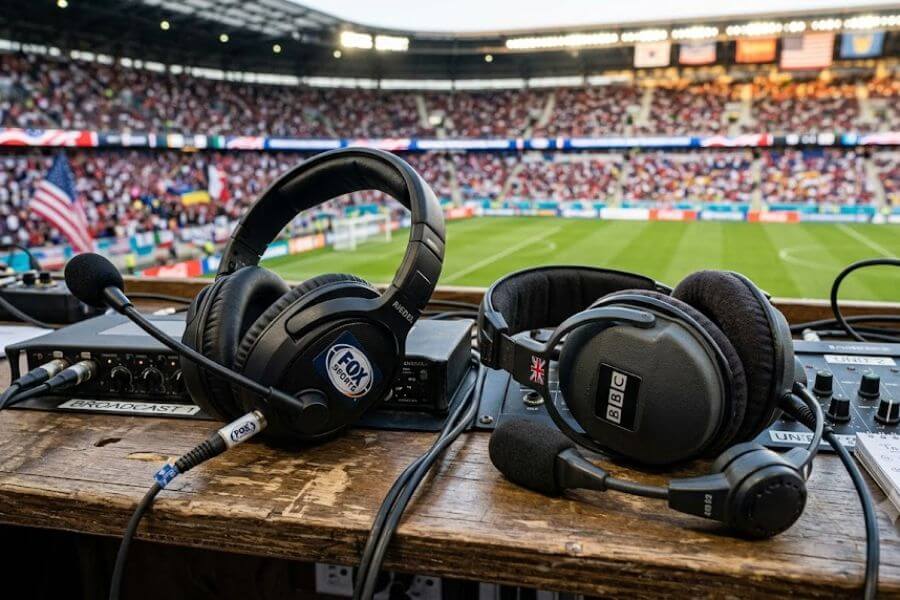
- Commercial Spark vs Public Service Value: Fox Sports brings high-energy, commercial production with massive pregame shows and a heavy focus on star-power. The BBC offers a traditional, deep-dive approach that focuses on storytelling, long-term legacy, and cultural context.
- Access Costs and Models: Fox Sports spreads its live games across pay-television and premium digital apps, making it a paid experience for most fans. The BBC provides its live games completely free-to-air across the United Kingdom, ensuring wide public availability.
- Studio Locations and Technical Output: Fox Sports bases its major productions close to the live action across North America with a strong push for late-night viewing events. The BBC operates largely from its core home studios while utilizing advanced cloud-based remote tools and smart-device applications to bridge the distance.
- Tone and Style: The American network relies on giant screens, loud music, and immediate social-media tie-ins. The British broadcaster leans into sharp punditry, historical match analysis, and calm, descriptive commentary.
Introduction to the Broadcast Battle
The global sporting landscape is changing fast, and the race to capture your attention has never been more intense. When a major tournament takes over the world stage, how you experience the drama depends entirely on who holds the microphone. Two media giants sit at the absolute top of this industry, yet they look at the world through completely different lenses. One is a bold, commercial engine built on big moments, bright lights, and high-energy presentation. The other is a historic public institution funded by the people, driven by tradition, and deeply committed to patient, detailed storytelling.
As you tune into the matches this summer, you are not just watching the athletes on the field. You are also experiencing a massive battle of styles between Fox Sports and the British Broadcasting Corporation, widely known as the BBC. These two networks represent opposite sides of the modern media world. From the way they pick their talk-show experts to the way they design their phone applications, every single choice they make changes how you feel about the game. This deep dive will look at how these companies bring the world’s biggest sports moments right into your living room.
The Production Style and Energy
When you flip the channel to Fox Sports, you are hit with an immediate wave of sound and color. The American broadcaster views sports as the ultimate form of live entertainment. They do not just show the match; they turn it into a grand theater production. You will notice giant digital screens, flashy computer graphics, and booming music that builds tension before a single player kicks a ball. The pregame shows are massive, often lasting hours, designed to make you feel like you are attending the biggest party of the year. The host studio is always buzzing, and the main goal is to keep your energy high from the first second to the final whistle.
The BBC takes a completely different path that focuses on quiet authority and deep respect for the game. Their presentation is clean, calm, and classic. Instead of trying to overwhelm your senses, they step back and let the stadium atmosphere speak for itself. The studio design is sleek but simple, ensuring that the focus stays on the match analysis rather than flashy visual tricks. You will hear an emphasis on the history of the teams, the deep cultural meaning of the game, and the subtle strategies of the coaches. It is an approach built for the long-time fan who wants to understand the game on a deeper level, rather than the casual viewer looking for quick thrills.
Commentators and Studio Punditry
The voices you hear during a big match shape your entire viewing experience, and these two networks could not be more different in how they choose their talent. Fox Sports favors big, recognizable personalities who show their emotions openly. Their lead match-callers use loud, enthusiastic phrasing to match the speed of the play. In the studio, the debate is fast and highly competitive. Former players offer quick, sharp opinions designed to create headlines and spark discussions on social media. The tone is casual and friendly, resembling a group of passionate sports fans talking around a restaurant table, though backed by high-tech playback tools.
Over on the BBC, the commentary booth is a place of carefully measured words and deep tactical knowledge. British match-callers often use silence as a tool, letting the roar of the crowd tell the story during major moments. The studio analysts are usually legendary figures who have won the highest honors in the sport. Instead of shouting over one another, they take turns breaking down a play with clinical precision. They look closely at a player’s positioning, the movement of the ball, and the long-term patterns of the match. You will find that the talk centers around the craft of the sport, offering a masterclass in analysis that teaches you something new during every single halftime break.
Accessibility and Cost Models
The way you pay for and find these broadcasts is another massive point of division. Fox Sports operates in a commercial market where premium sports content comes at a price. While they place their absolute biggest games on their main free-to-air network television channel, a massive portion of their coverage is tucked away on premium sports cable networks. To get the complete experience, you either need a costly television package or a monthly subscription to their new dedicated digital application. This model turns the tournament into a premium product, where the best features and deepest coverage require you to open your wallet.
The BBC operates under a completely public funding model, which changes everything about how they share content. In the United Kingdom, their coverage is a public service, meaning every single live game they own is broadcast completely free of charge to anyone with a television or an internet connection. There are zero commercials, zero sponsor messages, and zero paywalls blocking your view. This creates a massive, shared cultural experience where an entire nation can watch the exact same moment without worrying about a monthly bill. The focus is entirely on reaching as many people as possible, treating the event as a community treasure rather than a business asset.
Live Match Coverage Distribution
| Broadcast Feature | Fox Sports Model | BBC Model |
| Main Channel Access | Free over-the-air television | Completely free-to-air public service |
| Secondary Channel Access | Premium cable subscription required | Not applicable, all digital streams are free |
| Commercial Interruptions | Frequent during breaks and pregame | Zero commercials or sponsor ads |
| Full Tournament Access | Mixed across free and paid platforms | Fully free across television and internet |
Digital and Streaming Platforms
In today’s world, the screen in your hand is just as important as the one on your wall. Fox Sports has leaned heavily into the future of digital viewing by building their premium application into a high-tech sports command center. When you log in, you get an interface that offers multiple camera angles at the exact same time. You can choose to watch the main feed, follow a single star player, or look down from a high tactical camera. They also build real-time statistics and fantasy sports trackers right into the screen, turning the match into an interactive video-game experience tailored for younger, tech-saving viewers.
The BBC answers this with their famous digital platform, the BBC iPlayer, alongside their deeply popular sports website. Their digital strategy focuses on clean reliability and universal access. While they might not have as many flashy interactive game widgets, they offer incredibly smooth high-definition streams that work perfectly on almost any device. Their platform shines brightest through its instant highlight features and live-text commentary pages. If you miss a goal, a short video clip is posted online almost immediately, allowing you to catch up within seconds. It is a highly practical, user-friendly system built to serve millions of concurrent viewers without a glitch.
Digital Platform Features
| Digital Capability | Fox Sports App | BBC iPlayer and Web |
| Stream Resolution | High-quality 4K on premium tiers | High-definition and ultra-high-definition |
| Interactive Camera Angles | Multiple user-selectable feeds | Limited main feed options |
| In-Game Video Clips | Available via social channels | Instant clips on live-text pages |
| Data Integration | Live fantasy and betting statistics | Detailed text commentary and team facts |
Technical Innovation and Visuals
When it comes to the technical side of the broadcast, both networks are pushing the limits of what is possible, but they direct their money toward different areas. Fox Sports loves to invest in on-the-ground visual spectacle. They place massive physical studio sets right in the middle of host cities, using the local skyline as their daily backdrop. They also use heavy augmented-reality visual elements, meaning they place digital players and floating stat charts right onto the studio floor during pregame talks. Their camera work focuses heavily on close-up shots, capturing the sweat, emotion, and facial expressions of the players to maximize the human drama.
The BBC takes a more subtle, behind-the-scenes approach to technical innovation. Instead of moving massive, heavy studio crews across the world, they are leaders in remote production technology. They utilize advanced cloud networks to send high-quality video feeds back to their home studios in the United Kingdom. This allows them to mix the audio, control the replays, and handle the graphics smoothly from thousands of miles away. When they do innovate visually, they tend to focus on tactical playback systems, using advanced computer tools to draw lines on the field and show how defensive shapes shift over time, giving you a clear view of the tactical battle.
Cultural Tone and Audience Focus
The ultimate difference between these two broadcasting powerhouses is the audience they are trying to reach. Fox Sports builds its programming for the classic American sports market. This means they treat soccer with the same high-octane energy usually saved for American football or professional basketball. They focus heavily on individual star players, often framing the entire match as a battle between two global icons. They know their audience includes many casual viewers who only tune in for massive events, so they spend a lot of time explaining the basic stakes, telling emotional backstories, and keeping the entertainment value high.
The BBC writes its script for a deeply knowledgeable, football-first nation. They know that their audience watches the sport all year long and possesses a deep understanding of its traditions. Because of this, they do not need to explain the basic rules or spend time convincing you why the match matters. Instead, they treat the event with a certain level of serious journalism. They are not afraid to spend ten minutes discussing a minor midfield substitution or a refereeing decision from thirty years ago. Their coverage feels like an extension of daily life in a country where the sport is treated less like entertainment and more like a core cultural pillar.
Frequently Asked Questions
Which network is better if I want to learn about deep football tactics?
The BBC is generally much better for fans who want a deep look into the tactical side of the game. Their studio analysts are chosen for their deep football brains, and they spend their time breaking down team shapes and positional play. Fox Sports focuses more on the entertainment value and individual player star power.
Do I have to pay to watch the matches on these platforms?
If you are watching Fox Sports, you will likely need a paid cable package or a digital subscription to see every single match of a major tournament. The BBC offers all of its matches completely free-to-air to viewers inside the United Kingdom, with no subscription walls or hidden costs.
How do the two networks handle commercials during the live broadcast?
The BBC has a unique advantage because it is a publicly funded network, meaning it shows zero commercials during a match. Halftime is filled entirely with expert talk and highlights. Fox Sports is a commercial business, so you will see regular advertisements and brand messages during every natural break in the action.
Which service offers better options for viewing on a smartphone?
Fox Sports offers a more interactive phone application with features like multiple camera angles and live data tracking built into the video. The BBC focuses on a highly stable, clean viewing experience through its main streaming app, backed by incredibly fast live-text updates and instant goal videos on its sports website.