Key Takeaways
- Knockout matches introduce thirty extra minutes of play and penalty shootouts which change player point values and scoring potentials.
- Bracket prediction is more important than single-match stats because you need your players to stay in the tournament to avoid taking transfer point penalties.
- Utilizing specialized boosters like the Qualification Booster or the Clean Sheet Shield in early knockout brackets maximizes your score before matchups become highly unpredictable.
- Goalkeeper selections require choosing options from opposite sides of the tournament bracket to secure long-term stability and playing time.
- Balancing secure long-term picks from heavy favorites with one-round differential punts helps you climb your mini-league standings.
Navigating the Shift to Knockout Football
The group stage is officially over, and the tournament landscape has changed completely. Your approach to building a squad must change with it. In the opening three rounds, you had a safety net. If a player or team performed poorly, you knew they had another match to make things right. You could target cheap players from lower-tier nations who had secure starting roles, and you could easily predict which heavy favorites would score plenty of goals.
Now, the format switches to a single-elimination bracket. The stakes are massive for the real-world nations, and they are even higher for your fantasy squad. A single mistake means a team goes home, and any player from that team in your lineup becomes dead weight. You can no longer afford to carry players who might exit the tournament immediately.
Furthermore, the game regulations themselves undergo a major shift. In the group stage, matches ended after ninety minutes plus injury time. In the elimination phase, ties that are level after regular time move into thirty minutes of extra time. If the score stays level, a penalty shootout decides the winner. These structural changes affect player minutes, defensive safety, and potential goal scoring outputs. Understanding these shifting dynamics is what separates average managers from mini-league champions.
Understanding Extra Time and Shootout Rules
Extra time is a golden opportunity for fantasy managers, but it also carries significant risk. Those extra thirty minutes represent additional time for your attacking players to secure goals, assists, or shot-on-target bonuses. If a forward plays one hundred and twenty minutes instead of ninety, their chances of returning points increase naturally.
However, the impact on defensive players is completely different. If your defender holds a clean sheet for ninety minutes, but their team concedes a goal in the one hundred and eleventh minute of extra time, your clean sheet points vanish in most traditional fantasy setups. You must check your specific platform rules, but standard tournament formats count the entire duration of the match including extra time for defensive statistics.
Penalty shootouts have their own unique point scoring structures. Goals scored during a penalty shootout do not count toward your player’s standard goal tally, and assists are not awarded. However, goalkeepers can turn into absolute heroes during a shootout. Saves made during the shootout can award specific bonus points, and winning the shootout keeps the team in the tournament for the next round.
Impact of Extra Time on Player Positions
| Position | Potential Advantages | Potential Risks | Strategy Adaptation |
| Goalkeeper | More chances for saves, shootout hero bonuses | Conceding late goals destroys clean sheet points | Prioritize shot-savers on strong defensive sides |
| Defender | Extra time for passes completed and tackles | Loss of clean sheet points after ninety minutes | Target attacking full-backs rather than center-backs |
| Midfielder | Extra time for assists, key passes, and goals | High physical fatigue leading to late yellow cards | Select players with high fitness levels who do not get subbed |
| Forward | More minutes to score goals and take shots | Increased risk of muscle injuries or late substitutions | Target primary penalty takers who stay on the pitch |
Analyzing the Tournament Bracket for Long-Term Planning
One major error that fantasy managers make during the elimination rounds is looking only at the immediate fixture list. When you select a player for the Round of 32, you must look ahead to the quarter-finals, semi-finals, and the final match. Every transfer you make has a premium value, and you are limited in how many free changes you can perform between rounds.
If you load your squad with players who have a fantastic matchup in the current round but face a tournament favorite in the next phase, you are setting yourself up for failure. You will be forced to use multiple transfers or take point deductions to fix your roster.
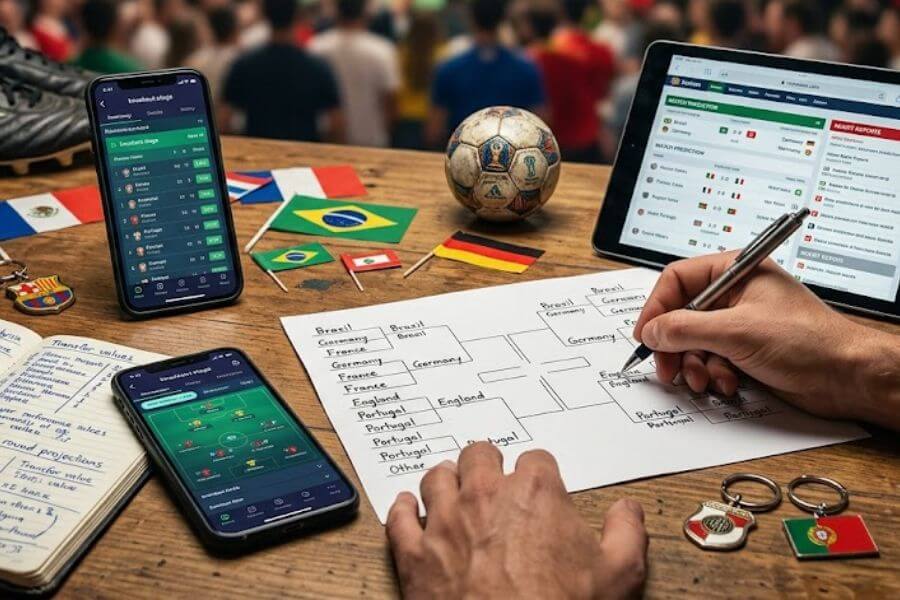
Study the bracket pathway meticulously. Identify the powerhouses that have been placed on opposite sides of the bracket. If two dominant nations cannot meet until the actual final match, you should look to build a balanced core using assets from both countries. This ensures that even if one side suffers a shocking elimination, the other side of your squad remains intact to carry you forward.
Comparing Bracket Pathways
The Favorable Side of the Bracket
This side features fewer historical champions and more surprise nations. Teams on this path have an easier journey to the semi-finals. Attacking assets from the top seeds on this side are highly valuable because they face weaker defensive units. You should look to invest heavily in their front-line options.
The Bracket of Death
This side is packed with top-ten ranked nations who must play each other early in the tournament. Clean sheets are incredibly rare on this side of the bracket because the attacking quality is world-class across every single matchup. When selecting assets from this side, focus strictly on elite individuals who are talismanic for their countries, such as primary penalty takers or creative focal points.
Mastering Goalkeeper Selection and Strategy
Your goalkeeper strategy needs a complete overhaul once the group stage concludes. In the early rounds, it was common to rotate cheap goalkeepers based on favorable single-match fixtures. In the elimination phase, this strategy can backfire quickly if your bargain goalkeeper gets eliminated early, leaving you with an empty roster spot.
The most effective approach is to select two reliable goalkeepers who sit on opposite sides of the tournament bracket. By doing this, you guarantee that you will have active goalkeepers deeper into the competition. It also provides flexibility with the manual substitution feature. If your first goalkeeper plays on Tuesday and concedes a goal, you can safely substitute your second goalkeeper who plays on Thursday without fearing that both will go home on the same night.
Additionally, pay close attention to save percentages and penalty histories. A goalkeeper playing for a slightly weaker defensive team that tends to draw matches can sometimes outscore a goalkeeper from a dominant side. The dominant goalkeeper might get a clean sheet but earn zero saves, while the busy goalkeeper might lose the clean sheet but accumulate eight saves and a penalty stop, resulting in a much higher total score.
Goalkeeper Selection Criteria
- Bracket Position: Ensure your two shot-stoppers cannot eliminate each other until the final rounds of the tournament.
- Penalty Record: Research historical penalty save data for both club and country to maximize shootout point potential.
- Defensive Structure: Choose goalkeepers from teams that protect the central box and force opponents into taking long-range shots.
- Set-Piece Defending: Check how many goals a team concedes from corners and free kicks, as knockout matches are often decided by dead-ball situations.
Capitalizing on Specialized Fantasy Boosters
The elimination phase is the absolute best time to deploy your remaining fantasy chips or boosters. Many managers hold onto their chips for too long, waiting for the final match. However, the final match only features two teams, which means everyone in your mini-league will have almost identical starting lineups. The early knockout rounds provide the largest player pool and the highest potential for massive point differentials.
Two of the most powerful tools available in modern tournament fantasy formats are the Qualification Booster and the Clean Sheet Shield. Using these chips correctly can skyrocket your rank over a single weekend. The key is knowing exactly when the math favors their deployment.
When to Play the Qualification Booster
This booster awards bonus points for every player on your roster who successfully advances to the next round. The ideal time to use this chip is during the Round of 32. This round features the widest gap in quality between group winners and the third-placed teams that barely scraped through. Predictability is at an all-time high here. As the tournament reaches the quarter-finals, matches become true coin flips, making this booster far less effective.
When to Play the Clean Sheet Shield
This chip protects your defensive points by mitigating the damage if a team concedes a single late goal. The best utility for this booster is during the Round of 16. At this stage, teams have settled into defensive rhythms, and coaches play much more conservatively. Matches are often tight, cagey affairs with one-zero or two-zero scorelines. Deploying the shield here secures your defensive baseline while your rivals lose their clean sheets to late counter-attacks.
Balancing Long-Term Investments with Short-Term Punts
To win your fantasy league, you need a healthy mix of reliable structural assets and high-upside differentials. If your entire team consists of the most popular players, you will never gain ground on the managers ahead of you. Conversely, if your team is full of risky players from underdog nations, your squad will fall apart after the first round of eliminations.
Think of your team in two distinct categories: the core and the punts. Your core should occupy roughly eight to nine spots in your starting eleven. These are elite, highly selected players from the absolute tournament favorites. They have excellent paths through the bracket and are highly likely to reach the semi-finals. They provide your team with a safe point floor every single week.
The remaining two to three spots should be reserved for short-term punts. A punt is a player with low ownership who has an incredibly explosive matchup in the current round, even if their team is expected to go home in the following round. Because you receive a set number of free transfers before each knockout phase, you can deliberately buy a player for a single match, enjoy their high scoring output, and immediately transfer them out when their bracket pathway turns difficult.
Roster Allocation Strategy
Your management plan should focus on a structured split. Allocate seventy-five to eighty percent of your overall budget to the core lineup. These positions should feature heavy tournament favorites, players with excellent bracket pathways, and high-ownership picks. The remaining twenty to twenty-five percent of your budget belongs to short-term punts, which focus on low-ownership differentials, single-round targets, and players with an explosive scoring ceiling.
Roster Management Table
| Player Role | Roster Percentage | Target Traits | Average Holding Period |
| Elite Core | Seventy percent | Captaincy options, penalty takers, top-four seeds | Entire knockout run |
| Defensive Anchors | Ten percent | Center-backs on low-concession teams | Two to three rounds |
| Midfield Enforcers | Ten percent | Ball-recovery specialists, bonus point magnets | Dependent on bracket |
| Single-Round Punts | Ten percent | Attackers facing leaky defenses in the current round | One round only |
The Role of Disciplinary Records and Player Suspensions
One factor that many fantasy managers overlook during the high-intensity elimination rounds is the yellow card regulation. In most major international tournaments, yellow cards accumulate from the group stage through the quarter-finals. If a player receives two yellow cards across these rounds, they receive an automatic one-match ban for the subsequent fixture.
This can be devastating for your fantasy team. If your star midfielder picks up a yellow card in the Round of 32 and already had one from the group stage, they will be suspended for the Round of 16. You are then forced to waste a precious free transfer just to get an active player back into your lineup.
Before finalizing your transfers, review the official disciplinary listings. Avoid bringing in players who are currently sitting on a single yellow card unless they are absolutely essential to your strategy. If you already own players who are one caution away from a suspension, ensure your bench is ordered correctly so an automatic substitution can save your score if they pick up a ban.
Managing the Transfer Budget and Team Value
By the time the group stage ends, player prices have changed based on their initial performances. Your team value should ideally be higher than your starting budget, giving you more spending power. However, the elimination rounds present a pricing trap that you must avoid.
Do not deplete your entire bank balance on premium forwards while leaving your defense completely barren. In the knockout phase, a premium defender who secures a clean sheet, an assist, and clean tackle bonuses can easily outscore a premium forward who fails to find the back of the net. Total team balance is vital.
If you need to free up funds to afford a superstar striker, look for value in the defensive midfields of top-tier teams. Ball-recovery points are a goldmine in knockout football because matches are intensely contested in the center of the pitch. Players who excel at breaking up play and retaining possession often earn steady bonus points for a very low price tag, allowing you to spend heavily on your front line.
Frequently Asked Questions
How many free transfers do I get during the knockout rounds?
You typically receive a higher allocation of free transfers before the Round of 32 to help rebuild your squad after the group stage. Following that round, you get a limited number of free transfers before each subsequent stage. Any additional transfers beyond your free allotment will cost you point deductions, so plan your bracket path carefully.
Do goals and assists in extra time count toward my fantasy score?
Yes, goals, assists, saves, and defensive actions performed during the thirty minutes of extra time count toward your player’s total points on almost all major fantasy platforms. However, actions during a penalty shootout do not count toward standard attacking points, though goalkeepers can earn specific shootout bonuses.
Should I take point deductions for extra transfers in the elimination phase?
Taking a point deduction is rarely worth it for defensive players, as clean sheets are difficult to guarantee. However, if a core attacking player gets injured or eliminated, taking a minor point penalty to bring in an elite captaincy option who has an easy matchup can pay off, provided they score enough to cover the transfer cost.
What happens to my players if a match goes to a penalty shootout?
If a match finishes regular time and extra time as a draw, the match enters a shootout. Your players will retain all points earned during the one hundred and twenty minutes of play. The shootout itself will not yield standard points for goals or assists, but your goalkeeper can accumulate extra points for penalty saves.
How should I choose my captain for the knockout rounds?
You should always choose a captain who plays on the earliest day of the round. This allows you to utilize the rolling captaincy feature. If your first captain performs poorly, you can switch the armband to a player who features on the following day, giving you multiple chances to secure a double-point haul.