Key Takeaways
The upcoming match between Brazil and Japan brings intense theater to the football world. You will see two completely different styles collide on the pitch. While Brazil brings unmatched individual skill and a proud history of winning, the Samurai Blue counter with intense team work, quick transition play, and deep tactical discipline. Looking closely at their past matches, their current rosters, and recent form reveals that an upset is not just a dream for Japan, it is a real possibility.
- Tactical Setup: Brazil relies heavily on an aggressive formation under their manager, utilizing explosive wingers to stretch the field. Japan uses a flexible system that emphasizes quick counter-attacks and intense pressing.
- Star Talent: High-profile names lead the South American side, whereas Japan leans on a balanced group of players who feature in top European leagues.
- Recent History: The Asian nation surprised the world by defeating Brazil in an international friendly match in late 2025, proving they have the blueprint to break down the giants.
- Key Battles: The game will be decided in the wide areas, where Japan’s full-backs must contain world-class wingers, and in the midfield battle where defensive stability is tested.
Introduction: A Clash of Two Worlds
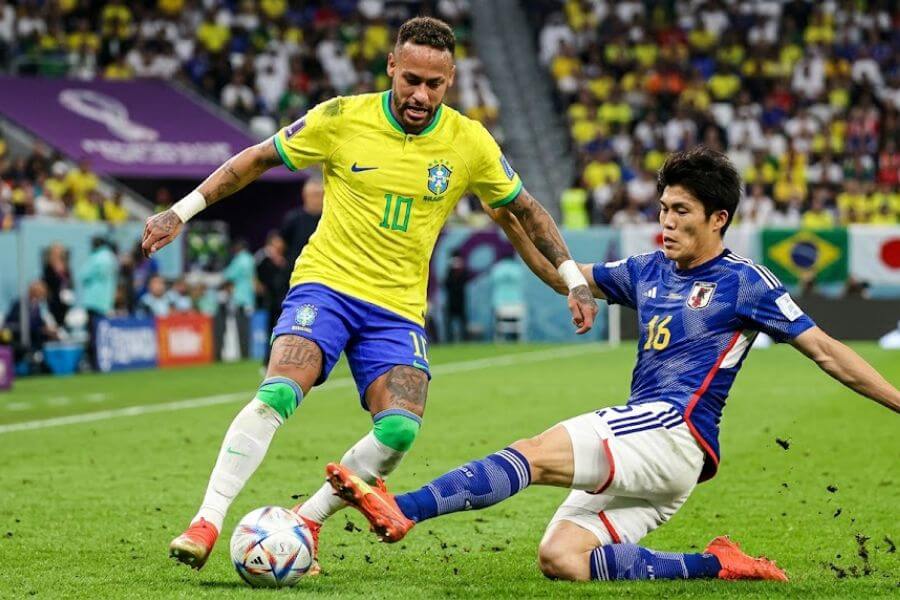
Imagine walking into a packed stadium where the air is thick with anticipation. On one side, you see the famous yellow and green jerseys of Brazil, a team that represents the historical pinnacle of football excellence. On the other side stand the Samurai Blue of Japan, wearing their deep blue kits, carrying the hopes of an entire continent looking to make a massive statement. This is not just a standard match. It is a true test of soccer philosophy, matching individual artistry against collective harmony.
You know the story of Brazilian football by heart. It is the home of beautiful play, where children grow up dancing with the ball at their feet. They enter every tournament with the expectation of lifting the trophy. For decades, they have been the benchmark of football quality. If you play Brazil, you are expected to defend for ninety minutes and hope for a miracle.
But times are changing in the international game. The gap between traditional powerhouses and rising nations is shrinking every single year. Japan is no longer a team that is just happy to participate. They have developed into a highly technical, tactically smart machine. Most of their roster now plays at the highest levels in Europe, bringing a wealth of elite experience to the national team setup.
When you look at this matchup, the big question comes to mind. Can the Samurai Blue truly pull off an upset against the most successful football nation on earth? To answer that, you have to look past the names on the jerseys and dive into the tactical setups, the physical conditions, and the mental battles that will play out on the grass.
The Historical Picture: David Meets Goliath
To understand where these teams are going, you must first look at where they have been. Historically, matches between these two nations have felt like a lesson in South American dominance. Brazil has traditionally held a clear advantage, using their physical power and superior technical skills to control games from the opening whistle.
For a long time, Japan struggled to match the sheer speed and confidence of the Brazilian players. Early meetings in global tournaments often ended in heavy defeats for the Asian side. The Brazilians would use their signature style to break down Japan’s defensive lines, leaving the Samurai Blue chasing shadows.
However, football history is a living story, and Japan has been writing incredible new chapters. The growth of the Japanese game over the past twenty years has been phenomenal. They studied the best systems in Western Europe and South America, built world-class training facilities, and focused on creating players who are completely comfortable under pressure.
The ultimate turning point in this rivalry arrived in October 2025. In a highly competitive international friendly, Japan did what many thought was impossible. They fell behind by two goals in the first half as the Brazilian attackers ran wild. Instead of collapsing, the Samurai Blue showed incredible mental strength. They fought back in the second half, scoring three unanswered goals to win the match three to two. That single night changed the narrative completely. You can no longer look at this fixture as a routine win for the South Americans.
Overall Head-to-Head Record
To get a clear view of how these teams stack up across their history, you can look at the summary of their official international matches.
| Match Type | Total Games | Brazil Wins | Japan Wins | Draws |
| Competitive Matches | 5 | 4 | 0 | 1 |
| Friendly Matches | 8 | 6 | 1 | 1 |
| All-Time Total | 13 | 10 | 1 | 2 |
This table shows you the historical mountains that Japan has had to climb. Yet, that single victory in 2025 acts as a bright light for the current squad. It proved to the players that the yellow shirts could be beaten if the plan was executed perfectly.
Brazil’s Tactical Blueprint: Power and Flair
Under the guidance of their world-class manager, Carlo Ancelotti, Brazil has adopted a system that aims to maximize their incredible attacking talent. They often deploy a very aggressive formation that can look like a traditional four-two-four when they move forward. This system is designed to overwhelm opponents by flooding the final third of the field with numbers.
The main idea behind this approach is simple: get the ball to the wingers as quickly as possible. Players like Vinicius Junior possess scary acceleration and dribbling abilities. By keeping these wingers wide on the touchline, Brazil forces the opposing defensive line to stretch out. This creates big gaps in the center of the pitch for late-running midfielders or supportive forwards to exploit.
However, this high-flying style comes with distinct risks that you can easily spot. When Brazil sends both full-backs forward to support the attack, they leave a massive amount of empty space behind them. The two defensive midfielders are forced to work incredibly hard to protect the center-backs. If an opponent can survive the initial wave of Brazilian pressure and break through that midfield shield, the Brazilian defense becomes highly vulnerable to quick counters.
Expected Lineup for Brazil
You can expect to see a star-studded group taking the field for the South American giants, combining veteran leadership with young energy.
- Goalkeeper: Alisson Becker (Liverpool)
- Defenders: Danilo (Flamengo), Marquinhos (PSG), Gabriel Magalhães (Arsenal), Alex Sandro (Flamengo)
- Midfielders: Casemiro (Manchester United), Bruno Guimarães (Newcastle United), Lucas Paquetá (Flamengo)
- Forwards: Vinicius Junior (Real Madrid), Raphinha (Barcelona), Gabriel Martinelli (Arsenal)
Key Strengths of the Brazilian Team
- World-Class Dribbling: They have multiple players who can win one-on-one battles anywhere on the field, forcing defenders to commit fouls or leave their positions.
- Elite Goalkeeping: Having a savior like Alisson between the posts means that even when the defense makes a mistake, they have a wall to bail them out.
- Set-Piece Danger: With tall central defenders like Gabriel Magalhães, Brazil is incredibly dangerous during corner kicks and free kicks.
Notable Vulnerabilities
- Full-Back Deficiencies: The current squad lacks the legendary, shutdown full-backs of the past, making the flanks a prime area for opponents to target.
- Roster Absences: Missing key stars like Eder Militao and Rodrygo due to injuries removes some of their tactical depth and defensive speed.
- Over-Confidence: The natural belief in their own superiority can sometimes lead to sloppy passing in their own half of the field.
Japan’s Tactical Machine: Unity and Speed
When you look at the Samurai Blue, you are looking at a team that relies heavily on a collective brotherhood. Their manager, Hajime Moriyasu, has created a flexible tactical framework that can shift between a stable four-two-three-one and an aggressive three-four-two-one depending on the match situation. They do not look to dominate possession just for the sake of passing; they look to strike with lethal precision.
Japan’s defensive style is built around an organized mid-block. This means they allow the opponent’s defenders to have the ball, but the moment the ball enters the midfield area, Japan triggers an intense press. Players work in tight pairs to close down passing lanes and trap the player with the ball. They use their incredible stamina to sustain this pressure for the full ninety minutes.
Once Japan wins the ball back, the transition happens in the blink of an eye. Midfielders like Takefusa Kubo and Daichi Kamada have the vision to instantly slide passes into the paths of running wingers and forwards. They utilize the full width of the pitch to launch attacks before the opposing defense can get organized. It is a highly organized style of football that requires total focus from every individual on the pitch.
Expected Lineup for Japan
The Samurai Blue will field a lineup filled with individuals who are regular starters in the top leagues of Germany, Spain, and England.
- Goalkeeper: Zion Suzuki (Parma)
- Defenders: Yukinari Sugawara (Werder Bremen), Ko Itakura (Ajax), Takehiro Tomiyasu (Ajax), Hiroki Ito (Bayern Munich)
- Midfielders: Wataru Endo (Liverpool), Ao Tanaka (Leeds United), Takefusa Kubo (Real Sociedad), Daichi Kamada (Crystal Palace), Ritsu Doan (Eintracht Frankfurt)
- Forwards: Ayase Ueda (Feyenoord)
Key Strengths of the Samurai Blue
- Incredible Work Rate: You will rarely see a Japanese player stop running; their physical conditioning allows them to pressure opponents late into matches.
- Tactical Intelligence: The squad can change formations during a game without losing their defensive shape or their offensive rhythm.
- European Experience: With almost the entire starting eleven playing in elite European environments, they will not be intimidated by the famous Brazilian names.
Notable Weaknesses
- Absence of Mitoma: Missing their most dangerous individual attacker, Kaoru Mitoma, due to an unfortunate injury removes a major threat down the left wing.
- Physical Disadvantage: In pure physical battles and aerial duels, Japan can sometimes be outmuscled by larger, heavier opponents.
- Finishing Consistency: While they create plenty of chances through their quick passing, they sometimes miss the clinical touch needed to convert small opportunities into goals.
The Key Pitch Battles: Where the Game is Won
To see how an upset could happen, you must look at the individual matchups that will take place all over the pitch. These mini-warfares will ultimately dictate the rhythm and the final score of the match.
Vinicius Junior vs. Yukinari Sugawara
This is arguably the most critical battle of the entire match. Vinicius Junior is a nightmare for any defender, using his lightning speed to cut inside from the left flank and shoot or create chances. Sugawara will have the massive responsibility of staying disciplined. If the Japanese right-back pushes too far forward to help the attack, Vinicius will destroy Japan on the counter. Sugawara will need constant help from his midfield teammates to double-team the Real Madrid superstar.
Wataru Endo vs. Lucas Paquetá
In the center of the pitch, Japan’s captain Wataru Endo will lock horns with Brazil’s creative engine. Paquetá loves to float between the lines, looking for small pockets of space where he can receive the ball and thread passes to his forwards. Endo is an absolute warrior who thrives on breaking up play and tackling hard. If Endo can successfully neutralize Paquetá, Brazil’s attack could become predictable and disconnected from their midfield.
Ayase Ueda vs. Gabriel Magalhães
Japan’s lone forward, Ayase Ueda, will face a massive physical test against Gabriel. Gabriel is known for his aggressive defending and strength in the air. Ueda cannot simply stay in the box and wait for crosses; he will lose that battle. Instead, Ueda must use his smart movement to pull Gabriel out of position, creating open lanes for arriving Japanese midfielders like Kubo and Doan to exploit.
Comparing Team Statistics
Looking at recent data from international performances gives you an idea of how these teams function across key areas of play.
| Team Performance Metric | Brazil National Team | Japan National Team |
| Average Goals Per Game | 2.4 | 2.1 |
| Average Goals Conceded | 1.1 | 0.8 |
| Passing Accuracy Rate | 88% | 83% |
| Shot Conversion Percentage | 16% | 14% |
| Average Running Distance | 112 kilometers | 118 kilometers |
This data confirms that while Brazil holds the edge in pure technical skills and attacking efficiency, Japan counters with superior defensive stability and an unbelievable team work rate on the field.
The Mental Game: Pressure vs. Freedom
Football is played with the feet, but it is often decided in the mind. The psychological dynamic of this matchup is completely lopsided, and that is exactly what gives Japan a unique advantage.
Brazil carries the weight of the world on their shoulders. When you wear that yellow jersey, winning is not enough; you have to win with style. A draw against an Asian team is seen as a failure by the passionate Brazilian public and media. This intense pressure can become a heavy burden if things do not go well early in the match. If Brazil fails to score in the first thirty minutes, frustration can set in, leading to individual play and a breakdown in tactical discipline.
Japan, on the other hand, enters this match with the ultimate freedom. Nobody outside of their home country expects them to dominate Brazil. This lack of pressure allows them to play with relaxed confidence. They can afford to be patient, sit deep in their defensive shape, and wait for their moments. If they give up an early goal, they have already shown the mental toughness to stay calm and fight back. This psychological balance is perfect for creating a shocking upset.
The Blueprint for a Samurai Blue Victory
So, how exactly does Japan pull off this historic upset? If you were sitting in the Japanese locker room listening to the pre-game speech, here is the exact plan you would hear to take down the giants.
1. Survive the Initial Storm
Brazil always starts matches with an incredible amount of energy, looking to score early and break the opponent’s spirit. Japan must expect this and stay completely calm. The defenders need to stay compact, limit the space behind them, and avoid making silly mistakes in their own penalty box. If Japan can keep the match tied at zero through the first twenty-five minutes, the pressure will begin to shift onto the South American side.
2. Attack the Vacant Flanks
As mentioned earlier, Brazil’s system leaves massive spaces on the wings when their full-backs join the attack. Japan must exploit this. When Wataru Endo or Ao Tanaka wins the ball back in midfield, they should immediately look to launch long, diagonal passes into the wide channels. Wingers like Ritsu Doan and Keito Nakamura must use their speed to get behind the Brazilian defense before Marquinhos or Gabriel can slide over to cover.
3. Maximize Set-Piece Opportunities
When you are playing against a team with superior individual talent, set-pieces become gold mines. Japan has excellent ball-deliverers in Takefusa Kubo and Daichi Kamada. They must design clever free-kick and corner-kick routines to catch the Brazilian defense off guard. Scoring from a dead-ball situation is one of the most effective ways to stun a favorite team and take control of a match.
4. Use the Bench Strategically
Modern football is a game of sixteen players, not just eleven. The high-pressing style used by Japan takes an incredible physical toll on the players. Manager Hajime Moriyasu must use his substitutions wisely in the second half. Bringing on fresh, speedy attackers like Daizen Maeda against a tired Brazilian defense can create chaos late in the match, just as it did in their famous victory back in late 2025.
Conclusion: Expect the Unexpected
When the referee blows the whistle to start this match, you are going to witness a spectacular contest. Brazil will step onto the field with their traditional confidence, ready to put on a show and prove why they are considered football royalty. They have the individuals, the history, and the attacking power to beat any team on any given day.
But do not dare to overlook the Samurai Blue. This Japanese team is built on a foundation of iron discipline, relentless work rate, and a deep belief in the power of the group. They have spent years preparing for these exact moments, proving time and again that they can stand face-to-face with the best teams in the world and come away victorious.
Will it be easy? Absolutely not. Brazil deserves their status as the favorite in this match. However, football is loved globally because it is unpredictable. If Japan can execute their tactical plan, survive the early pressure, and exploit the spaces left by Brazil’s attacking players, they can absolutely cause a massive upset. Get your popcorn ready, settle into your seat, and watch these two proud nations battle it out on the grandest stage of all.
Frequently Asked Questions
When did Japan last defeat Brazil in an international soccer match?
Japan achieved a historic victory against Brazil on October 14, 2025, in an international friendly match. The Samurai Blue came back from an early two-goal deficit to win the game by a final score of three to two, thanks to second-half goals from Takumi Minamino, Keito Nakamura, and Ayase Ueda.
Which key players are missing from this matchup due to injuries?
Both teams are missing prominent stars for this encounter. Brazil is playing without central defender Eder Militao and dynamic forward Rodrygo. Japan is forced to cope without their incredibly talented left-winger Kaoru Mitoma, who was left out of the squad due to a serious injury.
What tactical formation does Brazil typically use under their current coach?
Brazil prefers an aggressive setup that often functions as a four-two-four formation when moving forward. This system relies heavily on keeping world-class wingers wide on the touchlines to stretch opposition defenses and create spaces for interior runners.
Where do the majority of the current Japanese national team players play club football?
The vast majority of the Samurai Blue roster plays professionally in top European leagues. The German Bundesliga, the English Premier League, and the Spanish La Liga feature heavy representation from this Japanese squad, meaning the players are highly accustomed to elite competition.
Why is the wide defensive area considered a weakness for Brazil?
While Brazil possesses world-class talent in central defense and attacking positions, their current full-back options lack the defensive recovery speed and elite qualities of past generations. When these full-backs push up the field to join the attack, they leave massive open spaces that quick opponents can exploit.