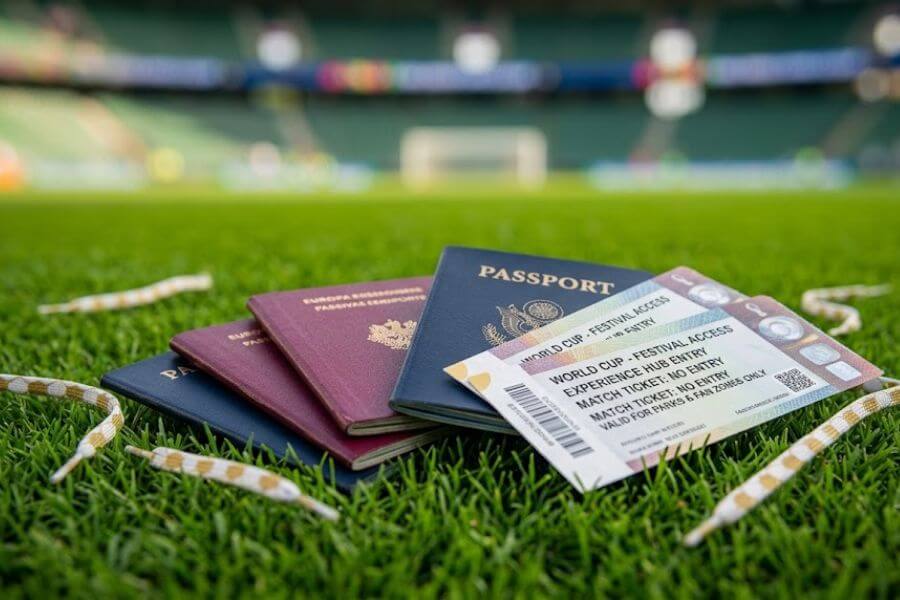
Key Takeaway
The modern sports landscape is undergoing a massive shift. Millions of soccer fans are choosing to invest thousands of dollars to travel to host cities for the World Cup without owning a single match ticket. This behavior highlights the rise of the experience economy, where human connection, local cultural immersion, and shared memories in lively public spaces hold far more value than a seat inside a stadium.
Welcome to the Ticketless Revolution
Picture this situation. You are standing in the middle of a massive city square. Around you are fifty thousand human beings from every corner of the planet. A giant screen towers above the crowd, reflecting bright colors onto a sea of painted faces. When a goal is scored, the entire plaza shakes. Strangers throw their arms around your shoulders, beer splashes into the air like rain, and singing voices echo off the nearby buildings.
You feel the ground vibrate. You hear the deafening roar of the crowd. You breathe in the collective nervous energy of a nation. Yet, you are not inside the multi-billion-dollar stadium down the road. You do not have a ticket. In fact, you never even tried to buy one.
This is the reality of the modern sports fan. For decades, traveling to a mega-event like the World Cup meant one thing: securing that precious piece of paper or digital barcode that grants you entry past the turnstiles. If you could not get a ticket, you stayed home and watched the action on your television screen.
That old rulebook has been thrown away. Today, a quiet revolution is happening across the globe. Massive waves of international and domestic travelers are packed into trains, boarding long-haul flights, and renting camper vans to head straight into the heart of host cities, completely empty-handed. They are entering the world of ticketless sports travel, a fast-growing movement that is redefining global tourism and changing how humans consume live entertainment.
To understand why this is happening, you have to look beyond the sport of soccer itself. This trend is a perfect reflection of a much larger shift in global human behavior: the explosive rise of the experience economy. Humans, particularly younger generations, are changing what they value. They are moving away from material possessions and even away from traditional, passive viewing. Instead, they are prioritizing active presence, community connection, and stories that cannot be replicated.
Defining the Experience Economy in Modern Sports
To truly understand this movement, we must first break down what the experience economy actually means. Decades ago, businesses competed on the quality of their commodities and goods. Later, the world shifted toward a service-oriented economy, where how a product was delivered became the main selling point. Now, we live in an era where experiences are the ultimate product.
An experience occurs when a person purposefully uses services as the stage, and goods as props, to engage individual customers in a way that creates a memorable event. In the context of global sports, the traditional commodity was the game itself, and the service was the stadium seat. The modern experience, however, is everything that happens around the edges. It is the entire journey, the social atmosphere, the collective joy, and the local flavors.
When you look at major sporting tournaments today, the physical stadium is no longer the sole boundary of the event. The entire host city becomes an open-air theater. The sports landscape has evolved through distinct stages to arrive at this point.
The Evolution of the Fan Journey
The Commodity Era
In the early days of global broadcasting, the tournament was simply a sports match. Fans consumed it by sitting in a stadium or listening to a radio broadcast. The interaction was direct, local, and highly limited by physical capacity.
The Service Era
With the explosion of satellite television and premium sports channels, networks began wrapping the matches in high-production commentary, slow-motion replays, and pre-game shows. The stadium experience also upgraded, offering better food options, merchandise stands, and clearer video screens. However, the fan remained a spectator, watching from a fixed point.
The Immersive Experience Era
Today, the event is an ecosystem. The game on the pitch is just the catalyst. The real product is the feeling of being part of a global cultural moment. This includes interactive digital spaces, city-wide festivals, and pop-up fan zones that run twenty-four hours a day.
This shift explains why the lack of a stadium ticket is no longer a dealbreaker for the modern traveler. If the entire city is a stage, then stepping foot into that city means you have successfully entered the event. You are no longer watching the festival from afar; you are actively living inside of it.
Why Stadium Seats Are Losing Their Monopoly
For a long time, the stadium was seen as the holy grail of sports fandom. It was the only place where you could truly feel the energy of the match. But in recent years, the physical stadium has started to lose its exclusive grip on the fan experience. Several factors have caused people to look outside the concrete walls of the arena for their fulfillment.
The Astronomical Financial Cost
The first and most obvious barrier is the sheer expense of entering a modern stadium. Ticket prices for global tournaments have skyrocketed to heights that ordinary working-class fans simply cannot reach. Between dynamic pricing models, where ticket algorithms raise prices based on sudden market demand, and secondary resale markets that mark up costs by thousands of percentage points, attending a match has become a luxury playground for the wealthy.
When you calculate the total cost of a stadium trip, the ticket is often just the beginning. You have to factor in stadium parking, high-priced stadium concessions, and exclusive tournament merchandise. For many passionate supporters, paying half a year of savings for ninety minutes of a soccer game feels less like a joyful sporting pilgrimage and more like a corporate transaction. By skipping the ticket entirely, travelers can redirect their hard-earned money toward extending their vacation, booking better lodging, or enjoying premium local dining.
The Corporate Stifling of Stadium Culture
There is also a growing feeling among die-hard supporters that modern stadiums are losing their soul. To cater to corporate sponsors and high-paying VIP customers, many modern venues have implemented strict rules that dampen traditional fan expression. Long gone are the days of spontaneous, chaotic fan displays inside the concourses.
Stadium security teams now strictly regulate everything from the size of banners to the types of chants allowed. The seating bowls are frequently filled with corporate executives who received complimentary tickets and choose to sit quietly, checking their phones rather than singing for ninety minutes straight. For a fan who craves raw, unfiltered emotion, the atmosphere inside a modern stadium can sometimes feel sterile, quiet, and over-commercialized.
Space Design and the Freedom of Movement
Inside a stadium, your experience is entirely defined by a number printed on a piece of plastic. You are assigned to a single seat, locked into a specific vantage point, and surrounded by whoever happened to buy the seats next to you. Your movement is restricted by aisles, security checkpoints, and long lines for the restroom.
Outside the stadium, the world opens up. In public plazas, park festivals, and local entertainment districts, you have total autonomy over your environment. If you want to stand next to a group of singing supporters from South America for the first half, you can. If you want to move over to a food market run by local chefs during halftime, you are completely free to do so. The lack of walls provides a sense of freedom and discovery that a concrete stadium can never replicate.
The Magnet of the Official Fan Zones
If ticketless fans are not heading to the stadiums, where exactly are they going? The primary destination for the modern traveler is the official fan zone, a concept that has grown from a simple parking-lot gathering into a multi-million-dollar entertainment asset.
These official sites, often organized by tournament organizers and local city governments, are engineered to deliver maximum psychological and sensory satisfaction. They are deliberately designed to feel like music festivals mixed with massive outdoor sports bars. Let us look at how these spaces compare to traditional stadium environments.
Comparing the Environments
| Feature | The Stadium Experience | The Official Fan Zone Experience |
| Average Entry Cost | Hundreds to thousands of dollars per match | Frequently free or very low cost |
| Capacity and Scale | Limited to forty thousand or eighty thousand seats | Scalable to hundreds of thousands of people |
| Visual Coverage | Single view of one live match from a fixed angle | Multiple massive screens showing all daily tournament matches |
| Food and Beverage | Standard corporate stadium concessions and fast food | Diverse local food trucks, cultural pop-ups, and craft bars |
| Entertainment Scope | The ninety-minute game with brief pre-match shows | All-day live concerts, DJ sets, player meet-and-greets, and games |
| Social Dynamic | Fixed seating with limited peer interaction | Open walking layout encouraging global mixing |
The sheer numbers tell a clear story. Over recent major soccer tournaments, cumulative attendance at these official city fan sites has regularly surpassed the total number of people who passed through the actual stadium gates. For example, during past tournaments in nations like Germany, Brazil, and Russia, tens of millions of people flooded into city centers to gather in front of the giant public screens.
These zones are masterclasses in experiential design. Organizers install concert-grade sound systems that broadcast the kick of the ball, the referee’s whistle, and the roar of the stadium crowd with crystal clarity. The screens themselves are marvels of modern engineering, towering several stories high and remaining perfectly visible even under direct noon sunlight. When you stand in a crowd of eighty thousand human beings watching a screen of that scale, your brain experiences the exact same emotional highs and lows as someone sitting behind the goalpost.
Cultivating Global Community and “Tribal” Connection
At our core, human beings are tribal creatures. We possess a deep, evolutionary need to belong to a group, to share a common purpose, and to experience collective emotions. In a modern world where many people feel increasingly isolated, lonely, and disconnected due to remote work and digital screens, a mega-event like the World Cup acts as a giant social fireplace. It is a rare moment where the world gathers around to look at the same thing at the same time.
Traveling to a host city without a ticket is a powerful expression of this need for community. When you travel to the tournament city, you are surrounded by thousands of people who share your exact passion. You do not need to explain why you care so much about a game; everyone around you already understands.
Breaking Down Cultural Barriers
One of the most beautiful aspects of the ticketless travel experience is the organic breakdown of geopolitical and cultural walls. Inside a stadium, the high stress of the match and the physical separation of fan sections can sometimes create an adversarial atmosphere. In the neutral spaces of the city, however, the dynamic is entirely cooperative.
You might find yourself sitting at an outdoor cafe table between a family from Japan and a group of friends from West Africa. Without the pressure of stadium seating or team segregation, people exchange jerseys, share food, teach each other local slang, and pose for photographs together. This organic, cross-cultural mixing is exactly what creates the lifelong memories that travelers crave. The soccer match becomes a universal language, a bridge that allows people who do not speak a word of each other’s native tongue to communicate through high-fives and shared songs.
The Power of Collective Effervescence
Sociologists use a phrase called “collective effervescence” to describe a community coming together and simultaneously communicating the same thought and participating in the same action. It is that electric feeling you get when you are part of a massive group moving as a single organism.
This feeling is not restricted to stadium seats. In fact, it is often more intense in city streets and public squares because those spaces are deeply woven into the history of human civilization. Cheering for a team in a historic town square that has hosted community gatherings for hundreds of years feels monumental. It connects your personal travel story to a grander historical timeline, making the journey feel deeply meaningful.
Local Tourism and Authentic Cultural Immersion
When a fan travels with a stadium ticket in their hand, their travel schedule is completely dictated by the match schedule. They must wake up, navigate the specific transit route to the arena hours in advance, clear security, watch the game, and then battle the massive crowds to get back to their hotel. Their view of the host country is often limited to airports, hotel lobbies, and the concrete highways leading to the sports complex.
Ticketless travelers, on the other hand, are the ultimate slow-travel tourists. Because they do not have a fixed match-day appointment, they are free to explore the host nation on their own terms. They turn a sports pilgrimage into an authentic cultural exploration.
Boosting Peripheral Economies
While major stadiums are often owned by massive corporations or local sports authorities, the money spent by ticketless fans flows directly into the veins of the local community. These travelers fill up small neighborhood bed-and-breakfasts, book long-term rentals in residential areas, and crowd into family-run restaurants far away from the commercial tourist traps.
Consider the economic ripple effect on a host city. A ticketless tourist might spend their afternoon visiting local art museums, shopping at neighborhood markets, or taking historic walking tours. When game time approaches, they do not buy corporate stadium food. Instead, they pack into local pubs, sports bars, and neighborhood diners. This behavior provides a massive financial lift to small business owners, taxi drivers, street food vendors, and independent hospitality workers who might not receive a single dime from the economic activity inside the stadium gates.
Customizing the Travel Itinerary
Without the stress of match deadlines, your travel itinerary becomes beautifully flexible. If you hear about a beautiful coastal town two hours away from the host city, you can hop on a local train and spend the night there, knowing you can easily watch the evening match at a local beach bar.
This style of travel allows you to absorb the true essence of the host country. You get to see how the local citizens live, eat, and celebrate the sport in their daily lives. You get to experience the tournament through the eyes of the locals, which is almost always more rewarding than experiencing it through the commercial lens of an official stadium corporate package.
Digital Storytelling and the Social Media Capital
We cannot discuss the modern experience economy without addressing the digital world. Today, an experience is not just lived in the physical moment; it is captured, curated, and broadcasted to a global audience in real time. The desire to collect “social currency” or digital storytelling capital is a massive driver of the ticketless travel phenomenon.
For the younger demographic of travelers, showing up in a host city and documenting the chaotic, vibrant street life is often far more content-rich than posting a picture from a distant stadium seat. A stadium photo is static and highly predictable. A video of a spontaneous street parade, an interview with eccentric local fans, or a montage of unique regional street food tells a compelling story.
The Rise of the Fan Creator
The explosion of smartphone technology and short-form video platforms has turned everyday sports fans into citizen journalists. Ticketless travelers are creating highly engaging, organic content that captures the true heartbeat of the tournament. They document the logistical struggles, the funny cross-cultural encounters, the cheap travel hacks, and the raw party atmosphere of the city streets.
This type of content resonates deeply with audiences back home because it feels genuine and accessible. When people watch a creator navigate a crowded public transit system or discover a hidden gem of a local pub, they do not see an elite, high-paying corporate VIP. They see themselves. This digital loop inspires even more fans to pack their bags and head to the next tournament without a ticket, knowing that the real show is happening out in the open air.
The Shift from FOMO to JOMO
For a long time, missing out on a stadium ticket caused severe FOMO, or the Fear of Missing Out. However, the ticketless movement has helped flip this psychology on its head, turning it into JOMO, or the Joy of Missing Out.
Travelers now actively boast about skipping the stadium lines and avoiding the exorbitant ticket costs. They share videos of themselves relaxing in comfortable lounge chairs at a city park fan festival, holding a cheap local craft beer, with the headline: “Why would I pay a thousand dollars to sit in the upper deck when this is my view for free?” The narrative has shifted. Staying outside the stadium is no longer a sign of missing out; it is a sign of a smart, savvy traveler who knows how to maximize their experience.
The Business Pivot: How Host Cities and Brands Are Adapting
As this wave of ticketless travelers continues to grow, city planners, tourism boards, and global brands are realizing that they must change their playbooks. They can no longer focus all their marketing energy and infrastructure design solely on the stadium property. The entire city must be treated as a commercial and experiential canvas.
This adaptation requires a complete rethink of urban transit, public safety, and brand engagement. Let us explore the specific strategic changes that modern host cities are putting into place to capture the economic power of the ticketless crowd.
Urban Infrastructure and Public Space Conversion
Modern host cities are actively redesigning their public spaces to accommodate these massive, non-ticketed crowds. Parks are being reinforced with heavy-duty ground coverings, temporary sanitation facilities are being distributed across urban centers, and public transit schedules are being extended throughout the night to ensure safe movement.
Cities are also creating multiple layers of fan zones. Instead of building one single massive site that can become dangerously overcrowded, smart destinations are setting up decentralized networks of viewing areas. A city might feature a massive, high-energy main zone in a major public park, a family-focused zone with interactive games in a museum courtyard, and a food-centric village in a historic market district. This strategy spreads the economic benefits across different neighborhoods and prevents dangerous crowd bottlenecks.
Innovative Brand Activations Beyond the Stadium Gates
Global corporate sponsors are also realizing that their traditional stadium signage is missing a massive percentage of their target audience. To reach the ticketless traveler, brands are moving out into the streets with highly creative, interactive pop-up events.
Instead of just displaying a logo on a stadium billboard, a major sports brand might build a temporary, public mini-stadium in a city center where local youth can participate in pickup tournaments. Beverage companies are creating immersive beer gardens featuring local musical acts and custom digital photo booths. Technology companies are setting up virtual-reality zones where fans can simulate stepping onto the pitch or interacting with digital avatars of their favorite players. These brand interactions are free, highly shareable on social media, and open to anyone walking by, making them incredibly effective in the modern experience economy.
The Strategic Blueprint for the Ultimate Ticketless Trip
If you are thinking about joining this movement and planning your own ticketless adventure to a future major sporting event, you cannot just show up completely unprepared. While the experience offers immense freedom, it still requires smart planning to maximize your enjoyment and avoid common travel pitfalls.
Success relies on understanding city geography, budgeting wisely, and knowing how to navigate dense crowds safely. Here is a practical roadmap to help you structure your journey.
Research and Location Strategy
The most critical decision you will make is choosing your base of operations within the host city. Since you do not need to commute to the physical stadium, do not make the mistake of booking expensive lodging near the sports complex, which is often located in isolated, industrial suburbs.
Instead, look for accommodations in vibrant, walkable neighborhoods that have excellent access to public transit. You want to be within a short walking distance of local dining districts, public squares, and official fan zones. This allows you to easily retreat back to your room for a quick break during the day without missing out on the neighborhood energy.
Crafting a Diversified Viewing Schedule
Do not rely on the exact same fan zone for every single match day. To keep your trip exciting and avoid sensory burnout, mix up your viewing environments throughout the tournament.
The Dynamic Match Itinerary
Opening Match or High-Stakes Rivalries
Head straight to the main official fan zone. This is when you want the absolute maximum crowd energy, the biggest screens, and the chaotic festival atmosphere. The collective adrenaline of thousands of people during a high-stakes match is an unforgettable experience.
Mid-Week Group Stage Matches
Explore the local pub and sports bar culture. Find a historic tavern or a neighborhood diner that aligns with the teams playing that day. For example, if a Mediterranean country is playing, head to a neighborhood with deep culinary roots from that region to watch the match alongside passionate local immigrants.
Decisive Knockout Rounds
Look for alternative outdoor public viewings, such as city-organized beach screenings, museum lawn events, or rooftop viewing parties. These venues often offer a slightly more relaxed, scenic environment where you can appreciate the beauty of the host city while still enjoying the drama of the tournament.
Embracing Flexibility and the Unexpected
The absolute best part of a ticketless trip is the freedom to change your plans on a whim. If you meet a group of friendly travelers from across the world who invite you to a backyard barbecue or a specific neighborhood viewing party, you can say yes without worrying about wasting an expensive stadium asset. Be open to spontaneous encounters, say yes to local recommendations, and let the natural flow of the tournament dictate your adventure.
Frequently Asked Questions
Why would someone spend money on flights and hotels if they cannot watch the game in person?
Because watching the game inside a stadium is only a small fraction of the total tournament experience. The real magic of a global event like the World Cup is the city-wide festival atmosphere, the incredible cross-cultural community, and the massive public celebrations. Ticketless travelers find that the energy of watching a vital match on a massive screen surrounded by eighty thousand singing fans in a historic city square is just as thrilling, emotional, and memorable as sitting inside a corporate stadium bowl, but at a fraction of the ticket cost.
Are official fan zones safe for international travelers and families?
Yes, official fan zones are highly regulated, well-planned environments designed by city governments and tournament organizers. They feature strict security checkpoints, professional medical tents, dedicated crowd-control teams, and plenty of staff members who speak multiple languages. Many cities even create dedicated family zones that feature youth soccer fields, interactive games, and alcohol-free relaxation areas, making the experience highly accessible for fans of all ages.
How do ticketless travelers save money compared to stadium attendees?
By skipping the stadium ticket, travelers eliminate the single largest expense of modern sports tourism. They avoid exorbitant face-value ticket prices, predatory secondary resale markups, expensive stadium parking fees, and inflated arena food prices. This financial freedom allows them to travel for a longer duration, book much higher quality lodging, enjoy premium dining experiences at local restaurants, and explore local cultural attractions that standard match-going tourists do not have the time or money to visit.
How can I find the best places to watch matches outside of the official fan zones?
The best strategy is to blend local research with digital tools. Look at city tourism websites and regional lifestyle blogs weeks before your trip to find lists of authorized sports bars and public viewing permits. Once you arrive on the ground, talk directly to hotel staff, taxi drivers, and neighborhood restaurant workers to find out where the locals go. Social media platforms and local maps are also fantastic for tracking real-time crowd heat-maps and finding spontaneous fan gatherings across different neighborhoods.
Does this ticketless travel trend harm the economies of the host cities?
No, it actually helps the local economy in a much more balanced way. While stadium revenue mostly flows into the pockets of massive international sports organizations and corporate partners, the money spent by ticketless fans goes directly into the hands of local citizens. These travelers spend their money on neighborhood businesses, family-run cafes, independent boutique hotels, grocery stores, and local transport networks. This behavior distributes the financial benefits of hosting a mega-event across the entire city rather than keeping it locked inside a single stadium district.