Helping your young athlete transition to their first full-size tennis racquet is a major milestone in their development. As they move from junior-sized frames to an adult-length racquet, finding the right balance of weight, control, and comfort is essential to prevent injury and encourage proper stroke mechanics. Competitive juniors need equipment that supports their growing power while remaining maneuverable enough for the technical footwork they are mastering. Whether your child is looking for more spin, raw power, or precise control, these top-tier options are designed to bridge the gap between their junior equipment and the adult game.
Quick Summary Table
| Racquet Model | Best For | Notable Feature |
| Babolat Pure Aero 26″ | Spin and Power | Legendary spin production |
| Babolat Pure Drive 26″ | Versatility | Explosive speed and power |
| Babolat Pure Strike 26″ | Control | Precision and feel |
| Head Speed 26″ | All-Around Play | Arm-friendly performance |
| Head Boom 26″ | Comfort and Power | Forgiving and easy to swing |
| Yonex EZONE 26″ | Stability | Sweet spot and feel |
| Yonex VCORE 26″ | Aggressive Play | Snapback for extra spin |
| Wilson Blade 26″ | Control | Excellent feedback |
| Wilson Ultra 26″ | Power | User-friendly performance |
| Prince Warrior Elite 26″ | Spin | Open string pattern |
| Tecnifibre Tempo 26″ | Consistency | Designed for modern swings |
| Head Radical 26″ | Versatility | Balanced performance |
How We Ranked These
We selected these racquets based on their performance for competitive juniors who are nearly ready for a full 27-inch frame. Key factors included:
- Weight and Maneuverability: Ensuring the racquet is light enough to prevent fatigue but heavy enough to remain stable against high-pace shots.
- Material Quality: Prioritizing graphite construction for better vibration dampening and “feel” compared to aluminum models.
- Technological Parity: Choosing models that utilize similar technology to their adult counterparts so the transition feels familiar.
- Control vs. Power: Balancing frames that offer easy power with those that provide the precision needed for tournament play.
- Arm-Friendly Specs: Focusing on frames that reduce the risk of common tennis injuries like elbow or wrist strain.
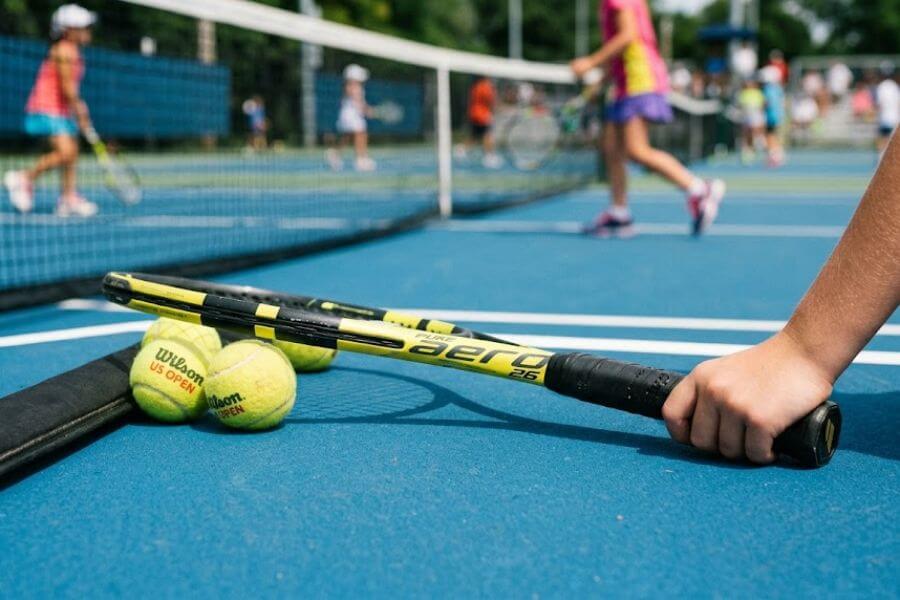
1. Babolat Pure Aero 26″
The Babolat Pure Aero 26″ is a dream for young players who love to dictate points from the baseline with heavy topspin. It carries over the same aerodynamic design and spin-friendly DNA of the adult version, allowing juniors to learn how to manipulate the ball’s bounce. It is lightweight yet sturdy, making it a reliable choice for long tournament matches where consistency is key.
2. Babolat Pure Drive 26″
Known for its legendary versatility, the Pure Drive 26″ provides a perfect mix of power and control. It is an excellent choice for a junior whose game is evolving and who needs a frame that can handle both defensive resets and aggressive winners. The signature Babolat feel helps juniors generate pace without having to over-swing, which protects their developing muscles.
3. Babolat Pure Strike 26″
If your junior player prides themselves on precision and sharp angles, the Pure Strike 26″ is the ideal candidate. It offers a slightly more dampened and controlled feel compared to the Pure Drive or Aero, making it great for players who like to hit flat and drive through the court. It rewards good technique and clean contact with exceptional feedback.
4. Head Speed 26″
The Head Speed 26″ is widely recognized for its arm-friendly nature and balanced playability. It is a fantastic bridge racquet because it doesn’t lean too far into extreme power or extreme control, giving the student a neutral platform to work on their entire game. It is a very consistent performer that helps players build confidence in their stroke mechanics.
5. Head Boom 26″
Designed with a focus on ease and comfort, the Head Boom 26″ is perfect for juniors transitioning to full-length frames. The frame geometry allows for a more forgiving sweet spot, which helps if a junior is still refining their footwork and positioning. It offers great pop on the ball while keeping the arm feeling fresh even during long training sessions.
6. Yonex EZONE 26″
Yonex is famous for its unique isometric head shape, which effectively expands the sweet spot of the racquet. The EZONE 26″ offers incredible stability for a junior frame, ensuring that off-center hits don’t twist the racquet in the player’s hand. It is a wonderful option for players who want a solid, predictable feel from all areas of the court.
7. Yonex VCORE 26″
The VCORE 26″ focuses on “snapback,” a technology that helps the strings move more freely to grab the ball. For a competitive junior looking to add more movement and rotation to their groundstrokes, this is a top-tier pick. It is highly maneuverable, making it easy for kids to whip the racquet head through the zone for high-spin shots.
8. Wilson Blade 26″
The Wilson Blade series is a staple among high-level players for a reason: it offers elite-level feel and control. The 26-inch version maintains this reputation, providing a connected experience to the ball that teaches juniors how to “feel” their shots. It is best suited for a junior who has already established consistent mechanics and is looking for a frame that matches their technical ability.
9. Wilson Ultra 26″
The Wilson Ultra 26″ is a power-oriented frame that makes hitting deeper, more penetrating shots much easier. It is a great confidence booster for players who might struggle to generate their own depth. Its user-friendly design ensures that the transition to a full-size frame doesn’t lead to a dip in performance or enjoyment on the court.
10. Prince Warrior Elite 26″
The Prince Warrior Elite 26″ stands out with its open string pattern, which is specifically designed to help players generate natural spin. It’s a very accessible racquet for competitive juniors who want to hit a modern game but still need a frame that is forgiving enough to handle standard match play. It is an often underrated, high-value choice.
11. Tecnifibre Tempo 26″
Tecnifibre designs the Tempo line specifically for the modern game, focusing on ease of use and speed. This racquet is built to help juniors manage the weight of a near-adult frame while maintaining high-speed swing paths. It is an excellent, well-engineered option for kids who participate in regular junior league play and need reliable equipment.
12. Head Radical 26″
The Head Radical 26″ is often called the “people’s racquet” because it does everything well. It is a fantastic, balanced frame that fits almost any playing style, whether your child is an aggressive baseliner or an all-court player. Its reliability makes it a go-to choice for parents who want a high-quality frame that will last through a significant period of growth.
Conclusion
Moving to a full-size racquet is an exciting step that signals your junior player’s growth and commitment to tennis. By choosing a frame that matches their playing style and physical development, you set them up for success, better technique, and fewer injuries. Whether you opt for the spin-friendly nature of a Babolat, the stability of a Yonex, or the precision of a Wilson, the most important thing is that your junior feels comfortable and confident with their equipment. Take the time to demo these options if possible, and remember that as their game continues to evolve, their needs will too.
Frequently Asked Questions
When is the right time to transition my child to a full-size adult racquet?
The transition should be based on skill, strength, and height rather than age. Generally, once a child reaches 150 cm (5 feet) in height, can comfortably handle a 26-inch racquet without strain, and displays consistent, fluid stroke mechanics during match play, they may be ready for a 27-inch adult frame. Always consult their coach, as they can observe if the child is struggling to maneuver their current frame or if they have the physical capacity to move up.
Does a more expensive racquet make my child a better player?
While premium racquets feature advanced materials and technologies that offer better feel and stability, they do not replace the need for practice and coaching. A high-end racquet can help a player maximize their potential and protect their arm, but it is not a shortcut to skill. It is better to choose a racquet that suits their current playing level rather than buying the most expensive, “pro-level” model, which may be too stiff or heavy for them.
Why do some of these racquets come pre-strung?
Most junior-focused racquets (including 25 and 26-inch models) come pre-strung to make the purchasing process simpler and more cost-effective for families. Manufacturers usually select a synthetic gut string that is durable and provides a good balance of power and comfort for developing players. Once your child reaches a competitive level where they play multiple times a week, you may eventually look into professional restringing with custom tensions or different string types.
Can my child use a full-size racquet before they are 12 years old?
Yes, it is possible for younger, advanced players to use a full-size racquet if they have the height and strength. However, using a frame that is too heavy or has a grip size that is too large can lead to poor technique and wrist or elbow injuries. If a child is physically capable but still maturing, many brands offer “Lite” versions of adult racquets (e.g., Team or Lite models) which provide the adult length but with a more manageable, lighter weight.
Should I prioritize a specific brand when choosing a junior racquet?
You should prioritize the racquet’s specifications—such as weight, head size, and length—over the brand name. While major brands like Babolat, Head, and Wilson all produce excellent junior gear, the “best” racquet is the one that fits your child’s physical build and playing style. Focus on finding a reputable model that is 100% graphite for better arm protection, and look for one that aligns with their specific needs, whether that is extra spin, control, or raw power.