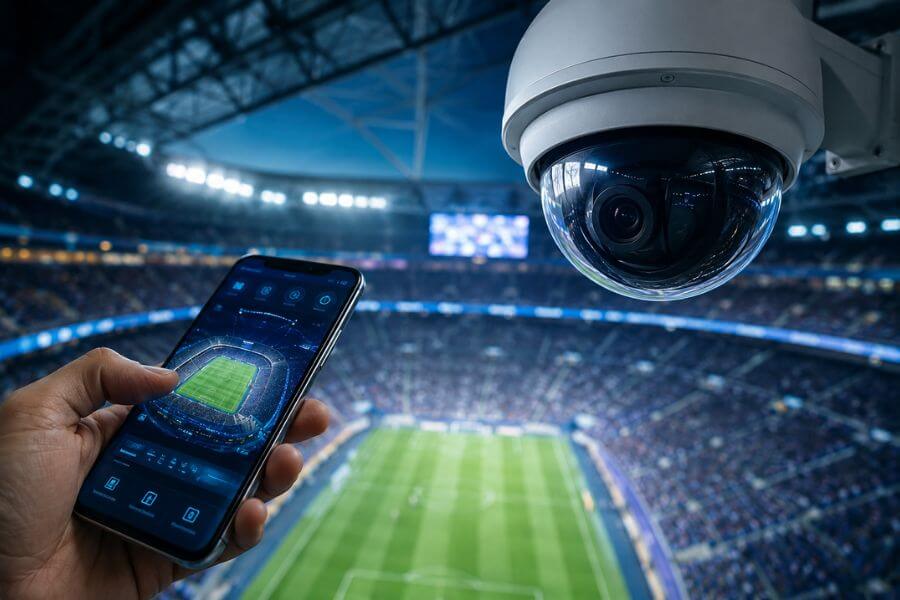
Sports stadiums are no longer just places where you watch a game. In 2026, they are becoming high-tech entertainment hubs designed to give you a faster, smarter, and more immersive experience. From artificial intelligence helping fans find their seats to giant next-generation video boards that make every replay crystal clear, stadium technology is evolving faster than ever.
Whether you attend football, baseball, soccer, basketball, or other major sporting events, these new upgrades are changing how you interact with teams, concessions, security, and live action. Stadium owners are investing billions of dollars to improve fan satisfaction, reduce wait times, and create unforgettable game-day experiences.
In this guide, you’ll discover the biggest stadium tech upgrades debuting in 2026 and why they matter to fans around the world.
Quick Summary Table 🚀
| Rank | Stadium Tech Upgrade | Main Benefit |
|---|---|---|
| 1 | AI-Powered Fan Assistance | Personalized fan experience |
| 2 | Facial Recognition Entry Systems | Faster stadium access |
| 3 | Next-Generation 8K Video Boards | Better viewing experience |
| 4 | Smart Concession Ordering | Shorter food lines |
| 5 | Augmented Reality Fan Experiences | Interactive entertainment |
| 6 | Cashierless Retail Stores | Faster purchases |
| 7 | Advanced Crowd Management AI | Improved safety |
| 8 | Hyper-Fast Stadium Wi-Fi 7 | Better connectivity |
| 9 | Smart Seats With Personalized Features | Greater comfort |
| 10 | Sustainable Energy Monitoring Systems | More efficient operations |
How We Ranked These Stadium Tech Upgrades 🎯
We evaluated each technology using several important factors:
- Impact on overall fan experience
- Innovation and future potential
- Speed and convenience improvements
- Safety and security benefits
- Adoption by major sports venues
- Long-term value for stadium operators
- Ability to improve live event engagement
- Scalability across different sports and venues
1. AI-Powered Fan Assistance 🤖
Artificial intelligence is becoming one of the most visible upgrades in modern stadiums. In 2026, many venues are introducing AI-powered digital assistants that help fans navigate the stadium from the moment they arrive.
Using mobile apps, voice assistants, and smart kiosks, you can quickly find your seat, locate the nearest restroom, discover concession specials, and receive real-time updates during the event.
The biggest advantage is personalization. AI systems can learn your preferences and recommend food, merchandise, and activities based on your interests. If you’re attending a game with family, the system may suggest kid-friendly attractions. If you’re a season ticket holder, it may highlight exclusive benefits.
This technology reduces confusion, improves convenience, and helps fans spend more time enjoying the event instead of searching for information.
2. Facial Recognition Entry Systems 🔐
Long entry lines have frustrated sports fans for decades. In 2026, facial recognition technology is helping solve this problem.
Instead of presenting paper tickets or scanning QR codes, fans can walk through designated gates where cameras verify their identity almost instantly.
The process can significantly reduce congestion during peak arrival periods. It also improves security by helping venues identify unauthorized access attempts.
For fans, the experience becomes nearly frictionless. You can enter the stadium faster and spend less time waiting in line. Stadium operators benefit from improved efficiency and better crowd flow management.
As privacy protections improve, more venues are expected to adopt facial recognition systems in the coming years.
3. Next-Generation 8K Video Boards 📺
Video boards have become one of the most important features inside modern stadiums, and 2026 is bringing major improvements.
New 8K displays offer incredible clarity, brightness, and color accuracy. Even fans sitting in the upper sections can see replays, player introductions, and game statistics with remarkable detail.
Many of these displays are also larger than those of previous generations. Some stadiums are introducing wraparound screens and immersive digital displays that create a more cinematic atmosphere.
Enhanced graphics, real-time statistics, and interactive content make the viewing experience feel much closer to being part of the action.
These massive screens help ensure that every seat in the venue feels connected to the game.
4. Smart Concession Ordering 🍔
Nobody likes missing a key play while standing in a food line.
Smart concession systems are becoming a major focus in 2026. Fans can use mobile apps to order food and beverages directly from their seats.
Once the order is ready, you receive a notification for pickup or delivery, depending on the stadium’s service model.
Artificial intelligence can also predict demand patterns and help concession operators prepare inventory more efficiently. This reduces wait times and improves food availability during busy periods.
The result is a smoother experience that lets you spend more time watching the game and less time standing in line.
5. Augmented Reality Fan Experiences 🕶️
Augmented reality is creating entirely new ways for fans to interact with live sporting events.
Using smartphones or AR-enabled devices, you can point your camera toward the field and instantly access player statistics, live analytics, team information, and interactive visual effects.
Some stadiums are developing AR games and challenges that fans can participate in before and during events.
This technology blends digital content with the physical environment, making the experience more engaging and entertaining.
For younger audiences, especially, augmented reality helps transform a traditional sporting event into an interactive experience.
6. Cashierless Retail Stores 🛒
Cashierless technology is expanding beyond grocery stores and entering sports venues at a rapid pace.
In these stores, you simply walk in, select merchandise or snacks, and leave. Sensors, cameras, and artificial intelligence automatically track purchases and process payments without requiring traditional checkout lines.
This dramatically reduces transaction times and helps fans get back to their seats faster.
The convenience factor is a major reason why many stadium operators are investing heavily in cashierless retail systems.
As the technology becomes more reliable, expect to see it in more venues throughout 2026 and beyond.
7. Advanced Crowd Management AI 👥
Managing tens of thousands of people safely requires sophisticated technology.
New crowd management platforms use artificial intelligence to monitor traffic patterns, identify bottlenecks, and predict congestion before problems occur.
Security teams can receive alerts when certain areas become overcrowded or when unusual movement patterns are detected.
This allows staff to respond proactively rather than react after issues develop.
The result is a safer and more comfortable environment for everyone attending the event.
As stadium attendance continues to grow, crowd management AI will become increasingly valuable.
8. Hyper-Fast Stadium Wi-Fi 7 📡
Fans expect reliable internet access wherever they go, especially inside large sports venues.
Wi-Fi 7 technology is one of the biggest connectivity upgrades arriving in 2026. It offers significantly higher speeds, lower latency, and better performance in crowded environments.
This allows thousands of fans to stream video, upload photos, access mobile apps, and interact on social media simultaneously.
Improved connectivity also supports many of the other technologies discussed in this article, including mobile ordering, augmented reality, and AI-powered services.
A strong wireless network has become an essential part of the modern stadium experience.
9. Smart Seats With Personalized Features 💺
The traditional stadium seat is getting a technology makeover.
Some venues are introducing smart seating systems that offer features such as device charging, personalized notifications, seat-specific ordering, and climate control options in premium sections.
These seats can connect to mobile apps and provide customized experiences based on your preferences.
For example, you may receive alerts when your favorite player reaches a milestone or when merchandise discounts become available nearby.
While currently focused on premium seating areas, these innovations could eventually expand throughout entire venues.
10. Sustainable Energy Monitoring Systems 🌱
Technology upgrades are not just about fan entertainment. Sustainability is becoming a major priority for stadium operators.
Advanced energy management systems debuting in 2026 use sensors, automation, and artificial intelligence to monitor power consumption in real time.
These platforms help reduce waste by optimizing lighting, cooling, heating, and equipment usage throughout the facility.
Many stadiums are also integrating renewable energy sources with smart monitoring systems to improve efficiency.
For fans, these upgrades may not be immediately visible, but they contribute to more environmentally responsible operations and lower long-term costs.
Conclusion 🏆
The stadium experience is changing rapidly, and 2026 is shaping up to be one of the most exciting years for sports venue technology. From AI-powered fan assistance and facial recognition entry systems to immersive augmented reality experiences and ultra-fast Wi-Fi 7 networks, these innovations are designed to make your visit smoother, safer, and more enjoyable.
As stadium operators continue investing in technology, the line between sports, entertainment, and digital experiences will become increasingly blurred. Whether you’re attending your favorite team’s home game or a major international sporting event, these upgrades will help create a more connected and engaging experience than ever before.
The future of stadiums is not just bigger. It’s smarter.
Frequently Asked Questions ❓
Will these stadium technologies increase ticket prices?
Some upgrades may contribute to higher operating costs, but many technologies are designed to improve efficiency and generate additional revenue. Ticket price changes will vary by venue and event.
Which sports are adopting stadium technology the fastest?
Professional football, soccer, baseball, and basketball organizations are generally leading adoption efforts because of their large audiences and significant investment resources.
Are smart stadium technologies safe to use?
Most stadium technologies are developed with security measures and privacy protections in place. Operators typically follow industry standards to protect user information and system integrity.
How does Wi-Fi 7 improve the fan experience?
Wi-Fi 7 offers faster speeds and more reliable connections, allowing fans to stream content, use mobile apps, share photos, and access digital services without significant delays.
What is the biggest long-term benefit of smart stadium technology?
The biggest long-term benefit is the ability to create a personalized, efficient, and highly engaging experience that improves fan satisfaction while helping venues operate more effectively.