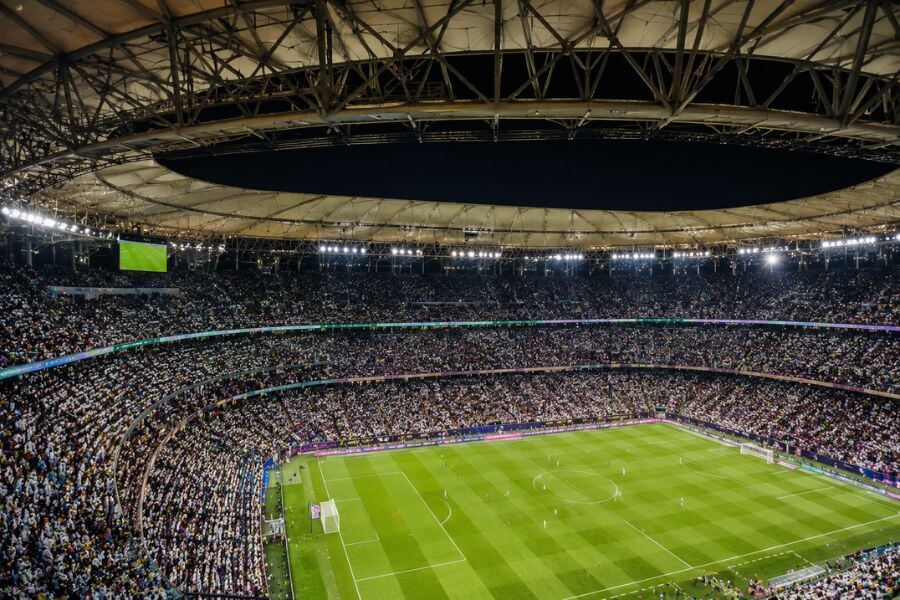
The World Cup brings football fans together from every part of the globe. When the best teams meet, they need massive spaces to hold the thousands of people who want to watch the action live. Some of the greatest moments in sports history have happened inside these giant arenas. If you love sports and want to know where the biggest crowds gather, you are in the right place. You will discover the largest spaces that have ever welcomed or will soon welcome the beautiful game on the biggest international stage.
Quick Summary Table
| Rank | Stadium Name | Location | Tournament Capacity |
| 1 | FNB Stadium | Johannesburg, South Africa | 94,736 |
| 2 | Rose Bowl | Pasadena, California, USA | 92,542 |
| 3 | Estadio Azteca | Mexico City, Mexico | 87,525 |
| 4 | MetLife Stadium | East Rutherford, New Jersey, USA | 82,500 |
| 5 | Lusail Stadium | Lusail, Qatar | 88,966 |
How We Ranked These
To find the true giants of the football world, we looked at specific rules to make our list accurate. Here are the key factors used to rank these structures:
- Official Seating Capacity: We only counted the number of seats available during an actual World Cup tournament. Many places can add extra seats for other sports, but football matches have strict safety limits.
- World Cup History: Every place on this list has either hosted matches in past tournaments or is actively prepared to host them for upcoming global tournaments.
- Individual Seating: We focus on modern layouts with fixed seats rather than old standing sections to ensure the data is fair and up-to-date.
1. FNB Stadium
FNB Stadium is the true king of football size when it comes to international tournaments. You might know this place by its famous nickname, The Calabash. It received this name because the outside looks like a traditional African cooking pot. Located in the large city of Johannesburg, South Africa, it can hold 94,736 fans.
The history of this ground is deeply connected to the spirit of South Africa. It was the site of the first major speech by Nelson Mandela after he was freed from prison. Years later, in 2010, the eyes of the entire world turned to this spot. It hosted the opening match and the incredible final match of the 2010 tournament, where Spain won its very first trophy after a tense battle against the Netherlands.
When you look at the design, you can see how special it is. The outside has a mosaic of warm colors that mimic fire underneath the cooking pot. At night, lights illuminate the base to make it look like it is glowing. Inside, the seats are arranged so that even if you are high up, you still feel close to the pitch. The energy here during a match is loud, vibrant, and impossible to forget.
2. Rose Bowl
The Rose Bowl is a legendary venue located in Pasadena, California. It is an older stadium with a rich history that dates all the way back to the 1920s. For soccer fans, it represents the moment the sport truly arrived in the United States. During the 1994 tournament, this beautiful bowl-shaped arena held 92,542 people.
You cannot talk about sports history without mentioning the matches played on this grass. It hosted the 1994 final match where Brazil defeated Italy after a dramatic penalty shootout. It is also the famous site where the United States women’s team won the trophy in 1999, a moment that changed women’s sports forever. The simple, open layout means that every single seat offers a clear view of the entire field under the warm California sun.
Unlike modern structures that use lots of steel and glass roofs, the Rose Bowl is famous for its classic design. It sits low in a valley surrounded by beautiful mountains and green trees. Walking into this venue feels like stepping into a sports museum, but when ninety thousand people scream at the same time, it feels as modern and exciting as any new arena.
3. Estadio Azteca
Estadio Azteca is a true temple of international football located at a high altitude in Mexico City. It holds a special place in history because it is the first stadium to host two different tournament finals, once in 1970 and again in 1986. For decades, its massive stands could hold 87,523 screaming fans, creating one of the most intimidating atmospheres for any visiting team.
This is the exact grass where Diego Maradona scored his most famous goals, including the one known around the world as the Hand of God. It is also where Pelé lifted the trophy with his legendary Brazil team. The history inside these walls is so thick you can almost feel it when you walk through the gates. The stands are built very high and steep, which means the noise from the crowd stays trapped inside and echoes down onto the players.
Because it is so historic, the venue has gone through renovations to keep fans safe and comfortable. Even with changes to the seating layout over the years, it remains a giant that every football player dreams of playing in. The combination of intense fan passion, historical moments, and huge crowds makes it a legendary stop on our list.
4. Lusail Stadium
Lusail Stadium is a glittering masterpiece of modern architecture located in Lusail, Qatar. Built specifically to be the crown jewel of the 2022 tournament, this venue has a capacity of 88,966. Its design is inspired by the traditional fanar lantern and the intricate bowls used in the Arab world for centuries.
You probably remember this venue as the place where Lionel Messi finally lifted the golden trophy after what many people call the greatest final match in history. The match between Argentina and France was filled with goals, tension, and pure drama, all happening under the bright lights of this golden structure. The outside of the stadium features a sleek metal skin that reflects the sun during the day and glows with a warm yellow light at night.
What makes this place stand out is the incredible technology hidden inside. Because the weather can be very hot, the architects built an advanced cooling system under the seats to keep both the fans and the players comfortable. After the tournament concluded, plans were made to transform parts of the building into community spaces like schools, shops, and clinics, showing that a massive sports venue can have a helpful life long after the games end.
5. MetLife Stadium
MetLife Stadium sits in East Rutherford, New Jersey, just a short distance from the bright lights of New York City. This massive open-air venue can hold 82,500 people for major football matches. It is a modern marvel that opened its doors in 2010 and serves as the home for two different American football teams during the regular season.
This venue is built to handle the biggest events in entertainment and sports. Its exterior is covered in metal aluminum louvers that can change color depending on who is playing inside. When you approach the entrance, the sheer size of the concrete and steel walls tells you that you are entering a place built for giant crowds. The wide walkways inside make it easy for thousands of people to move around without getting stuck in long lines.
The fields here are prepared to welcome international fans with open arms. Because it is close to a major global city, the crowd is always full of diverse people from every culture, bringing flags and songs from all corners of the earth. The view from the top sections gives you a sense of just how huge the human gathering is, making every goal feel like an earthquake.
Conclusion
The biggest stadiums in the world do more than just hold people. They act as giant stages where history is written and where emotions run high. From the classic bowls of California to the ultra-modern designs in the desert, these five venues have proven that size can create unforgettable magic. Whether you dream of visiting one day or just enjoy watching the games on a screen, knowing the scale of these structures helps you appreciate how much the world loves the game of football.
Frequently Asked Questions
Which country has the most stadiums on this list?
The United States features two venues on this specific top five list, which are the Rose Bowl and MetLife Stadium. Both of these massive arenas have played huge roles in bringing international football crowds to North America and showing the world how much fans love the sport in the United States.
Do these giant stadiums use real grass or artificial grass for tournament matches?
Every venue that hosts these major international tournament matches must use high-quality real grass. Even if a stadium normally uses artificial turf for American football or other events during the year, they must install a fresh layer of natural green grass to meet strict international playing rules.
Why do some stadiums change their official names during international tournaments?
International sports governing bodies have strict rules about commercial sponsorships. If a stadium is normally named after a bank, an insurance company, or an airline, it must use a neutral name during the tournament to avoid advertising conflicts with the official sponsors of the tournament.
How do fans stay cool inside giant stadiums located in hot climates?
Modern arenas like the one in Qatar use advanced solar-powered cooling systems. Cold air is pushed out through small vents located directly underneath every single seat in the crowd. This creates a cool bubble of air just over the spectators and the players on the field, even if the weather outside is very hot.
What happens to these massive structures after the tournament ends?
The future of each venue depends on its location. Some continue to host major local sports teams every week, while others reduce their seating capacity and convert extra space into public parks, shopping centers, or housing to make sure the building remains useful to the local community.