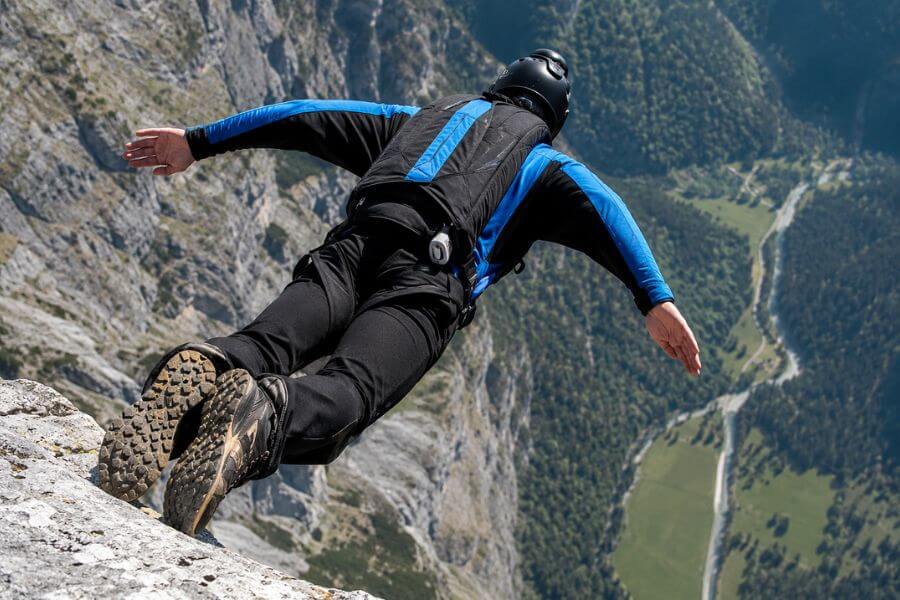
Extreme sports are exciting because they push people beyond normal limits. They combine speed, height, danger, and skill into experiences that most people would never dare to try. For some athletes, the risk is exactly what makes these sports feel alive and unforgettable.
While many sports come with injuries, extreme sports can involve life-threatening accidents if even one mistake happens. Harsh weather, massive heights, fast speeds, and unpredictable environments make these activities incredibly dangerous. Still, thousands of people around the world continue to train for them every year.
In this guide, you’ll discover the 10 most dangerous extreme sports people actually do, why they are so risky, and what makes athletes willing to take those chances.
Quick Summary Table ⚡
| Rank | Extreme Sport | Main Danger | Typical Environment |
|---|---|---|---|
| 1 | Base Jumping | Fatal falls | Cliffs, skyscrapers, bridges |
| 2 | Big Wave Surfing | Giant waves and drowning | Open ocean |
| 3 | Free Solo Climbing | No safety equipment | Mountain cliffs |
| 4 | Cave Diving | Getting trapped underwater | Underwater caves |
| 5 | Wingsuit Flying | High speed crashes | Mountains and valleys |
| 6 | Bull Riding | Violent animal attacks | Rodeo arenas |
| 7 | Heli Skiing | Avalanches and falls | Remote snowy mountains |
| 8 | Street Luge | High speed road crashes | Steep paved roads |
| 9 | Ice Climbing | Falling ice and slips | Frozen waterfalls and cliffs |
| 10 | Volcano Boarding | Crashes on volcanic rock | Active volcano slopes |
How We Ranked These Extreme Sports 🧭
We looked at several factors to determine which sports are the most dangerous.
- Risk of fatal accidents
- Frequency of serious injuries
- Environmental dangers
- Speed and height involved
- Limited access to rescue help
- Physical and mental pressure
- Equipment failure risks
- Real-world accident history
1. Base Jumping 🪂
Base jumping is widely considered the most dangerous extreme sport in the world. Athletes jump from fixed structures like buildings, antennas, bridges, and cliffs while using parachutes to survive the fall.
The problem is that base jumping happens at much lower heights than traditional skydiving. That means jumpers have very little time to react if something goes wrong. A parachute malfunction or bad landing can quickly become deadly.
Strong winds make things even more dangerous because they can push jumpers into rocks, buildings, or trees. Some athletes attempt risky tricks and spins in the air, adding even more danger to an already intense sport.
Even experienced base jumpers admit that every jump carries serious risk. Despite this, many athletes are drawn to the incredible adrenaline rush and the feeling of complete freedom during the fall.
2. Big Wave Surfing 🌊
Big wave surfers chase ocean waves that can rise over 70 feet tall. These waves are powerful enough to hold a person underwater for long periods, slam them into reefs, or throw them violently across the water.
Unlike normal surfing, you are fighting against the raw power of the ocean itself. Surfers can lose consciousness from underwater impacts or become trapped beneath multiple waves in a row.
The weather conditions are also unpredictable. Sudden storms, freezing water, and strong currents make rescue efforts difficult. Many surfers rely on jet ski teams nearby because survival often depends on immediate help.
Even getting into position for a wave can be dangerous. One mistake at high speed can cause broken bones, severe head injuries, or worse.
Still, big wave surfers continue chasing the world’s largest waves because few experiences compare to riding something so massive and powerful.
3. Free Solo Climbing 🧗
Free solo climbing involves climbing massive rock walls without ropes, harnesses, or safety equipment. One slip usually means death.
This sport demands incredible focus because there is no backup plan. Climbers depend entirely on finger strength, balance, and mental control while hanging thousands of feet above the ground.
Many free solo climbers spend years practicing routes before attempting them without protection. Even then, natural conditions like wind, loose rocks, or sweaty hands can turn deadly in seconds.
The mental pressure is extreme. Climbers must stay calm while making tiny movements on narrow ledges and sharp cliffs. Fear alone can cause mistakes.
What makes free solo climbing especially terrifying is how small the margin for error really is. Perfect skill still does not guarantee safety.
4. Cave Diving 🤿
Cave diving combines scuba diving with underwater cave exploration. It is one of the most dangerous activities because divers enter dark, narrow spaces where escape can become impossible.
Visibility can disappear instantly if mud or sand gets disturbed underwater. Divers may lose direction and become trapped deep inside cave systems.
Running out of oxygen is another major danger. Unlike open water diving, cave divers cannot simply swim upward to the surface. They must carefully navigate back through complicated tunnels.
Equipment failure underwater can quickly become fatal, especially when divers are far from exits. Panic also becomes a huge threat in tight underwater spaces.
Despite the danger, cave divers are fascinated by unexplored underwater worlds that very few humans ever get to see.
5. Wingsuit Flying 🦅
Wingsuit flying looks almost unreal. Athletes wear special suits that allow them to glide through the air at incredibly high speeds after jumping from cliffs or aircraft.
The sport is extremely dangerous because flyers often travel close to mountains, forests, and rocky terrain. At these speeds, even a small mistake can cause a deadly crash.
Many wingsuit flyers describe the experience as feeling like flying like a bird. However, the danger level is always high because there is almost no room for error.
Changing weather conditions can also create sudden problems. Wind shifts and poor visibility increase the risk dramatically.
Even highly trained professionals have lost their lives during wingsuit flights, which shows how unforgiving the sport can be.
6. Bull Riding 🤠
Bull riding may happen in an arena, but it remains one of the most physically brutal sports on earth.
Riders climb onto massive bulls weighing over a ton and attempt to stay on for eight seconds while the animal bucks, spins, and kicks violently.
The real danger starts after the rider falls off. Bulls can stomp, kick, or charge athletes within seconds. Broken ribs, concussions, spinal injuries, and crushed bones are common.
Protective vests and helmets help, but they cannot fully protect riders from the sheer power of these animals.
Bull riders often say the challenge is about courage as much as skill. Facing an angry bull requires incredible mental toughness.
7. Heli Skiing 🚁
Heli skiing takes skiers to remote mountain areas using helicopters. These untouched slopes offer amazing snow conditions, but they also come with serious risks.
Avalanches are one of the biggest threats. Skiers travel through areas with unstable snow that can collapse without warning.
Because these locations are remote, emergency medical help may take a long time to arrive. Harsh weather can also trap people in dangerous situations.
Steep cliffs, hidden rocks, and deep snow increase the chance of severe injuries. Even experienced skiers can lose control on unpredictable mountain terrain.
The beauty and isolation attract adventure seekers, but heli skiing requires skill, preparation, and respect for nature.
8. Street Luge 🏎️
Street luge racers lie flat on specially designed boards and race downhill on paved roads at extremely high speeds.
Unlike cars or motorcycles, riders have very little protection. Their bodies are only inches above the pavement while traveling faster than many highway vehicles.
Crashing at these speeds can cause devastating injuries. Sharp turns, road obstacles, and traffic dangers make the sport even more dangerous.
Some races happen on closed roads, but accidents still happen regularly because controlling a luge board at high speed is incredibly difficult.
Street luge athletes love the combination of speed and precision, but the danger level remains extremely high.
9. Ice Climbing ❄️
Ice climbing involves scaling frozen waterfalls, icy cliffs, and glaciers using sharp tools and spikes.
One major danger is that ice constantly changes. A surface that feels solid can suddenly crack or break apart beneath a climber.
Falling ice is another huge threat. Large chunks can crash down from above without warning, causing serious injuries.
Extreme cold creates additional problems like numb hands, frozen equipment, and exhaustion. Climbers must stay focused even in brutal weather conditions.
Ice climbing demands strength, patience, and technical skill, but nature can become unpredictable at any moment.
10. Volcano Boarding 🌋
Volcano boarding is one of the strangest and most dangerous extreme sports people actually do. Athletes slide down active volcano slopes on wooden boards at high speeds.
The volcanic rock is rough and sharp, making crashes incredibly painful. Riders often wear protective suits and goggles because falling can cause serious cuts and burns.
Some volcanoes also release toxic gases and intense heat. Unstable terrain adds another layer of danger.
Controlling speed on loose volcanic gravel is difficult, especially on steep slopes. Riders can quickly lose control and crash into rocks.
Even though it sounds unbelievable, volcano boarding has become popular among thrill seekers looking for unusual adventures.
Conclusion 🏔️
Extreme sports attract people because they offer excitement that ordinary activities simply cannot match. They push athletes to face fear, test their limits, and experience moments that feel unforgettable.
However, these sports also come with very real dangers. From giant ocean waves to deadly mountain cliffs, one mistake can change everything in seconds. Training, preparation, and safety equipment help reduce risks, but danger can never fully disappear.
If you ever decide to try an extreme sport yourself, understanding the risks is just as important as enjoying the thrill. Respect for the environment, proper coaching, and smart decision-making can make a huge difference.
For many athletes, the challenge is not about avoiding fear. It is about learning how to face it.
Frequently Asked Questions 🎯
Which extreme sport has the highest death rate?
Base jumping is often considered the extreme sport with the highest death rate because of the low jump heights and limited reaction time during emergencies.
Are extreme sports becoming more popular?
Yes, extreme sports have become more popular due to social media, online videos, and adventure tourism. Many people are inspired by athletes performing incredible stunts and challenges.
Do extreme sports athletes make good money?
Some professional athletes earn money through sponsorships, competitions, and content creation. However, many participants do these sports mainly for passion rather than financial rewards.
What safety equipment is most important in extreme sports?
The equipment depends on the sport, but helmets, harnesses, flotation devices, parachutes, and protective clothing are often essential for reducing injuries.
Can beginners safely try extreme sports?
Yes, beginners can safely try some extreme sports when working with trained instructors and proper safety systems. Starting slowly and learning the basics is very important.