If you are looking to take absolute control of the tennis court, you know that power isn’t everything. True mastery comes from putting the ball exactly where you want it, every single time. That is where 97-square-inch tennis racquets come into play. Often chosen by advanced players and competitive athletes, this specific head size offers a traditional, laser-focused feel that rewards clean ball-striking with surgical accuracy. In this guide, we break down the absolute best 97-square-inch options available today so you can find the perfect match for your competitive game.
Quick Summary of Top Precision Racquets
| Rank | Racquet Model | Primary Benefit | Best Suited For |
| 1 | Wilson Pro Staff 97 V14 | Timeless feel and ultimate placement | All-court traditionalists |
| 2 | Yonex Percept 97D | Dense string pattern for maximum control | Heavy hitters who want zero sail |
| 3 | Dunlop CX 200 Tour | Ultra-plush, flexible classic comfort | Players seeking a soft, connected feel |
| 4 | Head Prestige Pro 2023 | Unmatched stability and plow-through | Experienced players with big swings |
| 5 | Solinco Whiteout 97 XTD | Extended length for extra reach and spin | Aggressive baseliners needing leverage |
| 6 | Babolat Pure Strike VS | Crisp response with modern pinpoint accuracy | Attackers who take the ball on the rise |
How We Ranked These Precision Frames
To find the best options for your game, we evaluated dozens of advanced frames based on how they perform under pressure. We focused entirely on traits that help you hit targets consistently rather than raw, effortless power. Here are the key factors we used to rank these surgical weapons:
- Torsional Stability: How well the frame resists twisting when you meet a heavy, fast incoming ball.
- Targeting Consistency: The predictability of the launch angle off the stringbed across different stroke speeds.
- Feedback and Feel: The amount of clean information transferred to your hand so you know exactly where the ball is going.
- Maneuverability: How quickly you can accelerate the racquet head through the contact zone on quick reactions.
1. Wilson Pro Staff 97 V14
The Wilson Pro Staff 97 V14 continues a legendary heritage by giving you an incredibly crisp, pinpoint connection to the ball on every single stroke. Thanks to its unique braided graphite construction and headlight balance, you will find it incredibly easy to maneuver at the net while enjoying the signature pocketing feel that makes hitting lines feel second nature. It does not give you any free power, meaning your success relies entirely on your technique, but the reward is an unparalleled level of placement accuracy that lets you dictate points with absolute confidence.
2. Yonex Percept 97D
If you are someone who loves to swing with maximum speed without ever worrying about the ball flying long, the Yonex Percept 97D is your dream come true. Featuring a dense eighteen-by-twenty string pattern and a uniquely shaped isometric head, this frame expands your sweet spot while locking down the launch angle for total predictability. It absorbs heavy pace effortlessly, allowing you to counter-punch deep into the corners with a smooth, damp feel that keeps your arm comfortable through long, grueling matches.
3. Dunlop CX 200 Tour
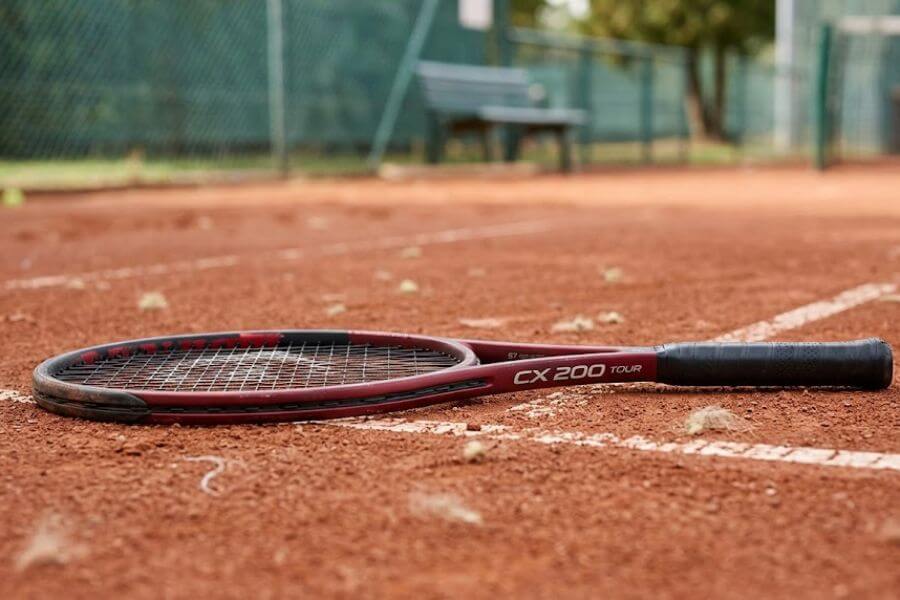
For players who prioritize a soft, flexible feel above everything else, the Dunlop CX 200 Tour offers a beautiful throwback experience wrapped in modern tech. This frame bends beautifully upon impact, holding the ball on the strings just a millisecond longer so you can guide it precisely toward your target like a paintbrush. It is one of the lowest-powered racquets on our list, making it an exceptional option if you already possess a massive swing and simply want a plush weapon that prevents overhitting.
4. Head Prestige Pro 2023
The Head Prestige Pro 2023 is a serious, heavy-duty frame designed for seasoned players who can handle a heavier swing weight for ultimate stability. When you step into the ball with this racquet, the incredible plow-through power crushes through heavy spin and pace, ensuring your shots do not get pushed around by deep balls. It offers a very direct, honest feedback system through the handle, giving you the exact sensory data you need to adjust your angles and drop volleys with master-level touch.
5. Solinco Whiteout 97 XTD
The Solinco Whiteout 97 XTD brings a unique twist to the precision category by adding a slight extension to the standard racquet length. This extra fraction of an inch gives you incredible leverage on your serves and groundstrokes, letting you create sharp, angled dipping shots that are tough for opponents to return. The frame itself remains highly controlled and sleek, ensuring that the added power and spin do not compromise your ability to hit small targets deep in the court.
6. Babolat Pure Strike VS
If you prefer a crisper, more modern feel while keeping the traditional control of a small head size, the Babolat Pure Strike VS stands out from the crowd. It features a specialized cross-section design that blends square and elliptical frame shapes, resulting in a highly responsive feel that tells you exactly where you made contact. This responsiveness makes it perfect if you like to stand close to the baseline, take the ball early on the rise, and aggressively drive it into open spaces before your opponent can recover.
Choosing Your Next Precision Frame
Upgrading to an advanced 97-square-inch racquet is a major step toward playing a more disciplined, intentional style of tennis. These frames force you to generate your own power, but in return, they give you the confidence to swing freely and aim for the lines without fear. Look closely at how each frame balances weight, string density, and flexibility to decide which one aligns best with your personal swing mechanics. Once you find the right match, you will unlock a level of court control you didn’t think was possible.
Frequently Asked Questions
What type of tennis string works best to maximize precision in a 97-square-inch frame?
To get the absolute most accuracy out of these frames, you should generally look toward co-polyester strings. Polyester strings are inherently low-powered and stiff, which perfectly complements a control-oriented frame by keeping the ball inside the lines even during fast, aggressive swings. If you have a history of arm discomfort, you can hybridize a polyester string with a softer multifilament string to maintain a great balance of comfort and targeting control.
How does the swing weight of a racquet affect my surgical precision during quick volleys?
Swing weight describes how heavy the racquet feels when you are actually moving it through the air, rather than just holding it still. A higher swing weight makes the racquet incredibly stable against fast incoming balls, meaning the frame won’t twist in your hand when you block back a heavy shot at the net. However, if the swing weight is too high for your current strength level, your reactions will slow down, causing you to hit late and miss your intended targets.
Why do advanced players prefer 97-square-inch heads over the standard 100-square-inch options?
Smaller head sizes, like 97 square inches, offer a tighter, more concentrated sweet spot, which naturally reduces the trampoline effect of the strings. This means the ball leaves the racquet face with a much more consistent and predictable trajectory, regardless of how hard you swing. While a 100-square-inch racquet gives you more forgiveness on off-center hits and easy power, it cannot match the laser-like directional control that a smaller head size provides.
Does a thinner frame beam width improve or hurt my control over the ball?
A thinner frame beam width generally improves your control because it allows the racquet to flex more naturally upon impact. This flexibility absorbs a lot of the ball’s energy and increases the dwell time, which is the amount of time the ball stays on your strings. When the ball dwells on the strings longer, you have a better physical sense of direction, allowing you to guide the ball into tight spaces much easier than you could with a thick, rigid frame.
How often should I re-string a control-oriented racquet to maintain its precise targeting?
As strings lose their tension over time, they begin to stretch more and create an unpredictable trampoline effect, which completely ruins the precise targeting of your frame. A good rule of thumb is to re-string your racquet as many times per year as you play per week. Even if you do not break your strings often, you should replace them at least every three to four months because the material naturally loses its elasticity, causing your shots to sail unexpectedly.