Athletes know that training is only half the battle. The real progress happens during recovery. Every workout creates stress on your muscles, joints, and nervous system. Recovery is when your body repairs that damage, builds strength, and prepares for the next challenge.
Whether you are a professional athlete, weekend warrior, runner, weightlifter, or fitness enthusiast, using the right recovery tools can help you sleep better, reduce soreness, and improve performance. Modern recovery equipment has become more advanced and accessible than ever, making it easier to support your body’s natural healing process.
In this guide, you’ll discover the best recovery tools athletes use to rebuild faster and wake up feeling ready to perform at their best.
Quick Summary Table 📊
| Recovery Tool | Best For | Key Benefit |
|---|---|---|
| Massage Gun | Muscle soreness | Reduces tightness and improves blood flow |
| Compression Boots | Leg recovery | Enhances circulation and reduces fatigue |
| Foam Roller | Muscle mobility | Releases tension and improves flexibility |
| Sleep Tracking Device | Sleep optimization | Helps improve recovery habits |
| Cooling Mattress Pad | Better sleep quality | Regulates body temperature during sleep |
| Infrared Sauna Blanket | Relaxation and circulation | Supports muscle recovery and stress reduction |
| Recovery Air Compression Sleeves | Arm and leg recovery | Promotes blood flow and reduces soreness |
| Weighted Blanket | Relaxation and sleep | Helps improve sleep comfort |
| Red Light Therapy Device | Tissue recovery | Supports cellular repair processes |
| Ice Bath Tub | Inflammation management | Reduces post-workout soreness |
How We Ranked These Recovery Tools 🏆
We evaluated these recovery tools using several important factors:
- Effectiveness for reducing soreness and fatigue
- Ability to improve sleep quality
- Scientific support and athlete adoption
- Ease of use at home
- Long-term recovery benefits
- Value for money
- Durability and reliability
- Versatility across different sports
- Comfort during use
- Popularity among professional athletes
1. Massage Gun 🔥
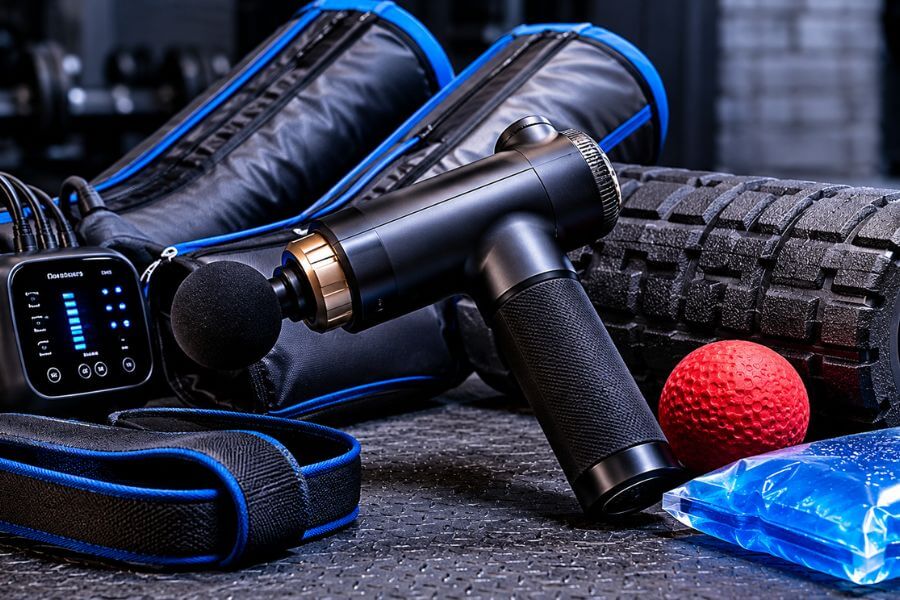
A massage gun has become one of the most popular recovery tools among athletes. It uses rapid percussion to target muscles and soft tissues, helping reduce tightness and improve circulation.
After a tough workout, your muscles can feel stiff and sore. A massage gun helps loosen those areas without needing a professional massage therapist. Many athletes use one before training to prepare muscles and after workouts to speed recovery.
The biggest advantage is convenience. You can target specific muscle groups such as calves, quads, hamstrings, shoulders, and back within minutes.
Why athletes love it:
- Easy to use at home
- Helps reduce muscle stiffness
- Improves blood flow
- Saves time compared to traditional massage
- Portable and travel-friendly
For many athletes, a massage gun is the first recovery tool they purchase because it delivers noticeable results quickly.
2. Compression Boots ⚡
Compression boots have become a favorite among professional athletes, especially runners, cyclists, and basketball players.
These boots use air chambers that inflate and deflate around your legs. This compression helps move blood and fluids through the muscles, potentially reducing fatigue and swelling.
Many athletes use compression boots while watching television, reading, or relaxing after training sessions.
Benefits include:
- Improved circulation
- Reduced heavy-leg feeling
- Less muscle fatigue
- Comfortable recovery experience
- Convenient passive recovery
They are particularly useful after long endurance workouts or competitions where your legs feel exhausted.
3. Foam Roller 🧘
A foam roller remains one of the simplest and most effective recovery tools available.
This affordable tool allows you to perform self-myofascial release, which is a fancy way of saying you apply pressure to tight muscles and connective tissue.
Rolling regularly can help improve flexibility, mobility, and movement quality. It can also reduce the feeling of muscle tightness after intense workouts.
Areas commonly targeted include:
- Quadriceps
- Hamstrings
- Glutes
- Calves
- Upper back
Even elite athletes continue using foam rollers because they are effective, inexpensive, and easy to carry anywhere.
4. Sleep Tracking Device ⌚
Recovery starts with quality sleep. That is why many athletes wear sleep tracking devices.
These devices monitor factors such as:
- Sleep duration
- Sleep stages
- Heart rate
- Recovery trends
- Nighttime movement
The goal is not simply collecting data. The real benefit comes from understanding your habits and making better recovery decisions.
Athletes often discover that small changes, such as earlier bedtimes, reduced screen time, or improved bedroom conditions, can dramatically improve recovery.
When you consistently get quality sleep, your body can repair muscles more effectively and maintain higher energy levels.
5. Cooling Mattress Pad ❄️
Many athletes struggle with overheating during sleep. Even small increases in body temperature can interrupt deep sleep stages.
Cooling mattress pads help maintain a comfortable sleeping environment throughout the night.
Better temperature regulation can support:
- Longer sleep duration
- Fewer nighttime wakeups
- Improved comfort
- Better recovery quality
- More consistent deep sleep
Professional athletes increasingly invest in sleep environments because recovery often depends more on sleep quality than on additional training.
A cooling mattress pad can be one of the most impactful upgrades for people who sleep hot.
6. Infrared Sauna Blanket 🌡️
Infrared sauna blankets bring many sauna-like benefits into your home.
These blankets use infrared heat to warm the body gently. Many athletes use them on recovery days to promote relaxation and help manage stress.
Potential benefits include:
- Increased circulation
- Relaxation after training
- Improved recovery routines
- Enhanced comfort
- Better sleep preparation
The calming effect is often one of the biggest advantages. When your body relaxes before bedtime, it becomes easier to fall asleep and stay asleep.
Many athletes include infrared sessions as part of their evening recovery rituals.
7. Recovery Air Compression Sleeves 💪
Compression sleeves work similarly to compression boots but can target both arms and legs.
Athletes who rely heavily on their upper body often use arm sleeves after demanding training sessions.
Common users include:
- Swimmers
- Baseball players
- Tennis players
- CrossFit athletes
- Weightlifters
The rhythmic compression promotes circulation and can help muscles feel fresher before the next workout.
These systems are especially useful during periods of heavy training when recovery demands increase significantly.
8. Weighted Blanket 🌙
A weighted blanket may not look like traditional athletic equipment, but many athletes swear by its sleep benefits.
The gentle pressure created by the blanket can produce a calming sensation that helps some people relax before sleep.
Benefits may include:
- Reduced restlessness
- Greater relaxation
- Improved sleep comfort
- Better bedtime routines
- Enhanced recovery habits
Since sleep is the foundation of athletic recovery, anything that supports deeper and more consistent sleep can provide meaningful performance benefits.
A weighted blanket is particularly useful for athletes who struggle to unwind after evening workouts.
9. Red Light Therapy Device ❤️
Red light therapy has gained attention across professional sports because of its potential role in supporting cellular function and tissue recovery.
These devices expose the body to specific wavelengths of red and near-infrared light.
Athletes often use red light therapy for:
- Recovery sessions
- Joint support
- Muscle maintenance
- Post-training recovery
- Wellness routines
The treatment is non-invasive and generally easy to incorporate into a daily schedule.
While research continues to evolve, many athletes appreciate the convenience and comfort of using red light therapy as part of a broader recovery strategy.
10. Ice Bath Tub 🧊
Ice baths remain one of the most recognizable recovery methods in sports.
Although they are not always comfortable, many athletes use cold-water immersion after intense training sessions or competitions.
Potential advantages include:
- Reduced muscle soreness
- Temporary inflammation management
- Mental toughness development
- Faster post-exercise cooling
- Recovery support after demanding events
Modern portable ice bath tubs make the process much easier than filling a regular bathtub with bags of ice.
Many endurance athletes, football players, and team sport athletes continue to rely on ice baths as part of their recovery programs.
Conclusion 🚀
Training hard is important, but recovering well is what allows you to keep improving. The best athletes in the world understand that sleep, muscle recovery, and stress management directly influence performance.
Recovery tools such as massage guns, compression boots, foam rollers, cooling mattress pads, and red light therapy devices can help you support your body’s natural healing process. The right combination depends on your sport, training volume, budget, and personal preferences.
If you are looking for the biggest overall impact, start with tools that improve sleep quality and reduce muscle soreness. Better recovery means better workouts, better performance, and a healthier body over the long term.
Frequently Asked Questions ❓
How often should athletes use recovery tools?
Most recovery tools can be used several times per week or even daily. The ideal frequency depends on training intensity, recovery needs, and the specific tool being used.
Are expensive recovery tools always better?
Not necessarily. A foam roller and a good sleep routine can provide tremendous benefits at a much lower cost than advanced recovery equipment. Consistency matters more than price.
Can recovery tools replace proper nutrition?
No. Recovery tools work best when combined with proper nutrition, hydration, and sleep. They should complement healthy habits rather than replace them.
Which recovery tool is best for beginners?
A foam roller is often the best starting point because it is affordable, easy to use, portable, and effective for reducing muscle tightness.
Do professional athletes use multiple recovery tools together?
Yes. Many professional athletes combine several methods, such as compression therapy, massage guns, sleep tracking, stretching, and cold-water immersion to create a complete recovery routine.